







The BL[OZ]
Attracting the RIGHT customers to your B2B business
By
Orit Oz
, 16/05/2017
Inbound marketing for B2B is about attracting the right people to your business – those who become leads, then customers and ultimately promoters of your brand.
The power of content in inbound marketing
By
Orit Oz
, 16/05/2017
Content is the fuel behind inbound marketing – it carries the message your company wants to deliver to your customers at the right time and in the right place.
Content is what sets you apart
It’s the fuel behind inbound marketing – it carries the message your company wants to deliver to your customers at the right time and in the right place. It’s what powers a successful inbound strategy by pulling people from one stage of the inbound methodology to another and addressing their challenges and questions.Content in B2B
Content marketing works for every type of business. In fact, according to a report put out by the Content Marketing Institute, 85% of B2B marketers identified the creation of quality and efficient content as being a leading factor for increased marketing success in 2016. Additionally, based on company metrics, 78% of these B2B marketers report an increase in audience engagement and 57% saw an increase in sales with use of content for their B2B marketing.The content process
Now that we've established the importance of content, where do you start and what should you focus on? The best way to optimize your content for your inbound marketing strategy is to follow a content process that involves 4 main steps:- Consider the content’s purpose, format and topics.
- Create content that builds trust amongst your prospects.
- Get your content in front of the right people at the right time.
- Analyze & repeat. Determine what worked and what didn’t, and repeat your successes.
Getting creative in B2B marketing
By
Miri Peled
, 15/05/2017
Yes, branding is vital to success. But what about lead generation, which is also crucial to business and requires creative methods to bring in qualified leads?
What’s all the fuss about Inbound marketing?
By
Orit Oz
, 15/05/2017
We’ve all heard the term Inbound marketing thrown around a lot lately. It’s become the latest catchphrase in a field that’s already packed with catchphrases.
What is Inbound marketing?
Inbound marketing is the process of attracting potential customers and getting them to reach out to you. This is different to more traditional marketing (also known as push marketing or outbound marketing) where you actively reach out to potential customers through methods such as cold-calling, printed magazines, and traditional advertising. But how do you attract potential customers and get them to trust you before you’ve even pitched them your product? The answer lies in content —the foundation of the Inbound methodology. By creating carefully curated content, you’ll establish yourself as a trusted source of knowledge and attract the ideal visitors to your site, convert them into leads and then customers, and keep them engaged so they go on to promote your brand. “By publishing the right content in the right place at the right time, your marketing becomes relevant and helpful to your customers, not interruptive.” - Hubspot
Inbound marketing in a nutshell
Inbound marketing is filled with complexities, but the following four steps (based on the Hubspot Inbound methodology) summarize the main Inbound stages:- Attract. Before you do anything, you need to fully research and understand who your ideal customers or buyer personas are. Once you have identified them, you can get them to come to you.
- Find creative ways to “convert” these potential customers into leads by offering them something valuable in return.
- Turn your leads into customers.
- Continue to engage with your customers so they become promoters of your brand.
Inbound marketing in B2B
At this stage, you may be wondering whether Inbound marketing works in the world of B2B. The answer is a big loud “Yes!” In fact, Inbound marketing creates a win-win situation for you where you can get closer to your direct customers and distributors, and also increase brand awareness amongst end users to enhance end-user demand for your brand (even if you they are not buying directly from you). Read how Elcam used digital marketing to increase brand awareness>>Combining Inbound and offline marketing
We’d like to emphasize that Inbound marketing does not replace the need for interpersonal interaction with your customers – especially in B2B industries where the customer model tends to be more complex and is often based on long-term relationships. The goal is to find the right communication mix for your specific B2B business needs, market and customers. By promoting your brand through a digital dialog and an inter-personal dialog, you can achieve a more effective and efficient sales and marketing process for better business results. For example, you can combine a compelling digital campaign to encourage potential customers to visit you at a trade show, and then meet them at the event to continue a direct dialogue with them. Look out for our next blog post on the need for face-to-face communication with your customers and creative ways to combine digital and interpersonal communication (coming soon).Inbound marketing – here to stay?
Another big loud “Yes!” It’s quite simple - as more and more potential buyers turn to the Internet for answers to their challenges, they look to buy from suppliers who instill trust by answering their questions and offering solutions to their problems. This means that in order to stay relevant in the marketplace, you have to be present where your potential buyers are looking for answers - online. And that’s why everyone is fussing over Inbound marketing.The changing role of CMOs in B2B marketing
By
Miri Peled
, 15/05/2017
Customer empowerment has led to a changing CMO role as CMOs become the customer voice within their organizations. But what does this role actually involve?
The customer leads the way
With digital disruption and an ongoing increase in Internet and social media usage, consumers now have almost all the information they need at their fingertips. In fact, research shows that the majority of customers engage in online research and brand comparison before they commit to a specific product or service — even (and often especially) in the world of business to business (B2B) — and continue to use online platforms at multiple points across their buyer journey. This has far reaching effects on the marketplace, and businesses are being forced to adapt their marketing strategy accordingly. Instead of interruptive marketing fighting for a customer's attention and money, twenty-first century businesses need to focus on both offline and online marketing to attract potential customers, increase sales and maintain an ongoing relationship with their customers.Expanding the CMO’s Role
These changes to customer behavior, as well as the ability of companies to reach a more diverse and global customer base, have led to an expansion or even a complete redefinition of the CMO’s role, in both B2C and B2B marketing. As advocators for customers — or the “voice of the customer” —CMOs will need to lead changes across companies. This involves playing a more active role in areas such as global branding strategy and public profile, product development, leading the move from a product-centric to a customer-centric model, content planning and generation, digital media, and more.Using online marketing to generate a buzz (or a moo)
By
Miri Peled
, 15/05/2017
When Afimilk was preparing to launch its new AfiLab, the company turned to Oz Branding for assistance in creating a combined online and offline campaign.
Afimilk case study: all you need is lab
When Afimilk — a pioneer and global leader of management technology for dairy farming — was preparing to launch its In-line Milk Lab internationally, the company turned to Oz for assistance in creating a combined online and offline campaign for the launch.- Online – including digital ads in a variety of professional magazines, a social network campaign that was launched 6 weeks before the expo, the creation of a specific AfiLab mini-site, blog posts on the subject, a newsletter, a PR, and more.
- Offline – including brochures, a booth at the trade show, giveaways, printed ads, and more.
The Online Approach to Event Marketing
By
Miri Peled
, 14/05/2017
This post will explain how to effectively integrate the two to achieve your company's greater marketing goals when it comes to marketing a conference
1. The More Targeted the Event, the Better
At an industry conference, you want your booth and company to really stand out among the others. The larger the conference and broader the topic, the more challenging it will be for your product to grab the attention of potential customers. One of our customers, Elcam Medical, for instance, started to see fantastic results after attending more targeted events. After undergoing a branding process which sought to position the company as experts in ensuring safety in the hospital environment, they understood that they were marketing not only to their supplier, but also to their end user -- ICU nurses. You can read more about Elcam's success in integrating online and offline marketing strategies here>> As a result, instead of attending the usual larger medical conferences and trade shows, they began to attend more targeted professional conferences of nurses, albeit with a smaller booth. Since the subject was so targeted, Elcam Medical was often able to generate awareness of their product by speaking on the lecture panel at the conference.2. Be Really Clear About Your Inbound Goals
Make sure everyone in your marketing department is working together towards the same goals. Your inbound marketing activity before, during, and after events can support your greater marketing strategy of lead generation by:- Increasing both direct and indirect traffic to your company website
- Increasing the number of email or blog subscribers
- Educating potential customers about your specific product or service
- Increase the number of requests for a product demo
3. Identify your Call-to-Action (CTA)
A call-to-action, or CTA, is an action which you want potential customers to take. This is the method by which you achieve your goal, which you've properly defined in #2. Your CTA could be to convince potential customers to register for the event, download your ebook or white paper, sign up for your webinar, take a survey, or just visit your latest product or service page. By convincing potential customers to take this action, you are driving them further along the sales cycle. Other parts of your company can benefit from trade shows as well, so it is important to sit down and brainstorm with management in different departments to get their input. One of our clients, Afimilk, decided that in order to promote their new product, the AfiAct II at the World Dairy Expo, they would run a lottery during the event to give away the product to one lucky registrant for free. We integrated a CTA into all of their marketing materials for this event, adding it to the Afimilk website homepage, and creating landing page dedicated to registrations specifically for the event.
4. Create a Dedicated Landing Page to Promote your Event
The best landing pages promote events before and after the event. How? Before the event, they help to schedule appointments with your sales and marketing team, explain exactly what your company will be doing at the event, and promote a particular product or service. After the event, they publish reactions and insights from the event as well as the speaker's presentations on the landing page. Another purpose of your dedicated landing page before the event can be to get specific info from potential customers in order for your sales team to qualify them. But in an environment where you are competing with many other companies for the attention of the same people, you'll need to stand out from the crowd. Why would they want to give you information about themselves? You'll have to offer them something in return. Think really hard about what your potential customer's pain point is and how you can help them – for free, in exchange for their contact information. Here's an example from one of our customers, Plastopil, where we inspired customers to register to an event by offering them a free iPad mini:
5. Promote Your Event via Email Marketing
Invite your contacts to the event with an email beforehand, sending them to your dedicated landing page in order to register for the event or schedule appointments, educating them about your services and products, or offering them a free ebook or white paper to show them you understand (and have a solution to) their main pain point. You may want to send an email promoting the event several times beforehand – perhaps a month, two weeks, and then the week of the event.
Follow up afterwards with either a thank you or a newsletter that recalls the event. If you blogged about the event, include those posts in the newsletter as well.
6. Combining Online and Offline for Maximum Results
A major goal in B2B conferences is to build new business relationships and strengthen old ones, both of which are key in lead generation. This offline approach should not be underestimated. However, you can use inbound marketing to gain the attention of new potential business partners, educate them about your products and services, and have that first meeting be as effective as possible.Should I Still Speak to My Customers Face-to-Face?
By
Miri Peled
, 14/05/2017
Are you struggling to find the right marketing mix? Get some tips on creating an offline marketing strategy that is complemented by your online strategy
Integrating online and offline marketing
With all of this focus on online marketing, we tend to think that we should invest all of our energy in our online presence. But it’s not that simple as customers don’t only spend their time online. While online marketing is crucial to growth and success, you need to also engage your customers using offline methods – especially in B2B industries where long-term relationships with customers are crucial to success. A good way to understand this is to compare it to the use of social media in our personal lives. Most of us frequently share personal information about ourselves, our families, our hobbies, and more, on social media platforms. Despite the fact that these platforms seem to “replace” direct relationships, that’s not usually the case, and most of us still make a lot of effort to meet with our families and friends on a regular basis to nurture our inter-personal relationships. If we apply this example to business, we can build well-balanced marketing strategies by combining the use of social platforms to share knowledge with potential customers and build their trust, with inter-personal, offline interactions.
Not mutually exclusive
Using both online and offline marketing doesn’t mean that you need to create separate strategies for each. Instead, you need to create the right marketing mix for your company and field where your offline marketing strategy is actually complemented by your online strategy, and vice versa. Here are some examples:1. Trade shows
Trade shows may be traditionally associated with “offline” marketing, but you can leverage your investment in them by using a digital strategy to promote your company’s presence at the event. This can be done through digital ads, social media campaigns, landing pages, calls-to-action, and even webinars or videos talking about the upcoming event and where to find you. These promotions can be used to both promote your business in general, and to set up meetings or collect quality leads.At the event, you’ll be able to meet these potential customers (and other) face-to-face and most importantly, to follow up after the event based on what they told you about their specific needs. Again, the follow-up communication can be done through both direct communication and digital communication such as newsletters.
Read here about the online approach to event marketing>>
2. Samples to customer
Offer potential buyers and distributors that leave their contact details via digital platforms free samples of your products (where relevant) or promotions. In this manner, you can collect quality leads from customers, communicate with them directly to get them to try your products, and continue to engage with them through online campaigns. You can also use geo-driven campaigns to attract potential buyers and then refer them to local points-of-sale.
3. Digital campaigns and demos
Use digital campaigns and landing pages to encourage potential buyers to leave their information and then call them to set up a live demo of your product. You can continue to nurture the relationship with these potential buyers after the demo through a combination of offline and online marketing techniques.
4. Join social media groups
Join and contribute to social media groups in your field, use them to increase your brand awareness, and look out for offline networking initiated by these groups, including impromptu meet-ups and offline conversations. You can also initiate such offline events in order to meet potential leads face-to-face.
The best of both worlds
So the answer is yes – you should DEFINITELY still speak to your customers face-to-face, and communicate with them in every way possible to secure and nurture long-term trust and relationships, and meet their specific goals and needs. To get the most out this combined approach, make sure your brand promise, messaging, and visual language is consistent across all platforms so that your potential buyers and promoters recognize you wherever you are.Creating an Exceptional Digital Experience for Millennial Buyers
By
Miri Peled
, 14/05/2017
Exceptional Digital Experience. millennial buyers have the first digital contact and are determining which vendors should even be considered by the C-suite.
Image by Google/Millward Brown Digital, B2B Path to Purchase Study, 2014
According to an IBM study, millennials value a hands-on, authentic experience with a brand. The challenge for B2B organizations, therefore, is creating a relevant, seamless digital experience that millennials can connect to – at the right time and in the right digital channel.
That's why an exceptional digital experience for all of your customers, including millennials, is so crucial. Since a CEB study found that buyers are now as much as 57% of the way through the buying process before actually engaging with a seller, you need to create a lasting impression that will raise your vendor to the top of the list.
How can your B2B organization transform itself into a digitally mature organization and leave a lasting impression on millennial buyers?
This post will offer three suggestions for creating an exceptional digital experience.Focus on the Customer Experience
Remember what we mentioned above about creating a relevant and seamless digital experience? You'll need to examine your customer's priorities to provide content that focuses on them and their needs. For B2B organizations, this means not only prioritizing strategic concerns such as customer experience, but also growing revenues and reducing costs. It also means making tactical decisions to improve the digital experience (see the graph below).
Digital and customer experience for B2B companies are becoming synonymous, and that's why an engaging and relevant digital strategy focuses on the customer.
Assign the C-Suite Responsibility for Digital Strategy
In order to execute the digital strategy effectively, you'll need guidance from someone who's been assigned responsibility for the digital strategy.In some companies it's the CEO, in others it's a Chief Information Officer (CIO) or chief digital officer. Whatever the title, someone in the C-Suite must lead the company with their end vision, with any changes being a result of this end vision.
In order to capture and sustain the attention of millennial buyers, you'll need to involve the C-suite to align all parts of your business to provide value to the customer – whether R&D, HR and company culture, or sales.
An exceptional customer experience will reflect this alignment.
Employ the Right Third-Party Solution Providers
Whether it’s front-end applications, performance analytics, web design or content strategy, your company may realize it needs support from a third party to reduce risk and help them gain expertise. According to this Forrester study on digital transformation in B2B, 87% of companies use a third-party solution for at least one component of their digital transformation. One of the conclusions of the Forrester study is that it is vital to choose a third-party vendor that not only provides time and materials, but an end-to-end partnership as well. Find a solution that understands your broader goals in the marketplace and have them accountable for some measure of quantifiable success (whether it be more traffic, a lower bounce rate, or higher keyword rankings).Getting on the Short List
By focusing on the customer experience, assigning someone in the C-Suite responsibility over digital strategy and choosing the right third-party vendor, you'll create a digital experience that is successful in catching and sustaining the attention of B2B millennial buyers. In addition, you'll have to provide them with relevant and engaging top-of-the-funnel content in the channel of their preference. For now, these millennial "buyers" may just be influencers determining which companies are on the short list. All the more so that their digital experience be exceptional.Overcoming Global Borders
By
Dina Gidron
, 14/05/2017
A Case Study in Effective Online and Offline Marketing. Trends in online marketing, Microtargeting, mobile, content, Amplification and Old-school marketing
A Case Study in Effective Online and Offline Marketing
Note: This is the last of a 5-part series on our annual international B2B marketing conference this past November. Read Part 4 here. As VP Strategy at Oz Branding, I decided to share our experience with Elcam Medical at the Global Marketing Challenges for B2B Companies conference, as it demonstrated the importance of combining both online and offline marketing approaches. Before delving into the Elcam Medical case study at the conference, howev er, I thought it important to remind you of five important trends in online marketing:- Microtargeting – which involves finding a specific subset of customers in your marketplace
- Mastery of mobile – Mobile will dominate your market, no matter what the industry.
- Quality content – You'll need to fill that mobile channel with quality content, not to mention all of your other channels (and differentiate between these channels).
- Amplification – You'll also want to figure out how to amplify that content so it reaches as many potential customers as possible.
- Old-school marketing – Nothing beats face-to-face interaction.
Elcam Medical– No Longer "Just" an OEM
Now that we have those trends in mind, I want to introduce you to Elcam Medical, a medical device company that is a world leader in medical stopcocks. This fluid control application is part of a larger set sold to a hospital through a multinational company. Elcam Medical, whose humble beginnings started at Kibbutz Baram, is a well-known OEM in the medical device industry. The challenge is creating awareness of the product to the end user who benefit from the patient safety and time-savings measures the device offers. Once the end users recognized the brand more, they would be able to create additional demand from the market, rather than relying solely on OEM representatives that may have a different agenda. How then could Elcam Medical go about positioning itself to be recognized more by the end users, in this case, ICU nurses in the medical device equipment industry? Oz Branding has been working with Elcam Medical for the past 4 years. In this case, we helped them devise a two-pronged strategy. The first challenge was to identify and understand their end user, a microtarget of ICU nurses, and develop channels to communicate with them. The second was to continue to strengthen its brand recognition with big multi-national companies, who are purchasers of Elcam Medical, but are familiar with it only as an OEM.
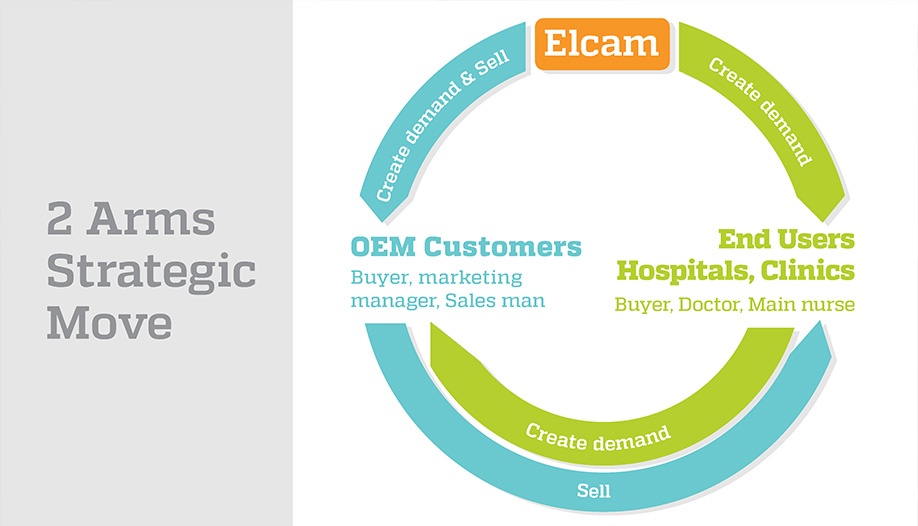
The purpose of this two-pronged strategy was to create demand with regular companies, and spark a conversation of why this product's value is high enough to justify raising its price. With increased demand generation, sales would rise.
A Risky Yet Effective Strategy
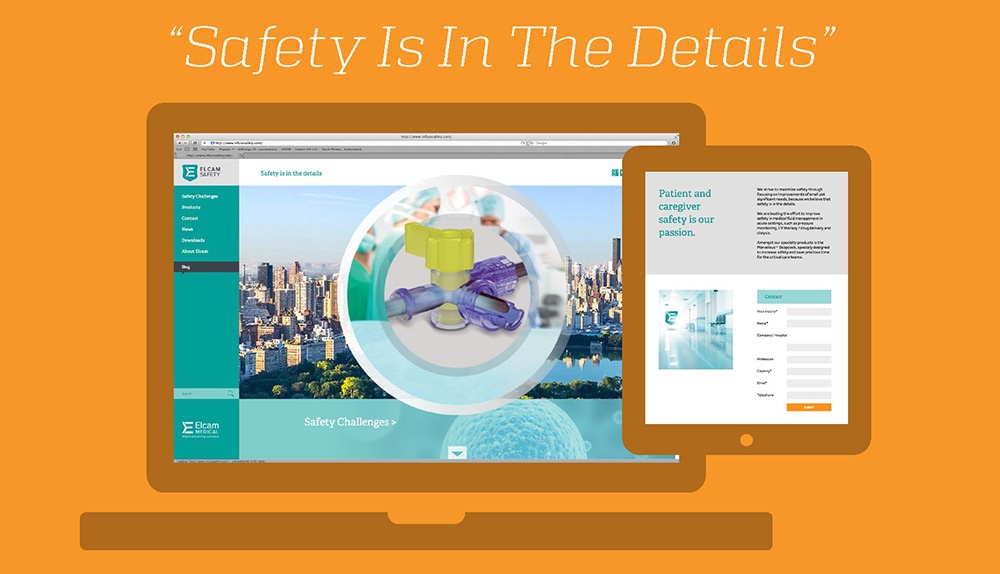
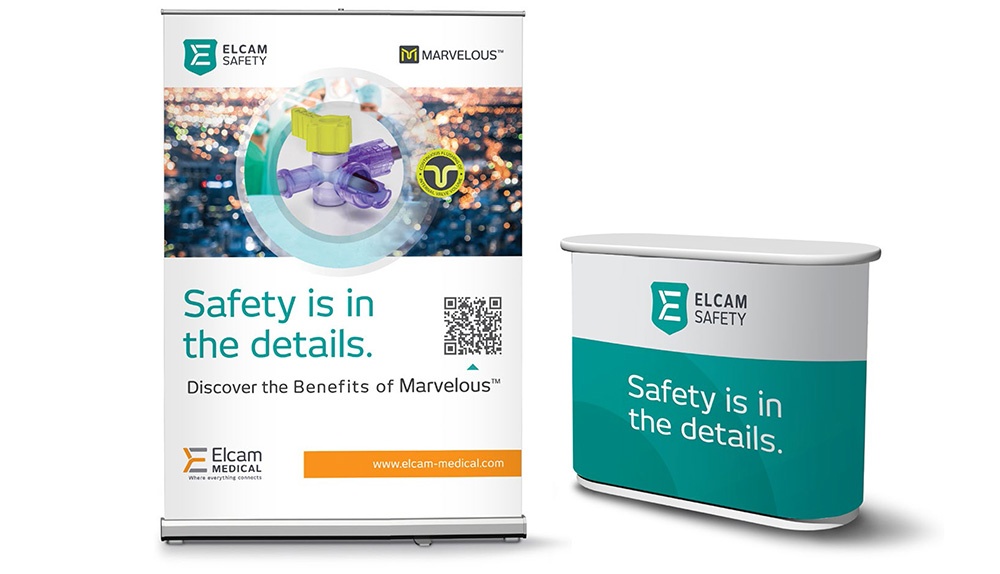
The approach Oz built with them was dramatic and involved big decisions. In truth, multi-national companies don't want suppliers talking to customers. The question became how Elcam Medical would implement its strategy without damaging customer relations. First, all project work was done with complete transparency between Elcam Medical and its customers. The customers understood Elcam Medical would not sell directly to the hospitals and since there was no conflict of interest, sales have increased as a result of this project. Secondly, the idea was to focus on a concept of concern to end-users which wouldn't affect the suppliers. Fortunately, this concept had already been thought of and built into the product and reflected in the Marvelous stopcock, specially designed to increase safety and save precious time for the critical care teams. In order to have this concept strengthen the entire brand rather than one specific product, a designated website was created to promote Elcam Medical's most important feature for the ICU nurses: patient safety.

This turned out to be the main benefit for end users. They wanted to know: How did Elcam Medical ensure patient safety? That became the agenda of the website – to position Elcam Medical as experts in insuring safety in the hospital environment, especially within the ICU.
As new products develop they will also be shown on the website. More than just a promotion of the company's latest technology, the website helps to share a lot of professional data and information among medical professionals.
In order to identify the issues and concerns Elcam Medical's end users face, 12 LinkedIn groups were identified and scoured. Blog articles were written and posted to this website addressing these topics and continue to be expanded upon. For even wider distribution and increased awareness, professional online publications are approached with these same topics, helping to position Elcam Medical as leaders in patient safety.
Online and Offline Equals 100% Success
The best approach combines online and offline marketing. Simply put: You have to get out there. In contrast to attending the usual larger medical conferences and big trade shows, Elcam Medical started to attend more targeted professional conferences of nurses, albeit with a smaller booth. Whenever possible, they tried to generate awareness by getting on the lecture panel at the conference. Of course, paid online advertising promoting these conferences helped, but at the end of the day, online activity leads to offline activity, which leads to a personal relationship. As a result of this two-pronged branding strategy, many personal relationships have developed, both between Elcam Medical and the end user, as well as between Elcam Medical and suppliers. As an example of the results generated from this type of online and offline approach, I read an email we received from a big company representative who wrote to one of Elcam Medical's representatives she had met at a critical-care nursing conference:
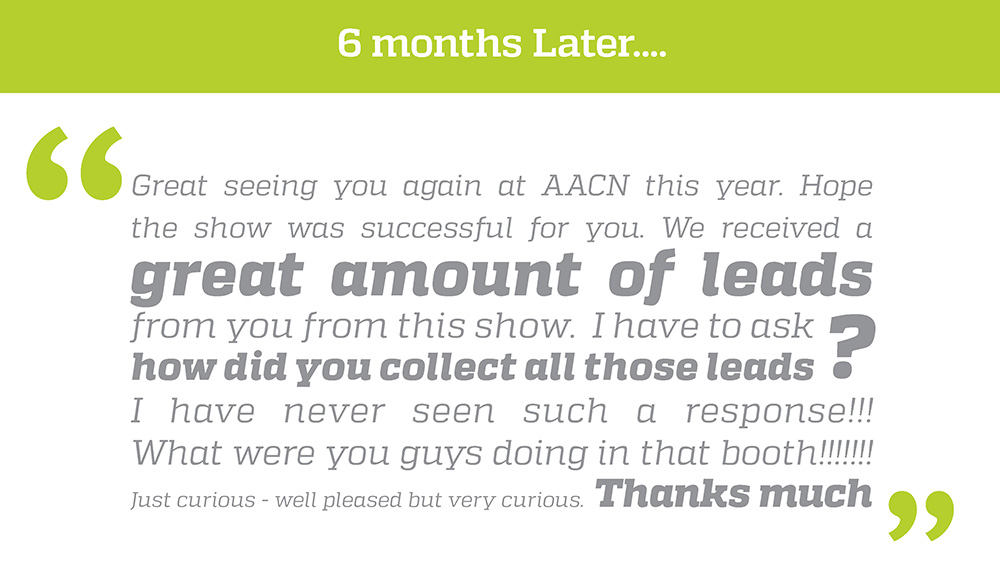
This email was sent just 6-8 months into the branding process, the results are still in process.
The shift is dramatic in that it has changed the rules of the game – Elcam Medical now talks to nurses directly, creating its own relationships with the end user, which in this case, resulted in a huge amount of leads from one particular nursing conference. It shouldn't be a surprise that sales increased by 35% in 2015, the same year that Oz started working with Marvelous.

As a takeaway from the conference, I believe that this combination of online marketing and the creation of offline personal connections can move many Israeli companies further into the international marketplace than they are today. As they expand and move abroad, I'd like companies to remember this combined approach when considering how to overcome global borders.
This is the last post in our series about the annual international B2B marketing conference this past November.

Growing Your Brand in the USA: Key Success Factors
By
Orit Oz
, 14/05/2017
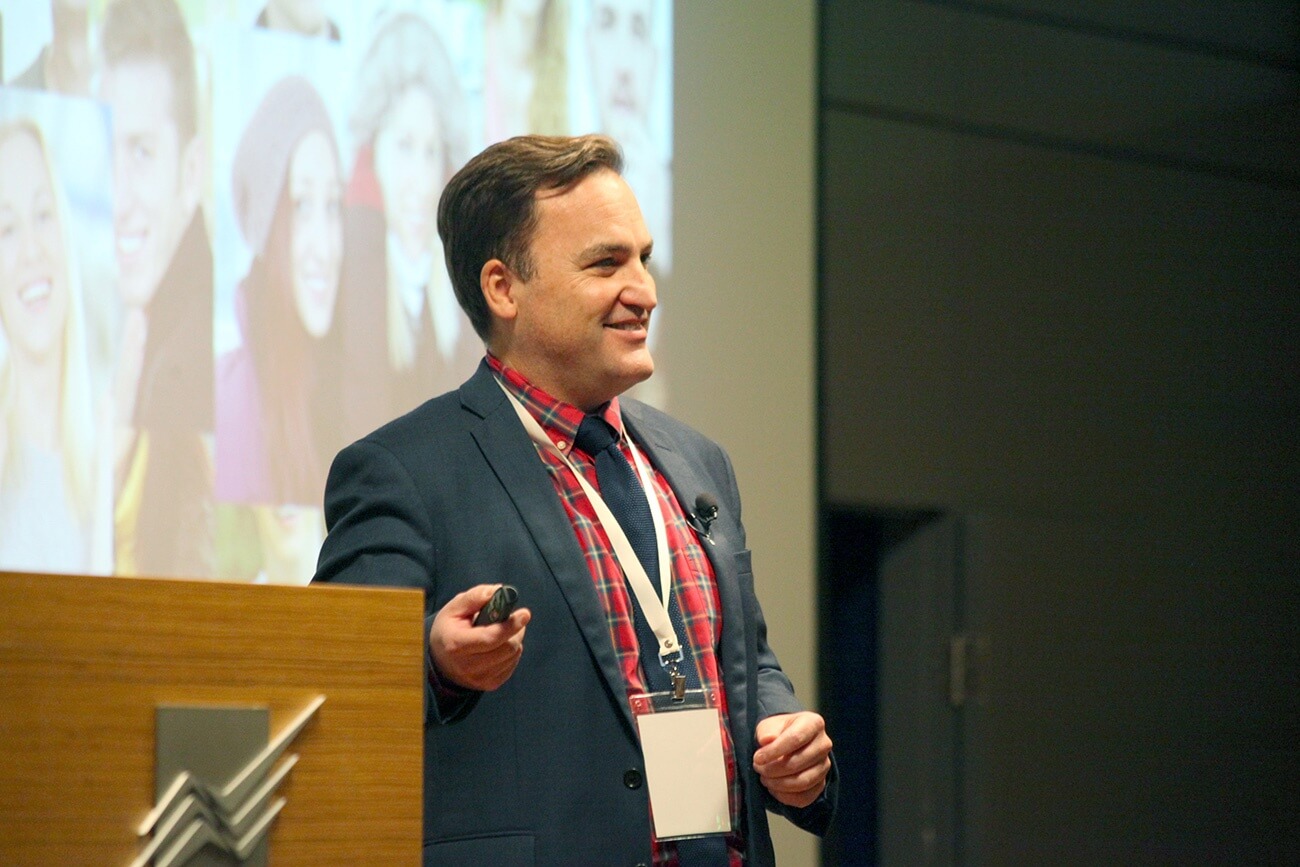
Matt Bowen, shared with us at the Global Marketing Challenges for B2B Companies the key success factors for Israeli companies to scale their product in the U.S.
Mr. Bowen believes that in addition to these factors, Israeli companies that desire to successfully penetrate the US market must be truly remarkable. We'll examine three key factors that contribute to a company's "remarkability" in this post.
Step 1 – Zoom and Focus
While the US market offers a lot of exciting opportunity for growth for any Israeli company, it is also quite diverse. The market forces can create a lot of voices, as well as choices, and your company's brand needs to be able to be heard above the noise. Mr. Bowen showed us how his company was able to zoom and focus on the market for one client, Greiner Packing, by creating customer personas. By focusing on specific personas and understanding what these personas do on a typical day, their pain points, values and possible objections to the product, his company gained a much clearer focus of who would benefit from the product and how. Here's a detailed example of a customer persona:
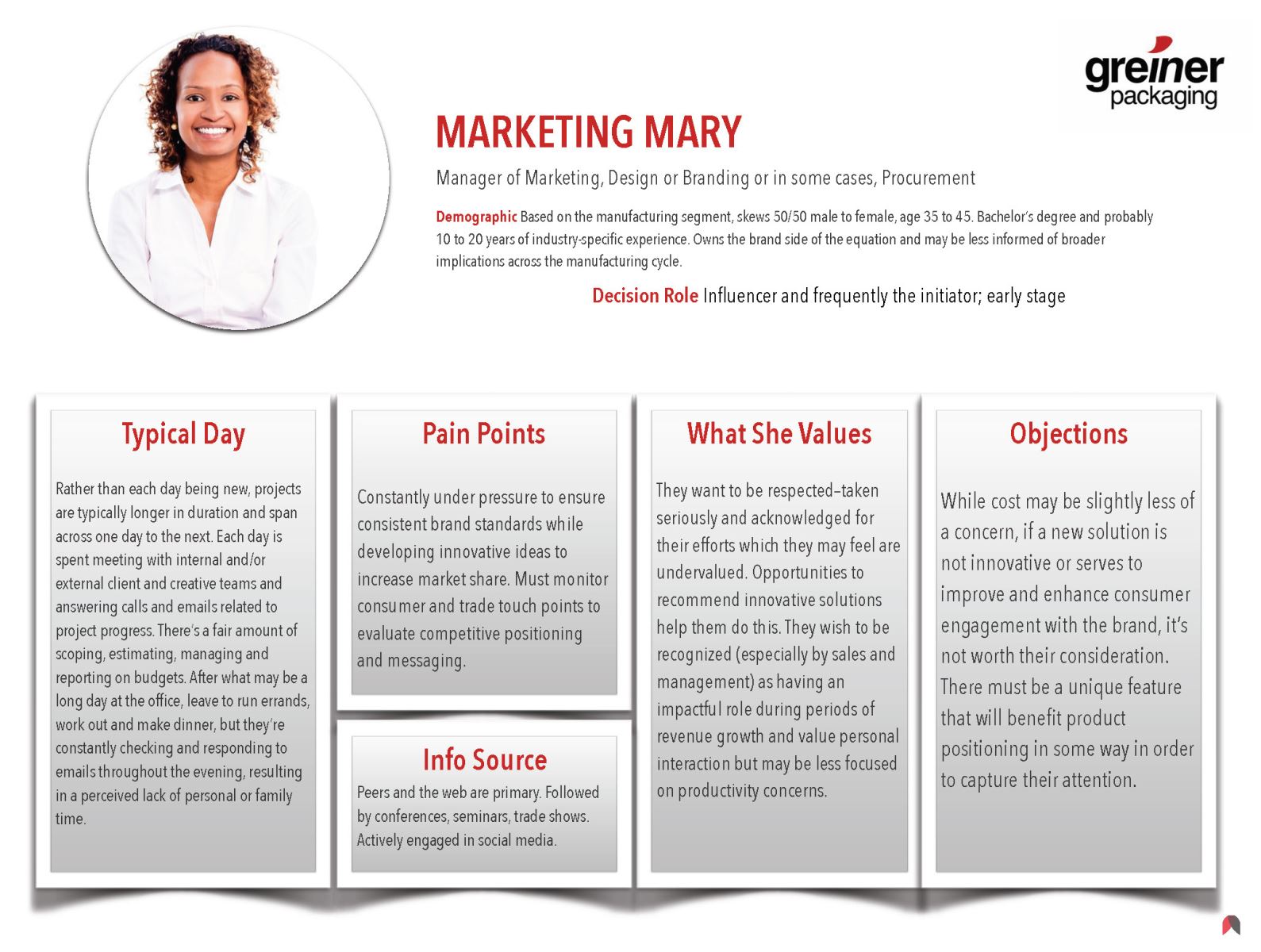
From this type in-depth understanding of your customers, you can start to build your company's story more clearly.
Step 2 - Tell a Bigger Story
From his vast experience in the field, Mr. Bowen told us: "Companies that seek to enter the US market successfully need a bigger story." That also means not overly focusing on your products or technology, but how it can make your customer's lives better. It's the customer's emotional connection to the brand that ultimately builds your customer relationships and brand loyalty.Step 3 - Cultivate Relationships to Inspire Brand Loyalty
Brand loyalty is a goal that is achieved by a journey - a journey with each customer. Through focusing and zooming in on your market and telling the right story, you'll start to build relationships. Customers with good experiences will be happy to share it with the world, especially if they believe in your product. Many of these relationships will develop into brand advocates and slowly build your brand and customer loyalty.