The BL[OZ]
AI, Sugar, and Side Effects
By
Dorin Peleg
, 30/03/2026
AI isn't a magic fix; it’s an endless candy store where it’s easy to get lost in the noise. Discover why a surplus of tools makes selection your biggest strategic challenge, and how to shift from chasing "the next shiny thing" to a purposeful process that puts business goals before technology.
Why More Tools Don’t Always Help
The problem with abundance isn’t the technology itself-it’s understanding what we’re actually trying to solve. Every tool can look appealing. It can offer automated writing, visual creation, smart diagrams, marketing content, advanced research, and more. But without a clear process, it all becomes noise. Like a child in a candy store who can only choose two candies before checkout, we need selection tools-not just solution tools.
How to Get It Right (Without a Sugar Overdose)
When we work with B2B brands, we always come back to a simple question: What do our customers really need? And what is our business goal? Once the goal is clear, the abundance of tools stops being overwhelming. It becomes a repertoire of solutions tailored to what’s needed—instead of what’s possible.- The key is: Define the need, not the tool
- Before choosing an AI tool, start with the question: What outcome am I trying to achieve? What does success look like?
- Build a decision framework Don’t let every shiny new idea set the pace. Create a structured set of questions and criteria that connect to real KPIs.
- Don’t lose the human context AI is the result of human creativity-not the answer itself.

So What Does Choice Look Like in Practice?
If we go back to the candy store-not every candy fits every moment. The same goes for AI. There are great tools for every task, but the choice doesn’t start with the tool’s name—it starts with the need. For example: When I need to generate text, I usually work with ChatGPT or Gemini. Both are fast and powerful, but the choice depends on tone, precision, and the outcome I’m aiming for. When it comes to visuals-surprisingly-ChatGPT delivers great results as well. Gemini (especially Nano Banana) excels when combining existing products, and in other cases, I like working with Midjourney or Artlist-each offering a slightly different level of control and style. For animation, I often use Freepick and Gemini-especially when I need fast solutions without fully compromising on quality. For voiceovers, ElevenLabs is almost always my go-to, delivering results that sound more natural and accurate for most use cases. And for music, while you can generate it with Suno, if you’re not a professional musician, it’s often more efficient to use platforms like Freepik, which now offer a solid and user-friendly music feature. In practice, we almost never rely on a single tool. The real choice is always a combination-between multiple tools, and between those tools and human thinking that connects them. So the real question isn’t “Which tool is the best?” It’s “Which combination of tools serves the goal most effectively?”What Actually Makes It Work
Earlier, I mentioned a confused child in a candy store. But the one who really knows how to choose isn’t the child-it’s someone with experience, knowledge, and an understanding of what to look for. Behind every valuable AI tool are people: developers, researchers, creators, designers-those who know how to connect technology to real business needs. They’re the ones who give these tools meaning. Without human intention, context, and strategy-even the most advanced tools won’t lead to real results. AI is not magic. It’s the outcome of accumulated human creativity.The Real Choice
In an age of abundance, the advantage isn’t the newest AI tool. The advantage lies in the ability to:- Choose wisely
- Execute with understanding
- Stay focused on clear, business-driven goals

Animations In The World Of Ai
By
Eliav Yosef
, 23/03/2026
AI didn’t make motion design easier—it made it more strategic. Discover how the world of animations is shifting from manual execution to high-level direction, and why the human element is now your brand's most critical asset.
Animations have been changed forever by AI — but not in the way many people first imagined. If you're a B2B marketing leader, you might assume AI-driven animations are simply a cheaper, faster way to churn out content. But this isn’t a story about replacing motion designers or animators; it’s a story about redefining the craft, reshaping workflows, and clarifying where human creativity and brand strategy in animations become more important than ever.
In 2026, creating animations with AI is not about pressing a button. It’s about directing systems, shaping narrative, and knowing where automation ends and design begins. More importantly, it is a tool that allows complex B2B brands to visualize abstract technologies through high-quality animations faster and more effectively before committing to a final, expensive 3D render.
Here is a look at the modern AI ecosystem for animations, how the workflow has evolved, and why the human element remains your brand's biggest asset.

The AI Animation Toolbox: What’s Actually Being Used
AI animation is not powered by one “magic tool,” but by ecosystems of platforms, each serving a different creative role.- Cinematic AI Video Generation: Tools like Higgsfield focus on video as cinema, not as motion graphics. They allow creators to define camera movement, pacing, and visual language using prompts that resemble directing notes more than animation instructions. These are ideal for short cinematic sequences and concept films with strong mood and intent.
- Workflow & Creative Orchestration: Freepik Spaces, Weavy, ComfyUi or any node-based AI platform represents a new category: AI as a workflow environment. Instead of jumping between disconnected tools, designers can build idea-to-video flows, experiment visually, and treat animation as a system rather than a single file. This is especially powerful for B2B studios managing complex creative pipelines.
- Experimental Ideation & Visual Exploration: Platforms like Google Labs are less about production, and more about creative exploration. They help designers rapidly test visual directions and build moodboards to explore aesthetics before animation begins.
From 2D to 3D: AI-Driven Dimensional Thinking
One of the most impactful shifts in AI animation is the ability to move from flat images to spatial scenes. Modern AI engines can infer depth from a single image, generate basic 3D structures from 2D visuals, and enable camera movement inside static compositions. For B2B brands selling complex hardware or medical devices, this is revolutionary. It allows motion designers to start with intuition and sketches, and only later move into structured 3D workflows—reversing the traditional, time-heavy pipeline.
The Right AI Animation Workflow (Step by Step)
AI doesn’t eliminate process—it demands a better one.- Concept & Narrative Definition Before touching any tool, you must ask: What is the story? Is this cinematic, playful, abstract, or informative? AI performs best when creative intent is crystal clear.
- Visual Language & Mood Exploration This is where AI shines. Designers can rapidly generate visual styles, test lighting, and explore pacing. At this stage, speed matters more than precision.
- AI-Generated Motion & Video Using video diffusion engines, creators generate motion drafts and experiment with rhythm and transitions. Think of these as rough cuts, not final films.
- Human Refinement & Direction (The Brand Check) This is the most critical step, and the one AI cannot replace. This is where designers shape timing, ensure narrative clarity, and fix inconsistencies AI inevitably introduces. Most importantly, this is where the visuals are strictly aligned with your brand guidelines. B2B brands need exact hex codes, corporate typography, and regulatory compliance—nuances AI simply cannot manage alone.

What AI Enables vs. Where Professionals Are Essential
The Democratization of Ideation: AI enables anyone to generate basic animated visuals, create short experimental videos, and prototype ideas without technical expertise. This democratization is powerful — and positive. Where AI Alone Falls Short: However, when it comes to high-stakes B2B marketing, "almost right" isn't good enough. AI struggles with:- Strategic storytelling and complex narrative structures
- Strict brand consistency
- Emotional nuance and long-form animation logic
The New Role of the Animator
In the AI era, motion designers and animators are no longer just executors of movement. They have evolved into visual directors, narrative architects, and AI system orchestrators. They act as the vital translators between brand, story, and technology. AI handles generation. Designers handle meaning.Final Thought: AI Doesn’t Replace Motion Design, It Raises the Bar
Animation has always been about movement. But today, it’s about intentional motion. The designers and marketing teams who thrive in this era won’t be the ones who master every new software update. They will be the ones who know when to use AI, when to override it, and when human judgment is the difference between digital noise and a compelling brand story. AI didn’t make motion design easier. It made it more important.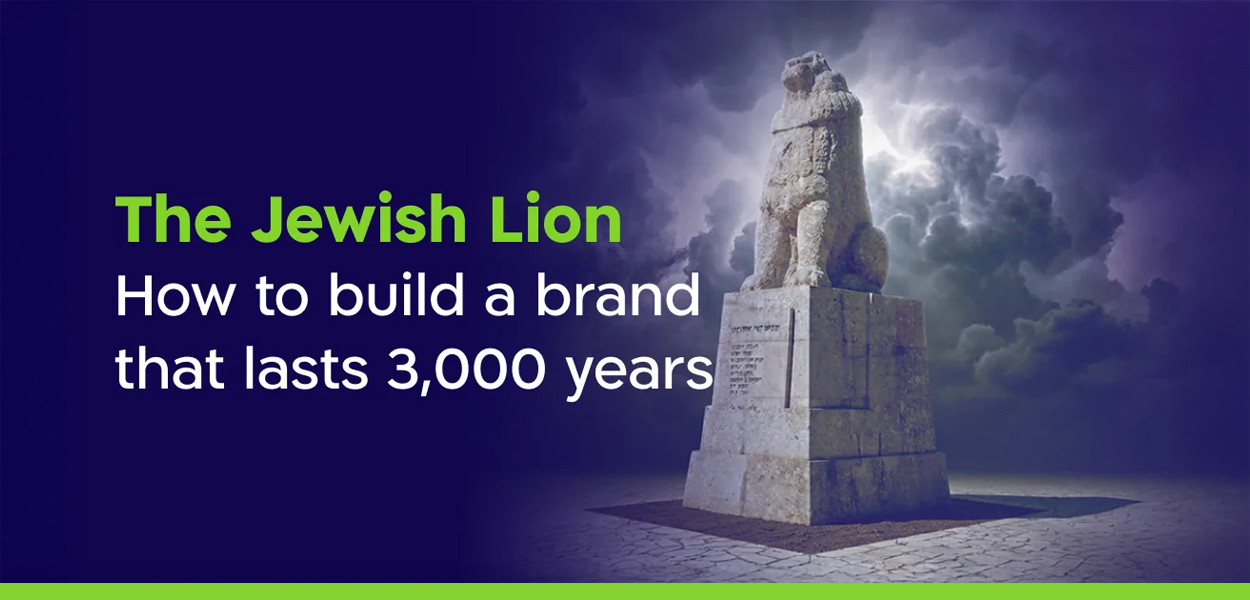
The Jewish Lion: How to Build a Brand That Lasts 3,000 Years
By
Amit Sakal
, 04/03/2026
Beyond ancient symbols: How do you build a brand that lasts for millennia? Discover the fascinating branding strategy behind the Jewish Lion – from the Bible to the modern battlefield.
How do you build a brand that lasts for millennia? If you are wondering how to build a brand that lasts for generations, the answer lies in one ancient symbol.Lately, certain names have resurfaced: “Am KeLavi” - A People Like a Lion. “Roaring Lion.”
Operation names. Security language. Headlines. But from a branding perspective, this is a fascinating choice. In an era when nations invest billions in narrative, public diplomacy, and perception management, Israel repeatedly returns to the same ancient symbol: the lion. Not a refreshed logo. Not an updated digital aesthetic. Not a passing graphic trend. A lion. And when you examine it closely, it may be one of the most consistent branding moves in human history.
A Brand That Hasn’t Rebranded Since Genesis
The story begins long before content strategy or visual systems. In the Book of Genesis, Jacob blesses Judah with the words: “Gur Aryeh Yehuda” - Judah is a lion’s cub. This wasn’t merely poetic imagery. It was a foundational positioning decision. The lion wasn’t chosen because it is the strongest animal in the wild. It was chosen because it is perceived as sovereign - a natural authority, a presence that does not need to strive for dominance. In branding terms, this is precise positioning. The lion does not symbolize reckless aggression. It represents restrained power. Not “we attack.” But “we are here - and we are not going anywhere.” That is a far deeper message than brute force.
Design in Exile: When There Is No State, There Is Still a Visual Language
For nearly two thousand years, there was no sovereignty. But there was branding. The lion appeared in synagogues, on Torah arks, in manuscripts - often flanking the Tablets of the Covenant, sometimes crowned. From a design perspective, this was brilliant: When political power disappears, you reinforce the symbol. During exile, the lion was not a call to rebellion. It was an anchor of identity. A form of brand consistency in the midst of historical chaos. Real brands are not built in comfortable eras. They are tested in difficult ones.
Zionism: Rebranding Without Losing the DNA
When modern Zionism emerged, it did not invent a new emblem. There was no dramatic visual overhaul. The lion simply shifted tone. Less mystical - more national. Less decorative - more upright. Less memory - more action. This was not a rebrand. It was a tonal update. One of the most powerful visual moments in Israeli cultural history is the “Roaring Lion” monument at Tel Hai. Not a victorious lion. Not a charging lion. A wounded lion - roaring. That is a courageous branding decision. It does not sell “absolute power.” It sells endurance. Resolve. Cost. A brand built on courage through standing firm lasts longer than one built on dominance alone.
The IDF: A Language of Consciousness, Not Just Operations
When military operations are named “Am KeLavi” or “Roaring Lion,” this is not biblical romanticism. It is narrative strategy. Operation names are never merely technical labels. They are messages. Inward - to soldiers and society. Outward - to adversaries and to the world. The lion enables Israel to position itself as restrained yet determined. Not a wild force. Not an imperial aggressor. But an actor capable of patience - and action. The distinction is subtle. And critical.
Why It Still Works
Because the lion carries rare historical depth. It bridges scripture and sovereignty. An ancient verse and a modern fighter jet. Memory and statehood. In a world where brands redesign their logos every five years, the Jewish lion is proof that true brand equity is built across generations. Not through trends. Through consistency.
What Can Branding Professionals Learn From This?
- A strong symbol doesn’t need to shout constantly.
- Deep brands are anchored in story, not aesthetics alone.
- Long-term consistency outperforms cosmetic refreshes.
- Restrained power is a strategy - not a weakness.

Don’t Be Afraid of the Monster: B2B Websites Aren’t Actually That Scary
By
Naomi Lifshitz
, 01/12/2025
When B2B sites become complex, smart design brings order and clarity — guiding users, strengthening trust, and helping them move forward with confidence.
“Honestly? Above everything else, it just looks like you’re really enjoying working on this.”
And she was right. I really am.
Because websites are one of the things I love most in the world.
Why do B2B websites always seem a bit more intimidating?
When people hear “B2B website,” they immediately imagine something heavy: catalogs, products, integrations, CRM systems, and a content tree with thirty pages. And it’s true - this isn’t the website of a jewelry shop or a restaurant. But that’s exactly what makes it interesting. When handled correctly, this complexity turns into clarity.
So how do you actually make it simple?
A website is not a filing cabinet that needs to store every piece of information accumulated over the years. It needs to be focused and relevant. In almost every B2B website I work on, the same pattern repeats itself — templates that help organize the information clearly. And once every piece of content knows where it belongs, everything starts to fall into place. There’s the product - sometimes physical, sometimes digital, sometimes an entire range that needs to be sorted into a clear catalog. Sometimes products are scattered across applications, technologies, or different solutions. In those cases, it’s better to centralize everything under one catalog with smart filtering. This preserves a clear hierarchy and creates a smooth, intuitive user experience. Behind the product lies the technology, which often interests professional audiences and differentiates the company from competitors. On this page, we presented technical and seemingly “dry” information — but in an airy, clean, and clear way. We added a scrolling visual element inspired by the client’s industry, which made the page feel less mechanical and more pleasant and flowing. Then there are the industries or segments where the product operates — because in B2B, there is no “everyone,” only context. There’s also the company’s reputation, the services it provides, and the people behind the scenes. On the Agmatix website, we organized the entire Case Studies archive in a simple, comfortable way. “About” and “Management” pages are almost always among the most visited. Because even in B2B, people look for people. They want to see faces, understand who stands behind the company, and sometimes even recognize someone they know. Look at this innovative About page we created for trendlineslab, It’s innovative because it’s not just “About” - it tells a story. A brand is a story, and that’s exactly what users feel here: a short, clear journey that presents the company through a narrative rather than dry text. And then there’s one of the most important parts — knowledge hubs B2B customers aren’t looking for slogans; they’re looking for information. Articles, guides, real-world examples, case studies. Knowledge that builds trust.Staying focused throughout the process
One of the biggest challenges in B2B website projects isn’t necessarily design or technology - it’s the people. Every company has several departments with different viewpoints: marketing, sales, product, support, leadership. Everyone has something to say - and rightly so. But if each person sees the website as theirs, the project quickly spreads in all directions. The solution is to work with a small decision-making team: three to four key personas representing the core needs. They don’t need to agree on everything - but they do need to speak the same language and hold the same goal. Once you have that core, every decision becomes easier.
And what about all the content?
Almost every company has a sea of materials - presentations, brochures, PDFs, guides, old documents. Instead of trying to “fit everything in,” it’s better to start with the opposite question: What does the user actually need to know here? Not everything needs to become a page. Topics like customer stories, updates, or technological innovations are often better as blog posts or part of the Resources section. Blogs are an excellent way to add knowledge and context without overwhelming the site. You can write about almost anything, and the volume can be endless. You can always enrich the content hub, and with smart filtering, still maintain order and clarity.Functionality comes first
Not long ago I finished designing an especially complex website - catalog-based, with many digital tools and templates. What made it truly successful was its functionality: clear, intuitive, and easy to use. Visitors know exactly where to find what they’re looking for - and to me, that’s the biggest achievement. B2B websites are, first and foremost, work tools. They need to be functional, comfortable, and clear for users. That doesn’t mean giving up on design - the opposite. A modern look that conveys innovation is part of the message: if the website feels up-to-date, the user will feel the company behind it is moving forward. Like on the Aquestia website, where we highlighted the certifications clearly.It’s all a matter of mindset
If you approach a B2B website with fear - it really will feel like a monster. But if you approach it as a process of organization, structure, and listening - everything becomes clear. A good website doesn’t need to be big, it just needs to work. And to me, that’s the heart of it: turning complexity into clarity - step by step, methodically, and with a small smile along the way.
Rules, Regulations & Medical Brands How your medical brand can stand out within the regulatory framework
By
Nirit Elyovich, MBA
, 15/08/2024
Balancing marketing ambition with regulatory compliance is no easy task for medical brands. Our latest blog explores how early collaboration between marketing and regulatory teams can transform these challenges into opportunities, ensuring your brand stands out while staying compliant. Discover the smart strategies to help your brand shine within the regulatory framework.

When the journey takes an unexpected turn
During branding strategy kick-off meetings, we take a deep dive into your product, technology, and service. We’re looking for a fresh perspective, a promise not yet made, a story yet to be told. At this point, we get excited as we hear about groundbreaking technologies, solutions, and life-enhancing, life-prolonging products. Our jaws drop. With this WOW feeling, we continue the learning process in which we talk to customers, analyze the competition, and create a multi-participant meeting within the company to fine-tune its significant and differentiated strengths and generate outstanding benefits for its customers. As the process continues, we begin to understand the regulatory limitations. Suddenly, “Cinderella”, your extraordinary technology is being held back by regulatory limitations and is covered with “soot”.
Understanding limitations and optimizing capabilities
During the process, we’ve heard “It’s a given” or “It's powerful, but I can't confirm it" more times than we can count. Responses like these made us understand there must be a better way. That’s how our new module was born. It’s placed right at the beginning of the branding strategy process, which sets the stage for an open and guided dialogue between marketing and regulatory early on.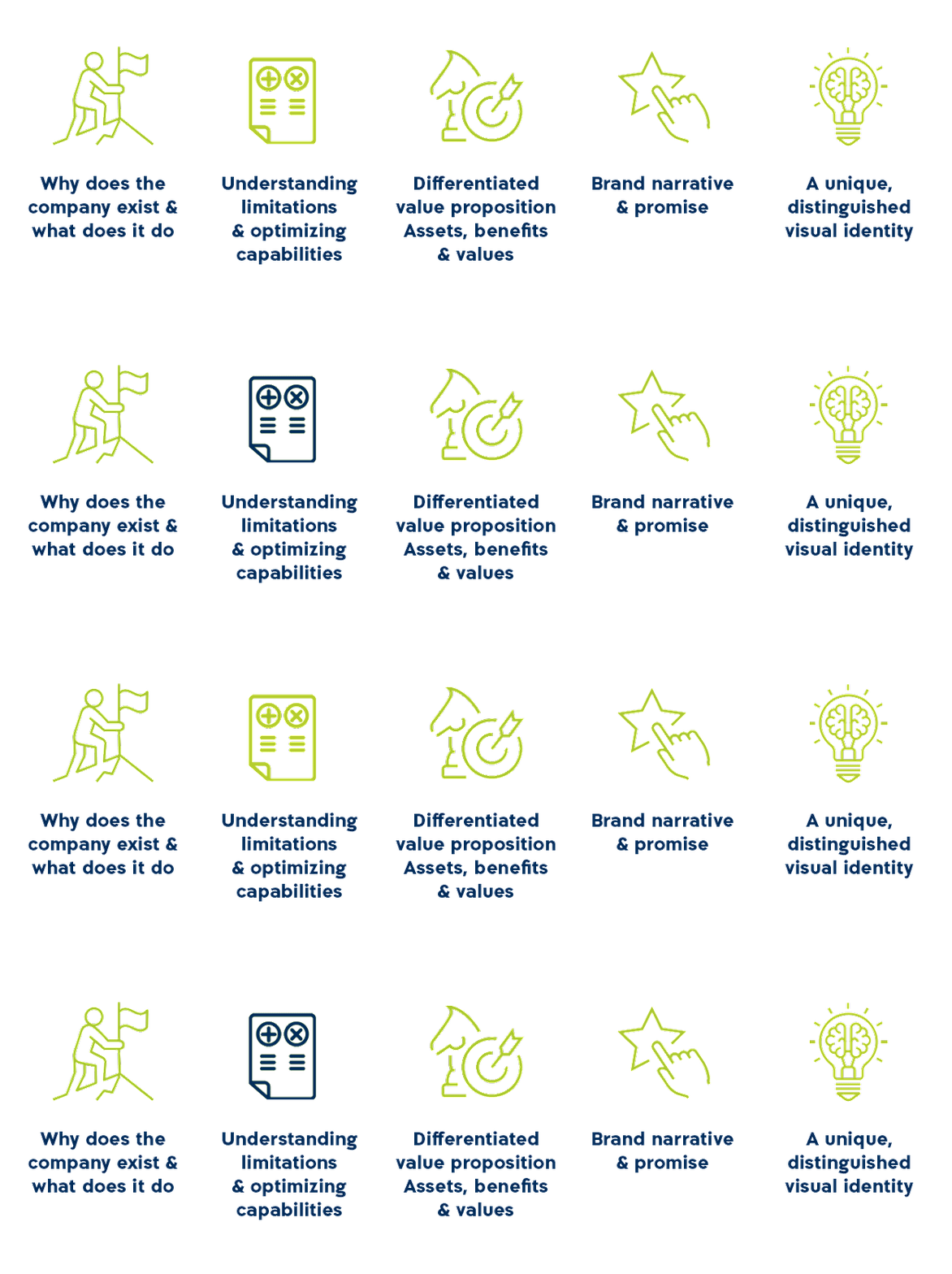
Challenging the norms
This dialogue is about helping the marketing team to understand the limitations in depth, and for the regulatory team to delve into the marketing team’s needs. It’s an authentic dialogue that creates a space to carry out activities that weren’t possible before. Understanding the precise needs opens up new perspectives and enables solutions within the boundaries of regulations. We understand the importance of compliance, but our experience shows that there are many degrees of freedom that are not being tested.It’s not about overstepping the bounds of the approved claims, but we also don’t want to take a step backward in the name of conservatism.
Sometimes it's a matter of overall wording, sometimes it's just changing one word. It's the little things that make a big difference. Stopping to ask questions often gives you a competitive advantage. Sometimes, there won’t be any flexibility in the claims you make, but at least you’ll know that you’ve turned over every stone.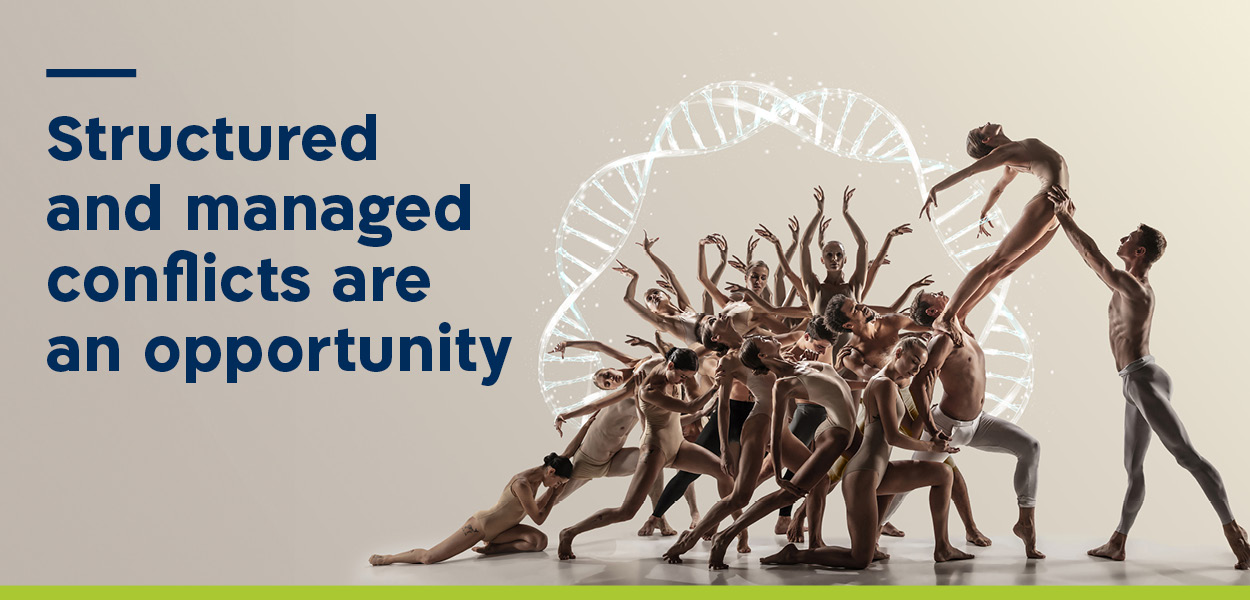
Structured and managed conflicts are an opportunity
Remember, whoever sits at the decision-making table wants the company to succeed and do the best they can. Inherently, conflict is not a negative; it can also be an opportunity. Don't let emotions run the process. As we often say, “Don’t be right, be smart!” As with every relationship where there’s an inherent conflict, there’s great value in professional guidance to create the conditions for a productive dialogue. To meet this need, we’ve created a special collaboration between OZ Global B2B and Leap, led by Moran Faibish, who has extensive experience in leading marketing in global medical companies. Moran has hands-on experience in bridging the gap between marketing and regulations to create deep and unique brand promises — promises that aren’t possible without providing an informed and professional framework that enables constructive communication.Play smart
The more we play smart within the regulatory limits to make the most of your claims, the more we can create a differentiated value proposition that more accurately reflects your breakthrough technology. This is how your brand will shine. We’ll be there every step of the way to guide the process, refine the messaging, and make sure your “WOW” comes through loud and clear. If you’ve nodded your head while reading this, it’s time for us to talk.


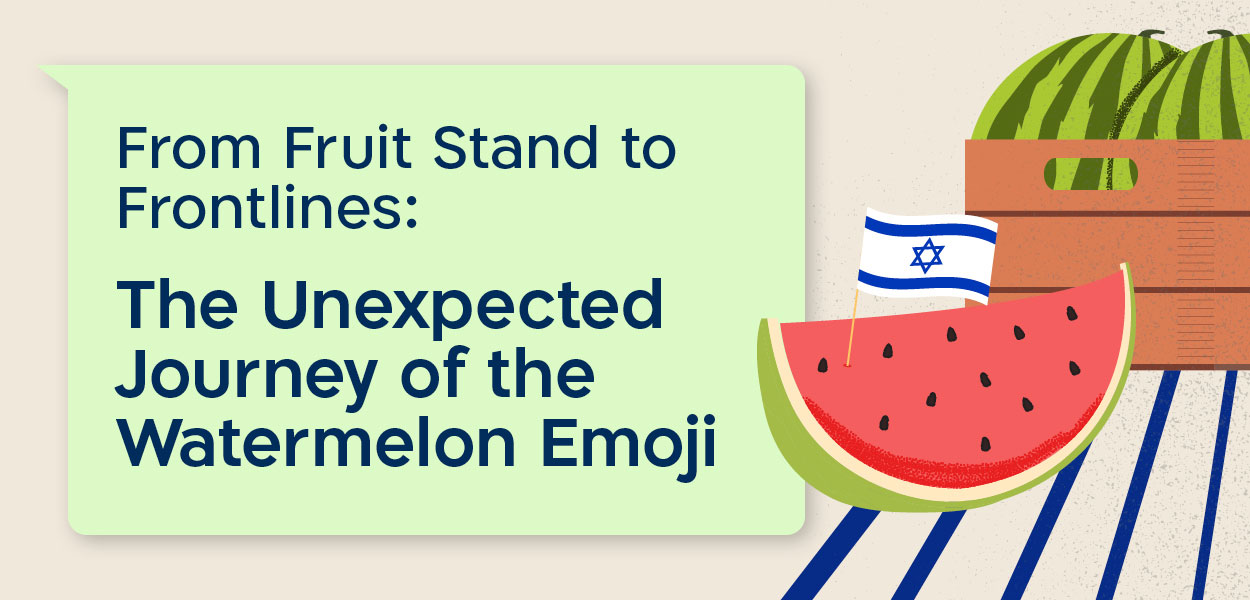
From Fruit Stand to Frontlines: The Unexpected Journey of the Watermelon Emoji
By
No items found
, 25/07/2024
Navigating digital symbolism can be intricate, but the case of the watermelon emoji adds a unique layer of complexity. It’s a prime example of how symbols can shape online narratives and influence global perceptions. This post uncovers the strategic use of the emoji and offers actionable ways to support pro-Israeli voices in the digital arena.
But first, a disclaimer: My name is Rivi, and I'm a proud Zionist (I believe in the Jews' right to self-determine in their ancestral homeland).
In recent years, while immersed in the online world of Hasbara, I’ve witnessed firsthand the challenges of representing Israel's narrative in a vast digital landscape. With Jews comprising just 0.2% of the global population, our voice can easily be drowned out in the maelstrom of social media.
This blog post examines a fascinating case study in digital activism: how a simple fruit emoji became a battleground for narrative control. We'll explore the marketing strategies at play and their implications for Israel's online presence. While we analyze these tactics objectively, our goal is to empower pro-Israeli voices in this ever-evolving digital dialogue.
At the end of this blog, you'll find actionable recommendations on supporting content creators who are amplifying Israel's perspective in the online world.
The Roots of a Symbol
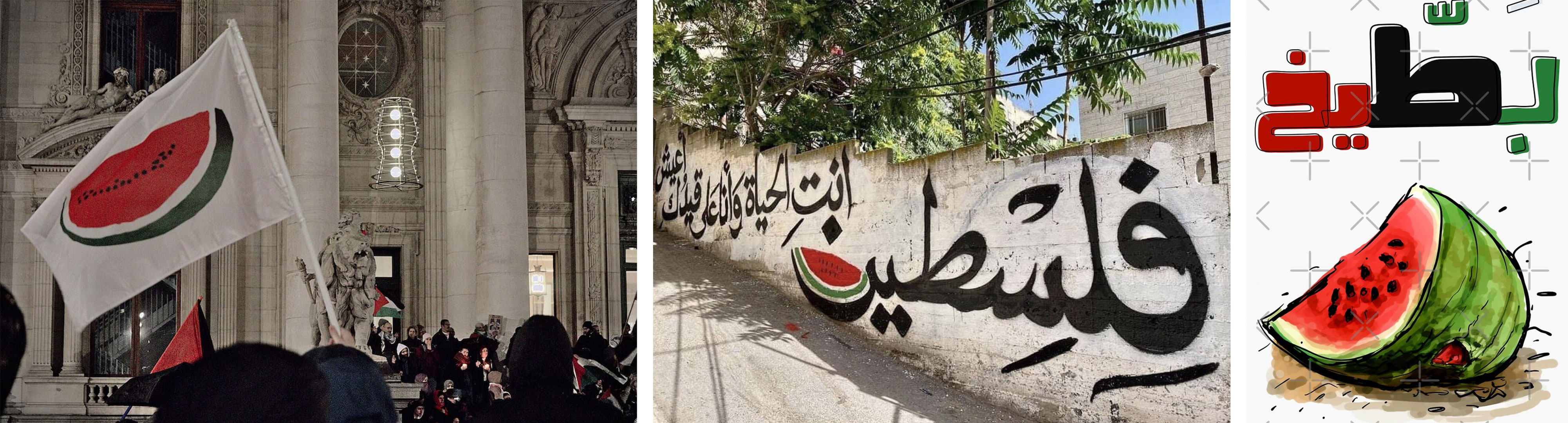
As we approach National Watermelon Day on August 3rd, let's slice into a juicy marketing tale that's more complex than meets the eye. It's the story of how a simple fruit emoji became a powerful symbol in one of the world's most enduring conflicts. The roots of this story begin back in the 1960s, when the watermelon, with its colors reminiscent of the Palestinian flag, became a covert symbol of Palestinian identity. Palestinian activists used the watermelon imagery in graffiti and posters, primarily because in 1967, Israel passed a law prohibiting the raising or display of Palestinian flags (which had been canceled, during the Oslo Accords in the 1990s). The watermelon became a symbol of political resistance, and if we fast-forward to today's digital age, this symbol has found new life as an emoji, skillfully wielded by pro-Palestinian activists in their online narratives.
A Clever Marketing Strategy
But here's where it gets interesting from a marketing perspective: the use of the watermelon emoji isn't just a random choice. It's a clever strategy that serves multiple purposes:- Bypassing Algorithms: By using an innocuous fruit emoji, activists can often fly under the radar of content moderation systems. It's a digital sleight of hand that marketers call "Algospeak."
- Viral Potential: Emojis are the universal language of the internet. They're easy to use, easy to share, and can convey complex emotions and ideas in a single character. It's virality in its purest form.
- Continuity of Message: By adapting a historical symbol to modern digital platforms, the pro-Palestinian movement maintains a consistent narrative across generations. It's brand continuity at its finest.
The Israeli Perspective
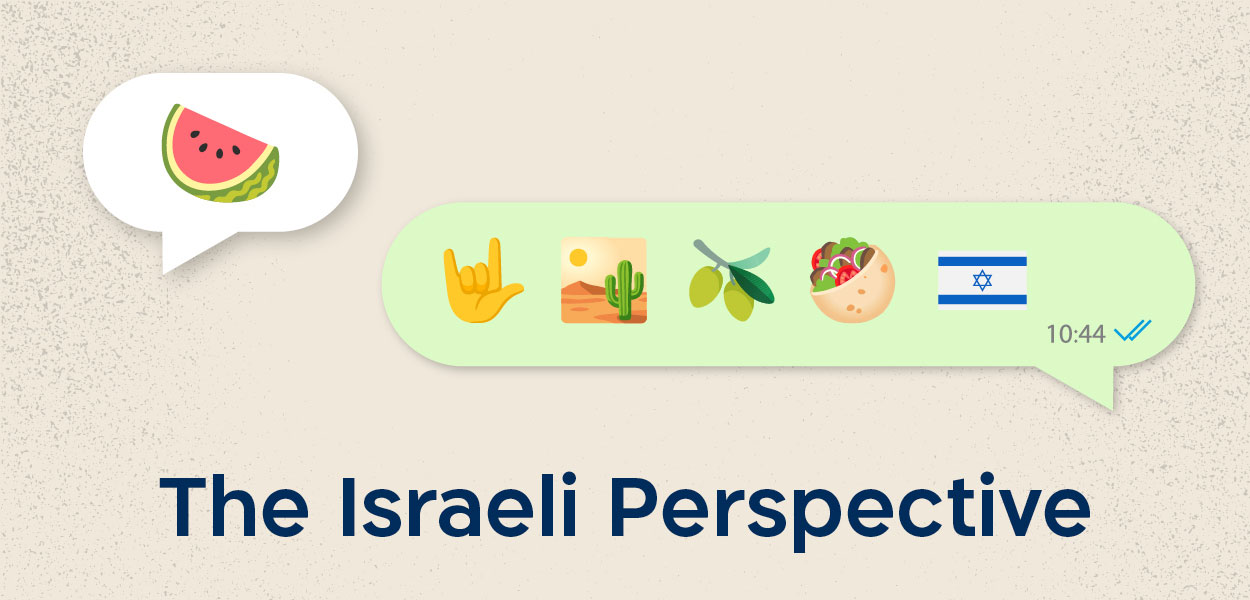
Yet every story has another side. In Israel, where watermelons are a staple of hot summers and where the country produces a whopping 140,000 tons annually, this digital co-opting hasn't gone unnoticed. Enter the counter-narrative: Pro-Israeli social media users have begun their own campaign to reclaim the watermelon emoji. It's not about fruit anymore; it's about identity, representation, and the power of symbols in the digital age. Some Israeli users have started adding emojis of the Israeli flag, watermelon, and yellow ribbon (for the hostages) to their usernames, while others are creating actual content around watermelons: recipe videos, which are inherently popular on social media, featuring watermelons with the Israeli flag proudly displayed in the background. Other users (typically younger ones) are simply riding existing trends, adding watermelon eating to dances, trendy sounds, and more. Some have gone as far as creating simple online games centered around watermelons, while pro-Israeli creators are directly addressing the appropriation of the watermelon as a Palestinian symbol, calling it an unfounded act.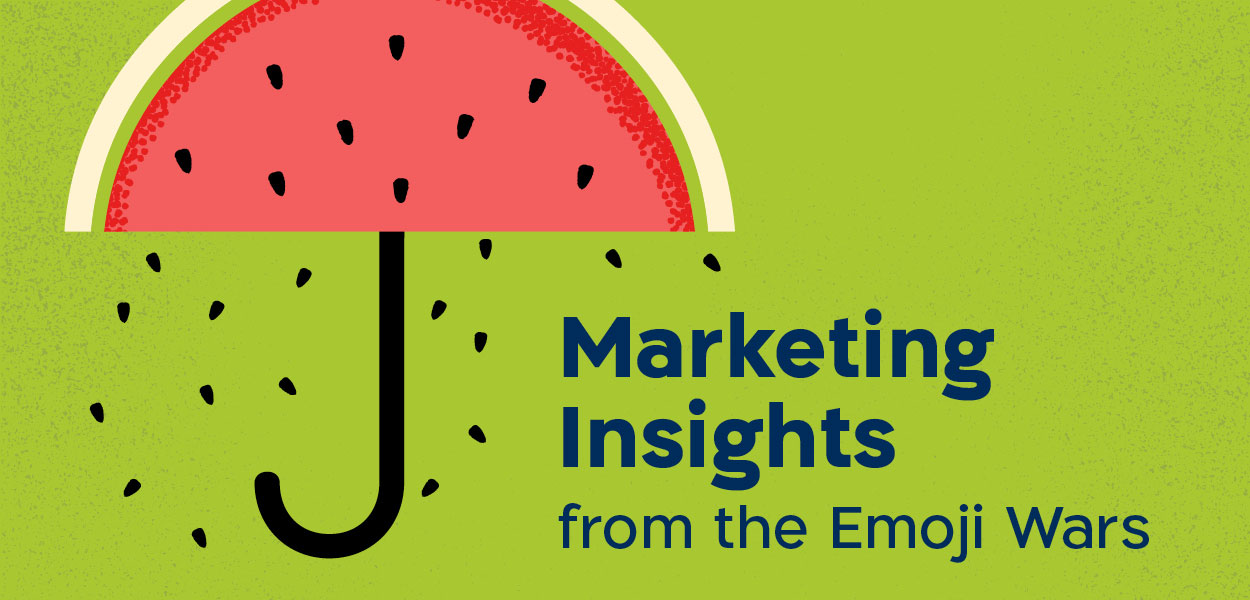
Marketing Insights from the Emoji Wars This digital tug-of-war offers fascinating insights for marketers:
- The Power of Symbols: Who knew a fruit could carry so much meaning? It reminds us that in the right context, even the simplest symbols can convey complex messages.
- The Importance of Proactive Strategies: The pro-Israeli response underscores the need for brands to be vigilant about their symbols and ready to reclaim them if necessary.
- Authenticity Matters: The most effective responses are those rooted in genuine cultural connections. Israel's agricultural tie to watermelons provides an authentic base for their counter-narrative.
- David vs. Goliath in the Digital Age: The pro-Palestinian digital presence significantly outnumbers the pro-Israeli one. It's a reminder that in the world of digital marketing, it's not always about who's loudest, yet sometimes it is.
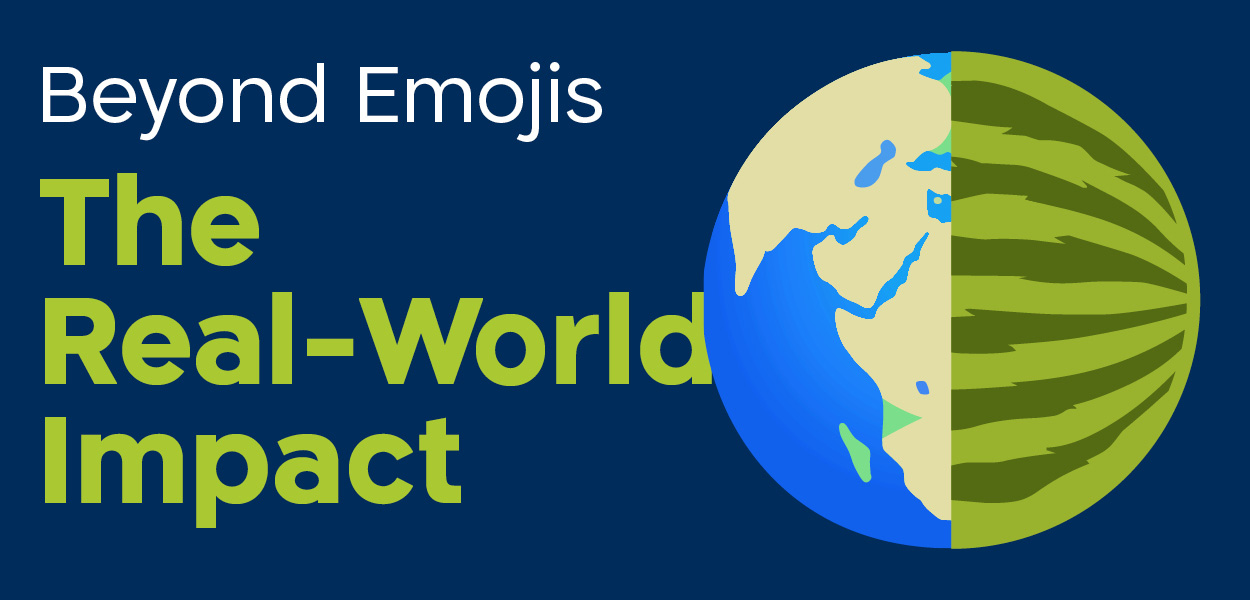
Beyond Emojis: The Real-World Impact
While we engage in digital discourse, let's not forget the real-world stakes. Our brave soldiers are fighting daily to protect our nation and bring our hostages home. This online 'battle' is more than just emojis and trends; it's our way of supporting Israel's narrative on the global stage. As we participate in these digital efforts, we stand united with those on the front lines, showcasing the resilience and spirit of the Israeli people. Every post, every share, is a small act of solidarity that contributes to our national strength and resolve. In this digital age, we all have a role to play in supporting our country and its values.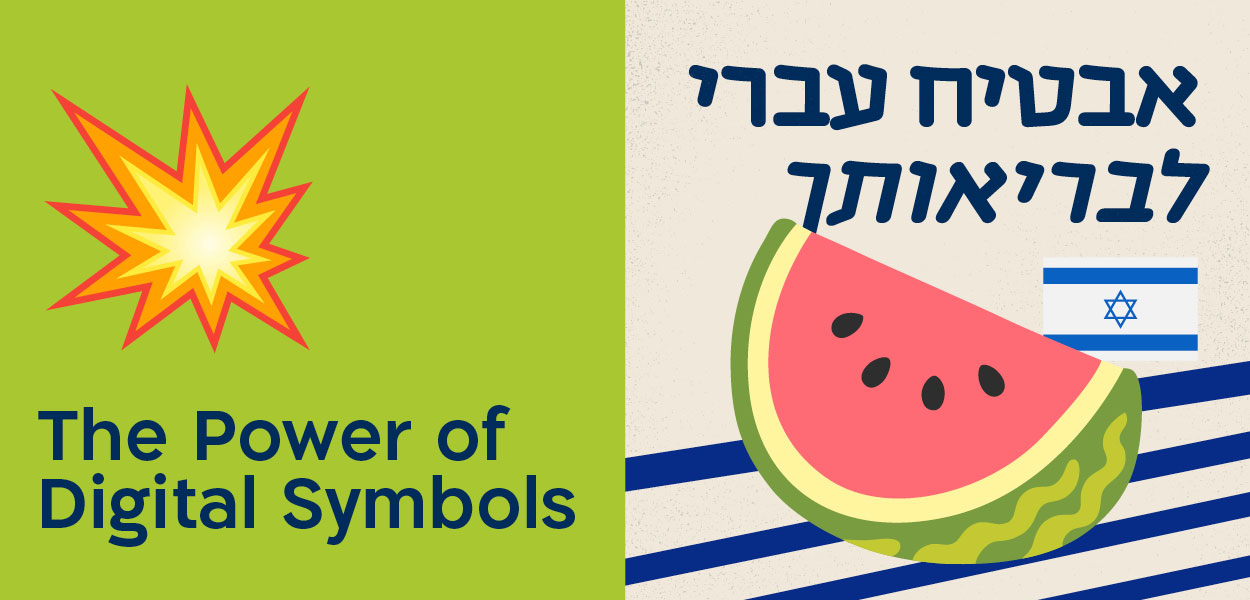
Conclusion: The Power of Digital Symbols
This National Watermelon Day, as we enjoy this summer fruit, let's also appreciate the complex world of digital symbolism it represents. It's a world where marketers, activists, and everyday users are constantly innovating, adapting, and yes, sometimes battling, in the ever-evolving landscape of online communication. After all, in the grand fruit bowl of digital marketing, the watermelon has proven it's not just a seasonal favorite – it's a year-round player in the game of global narratives. Join the Digital Movement Want to show some love to Israeli content creators this Watermelon Day? Here are a few ways you can contribute: 1. Follow prominent Pro-Israeli content creators: Adiel - TikTok Instagram Montana Tucker – Instagram TikTok Baby Ariel - TikTok Instagram Michael Rapaport – Instagram Tiktok Daniel Ryan Spaulding - Instagram TikTok Mia - TikTok Instagram Stop antisemitism – TikTok 2. Like and share posts featuring the "Hebrew Watermelon": instagram instagram tiktok tiktoK tiktok tiktok tiktok tiktok tiktok 3. Feeling creative? Use this trending TikTok sound to make your own Watermelon Day video: Tiktok Remember, this upcoming Watermelon Day might see increased pro-Palestinian activity on social media. For those of us who are pro-Israel and want to contribute, the methods mentioned above are a great way to start. Every like, share, and post counts in this digital age of narrative shaping. Let's make our voices heard while remembering the real battles being fought and the importance of standing united for Israel.
Stars are born. Winning B2B brands are built over time.
By
Nirit Elyovich, MBA
, 07/07/2024
Brand building is always complex, but B2B brands bring a whole level of complexity that simply doesn’t exist in the B2C world. It's a golden opportunity to create a one-of-a-kind standout brand promise that will make a difference in the world.
Building a new brand or giving an existing brand a facelift, is a golden opportunity to create a one-of-a-kind standout brand promise that will make a difference in the world. Building a significant brand is complex, but B2B brands bring a whole level of complexity that simply doesn’t exist in the B2C world. Decision-making processes are lengthy, decision-makers come and go, and increasingly, the decision-makers are Gen Y and Gen Z. The road to the end user is paved with importers, distributors, and dealers. The orientation of most of the people you are working with is engineering or sales. Your brand needs to make its way into everyone's hearts on the long and winding road ahead. From time to time, I still hear that "in the business world, people make rational decisions." In my experience, people are people even when they sit in the decision-making chair. Their considerations are professional, business, and personal and the brand needs to touch all these points
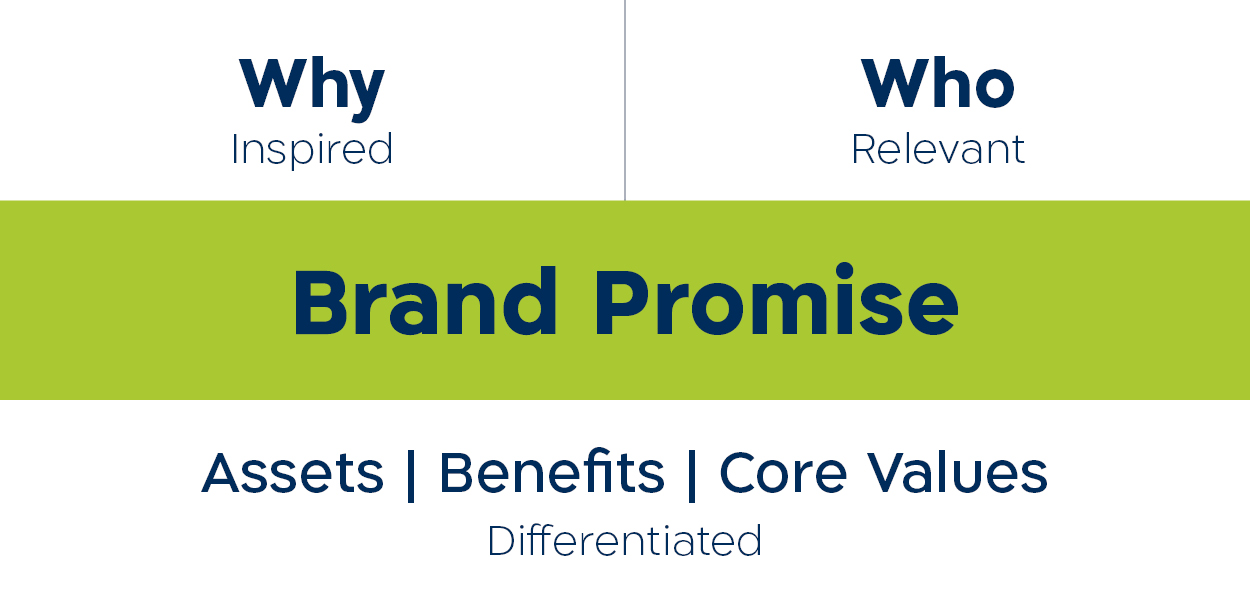
A meaningful brand must be relevant, differentiated, and inspired1. Be relevant
Before you begin, define your audience. Unlike launching a product line that appeals to distinct customers, a B2B brand speaks to a wide range of audiences – existing and potential customers, employees and candidates, investors, suppliers, opinion leaders, and influencers.
However, you operate in a very specific world, so finetune the audience that interests you and create circles of influence. Who is in the first circle and who is in the more distant circles? The brand needs to speak directly and accurately to members of the first circle and still be relevant to other circles.
To be relevant, you need to know your audience, what their challenges are, and where you can help them deal with their challenges well. To motivate people, we must touch their “operating” buttons, speak their language, and solve the problems that bother them. We want to sell them what they want to buy and not what we want to sell — even if it's the same thing.
2. Build a differentiated value proposition
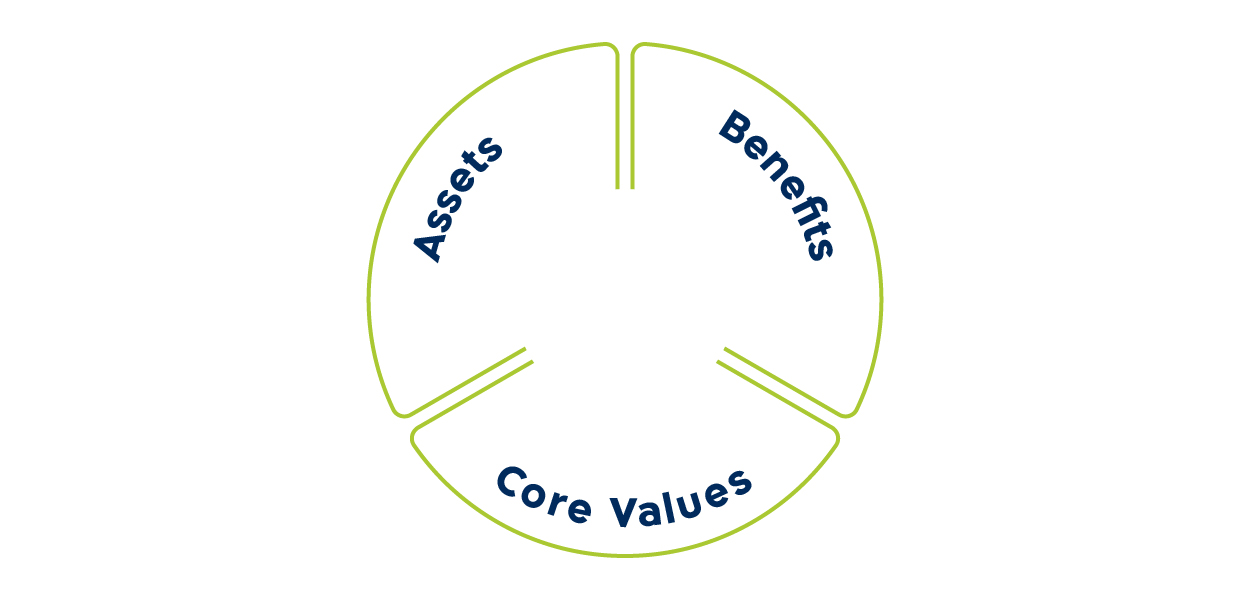
To build a differentiated value proposition, start with A, B, and C: Assets, Benefits, and Core Values. Assets – What are your biggest assets? What strengths are you most proud of? Make a list of the things you're best at – unique patented technology, people with unique knowledge, exceptional support and service, and more. Make sure that every strength that makes up your list is grounded in reality, and not an aspiration for something you'd like to have. From the list, extract the three most significant strengths. As much as possible, select those that differentiate you from the competition. Benefits –Step into your customers' shoes and think about what they get out of your strengths. This is where you ensure that you provide professional benefits that help them upgrade their professional field; business benefits that contribute to their business performance; and no less important, personal benefits. Ultimately, everything is personal simply — because people want to make sure that choosing you promotes their reputation within the organization. Core Values – Brand values are always important, but even more so in the B2B world. People are an integral part of your value proposition – whoever defines the specifications with the customer, develops, sells, installs or integrates, provides service and support – all these and more bring the brand to life. They must follow a uniform set of values to ensure that they deliver the benefits to the customer and subsequently deliver on the brand promise. If the company was founded recently, the values may be naturally infused into the brand. If the company is alive and kicking, the values are usually passed down over the years. Make sure the values reflect the company's DNA.
There's nothing new under the sun You may find that your competitors have an asset, benefit, or value that appears to be similar to yours. However, the combination of assets, benefits, and values must be unique to your company. That's why starting with unique assets and formulating benefits that address your clients' deep and diverse needs is important.
The more you get to know your clients, the more likely you will produce differentiated benefits. This is another opportunity for differentiation: your founders, owners, and significant employees are the unique spirit that makes your company what it is.
3. Bring inspiration to life with a promise
To make sure your brand inspires you and everyone you meet, go back to your vision. The thing that fascinated you when you started your business or that attracted you to join the company. The reason you get up in the morning and go to work. The North Star lights the way for you, even on days when visibility is poor. Your vision is an ambitious statement that describes what your organization ultimately wants to be. Spoiler alert: you're not supposed to get it, you’re supposed to aspire to reach it. As Aviv Geffen put it, " The moon is so high up there that we can't touch it, and there are some who are still trying.” Your vision is there to lift you high above your daily activities and inspire you.
Building or refreshing a brand is a strategic task
Don’t cut corners. Enjoy the journey as much as the destination. Get as many people involved in the process as possible to make everyone feel a part of it. This is how to make them the best ambassadors for your brand.
Formulating a brand strategy is an extremely important and complex process, but it’s only the beginning. From now on, the entire organization has to fulfill it, to bring the brand into the lives of those who experience it exactly as you intended. In the B2B world, your brand will touch a lot of people for many years to come. Make sure that everyone has the same experience, irrespective of the language they speak.
A brand is a promise. A strong brand is a promise that is fulfilled every day in every encounter between the brand and the world.
Branding 101 – The Branding Process Explained
By
Inbar Telem
, 03/09/2023
Want to know the secret sauce of branding? Our latest blog post has it all! Learn how inspiration fuels our journey, how design brings brands to life, and how businesses evolve through effective branding. Click here to uncover the branding recipe for success!

Step One – How to Start the Branding Process for a Business?
The start is life itself, because every day we're exposed to hundreds of messages, ideas, videos, texts, and images. Later it all comes together, and our mind begin processing all these inspirations into new, original, and unique design and language for a specific client. At Oz, we make sure our team, in this case, our designers, is exposed to diverse content worlds and various content styles. This opens up their minds to creativity, from which different brands for different companies can blossom (even if they're in the same industry, they'll create something unique and original – that's the beauty of it!). The branding process for a business begins as a strategic process where we research and analyze the brand, the product, the company, or the service – and answer the age-old questions – what is the company's vision, what makes the company special, what customers expect, and what the competition offers. To differentiate the brand effectively, it's essential to examine competitors – what visual and textual language they use, what messages they convey to the world, and what their customers think of them. During this examination, we come across tons of content and inspiration on the web, and it's a fantastic process. All the research and in-depth analysis, combined with the ideas and inspirations, meld together to form the foundation of the brand – the unique value proposition, the narrative, the promise, and the brand's values.
Step Two – How to Implement the Branding Process?
This is the step everyone seems to be familiar with – the name, logo, fonts, color palette. Supposedly. Since everyone talks about this step, it's crucial to understand that without a solid foundation and thorough research, it won't work. The brand's cornerstones (based on the strategic messages, remember?) need to be creatively and visually translated into the brand's language – both in verbal elements (the brand's name and slogan) and visual elements (the logo, fonts, shapes, and colors). The brand's domain, characteristics, and values will be expressed through its visual appearance. Importantly, the design should not only be eye-catching but should also have longevity. Trends come and go, but your branding should remain stable for years. Our designers have the ability to translate the emotional world into the visual world, making your target audience express positive emotions, identify with your brand, and remember your look (for the next time they encounter you) – or in short, to create an impactful brand for you.
Step Three – How Does a Business Change as a Result of Branding?
So, we've gathered inspiration, worked with a professional branding agency (like OZ, ahem), researched, and analyzed, and the designers have prepared sketches. And the most exciting part – the management approved it! So now what? Implementation! At the end of the branding process and the creation of the brand's visual language, it's time to infuse it into every marketing and reputation aspect of the company. The new language will be applied across the board – on social networks, envelopes, outdoor signs and ads, physical offices, pens and notebooks – anything that comes to mind (and if it doesn't, our client managers have plenty of ideas). Effective design is measured by its versatility. If the base has a strong and focused idea, it will be clear how to continue and develop that into the brand's language in every format – digital and print.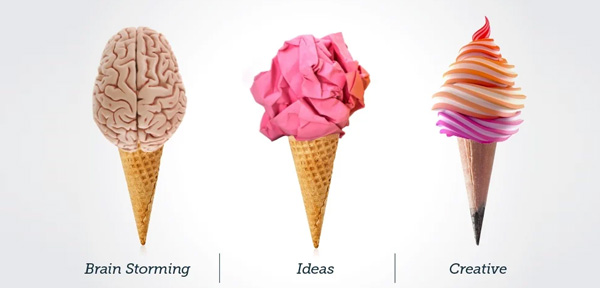
Rebranding – so much more than just a logo or color palette
By
Miri Peled
, 19/02/2018
Rebranding – so much more than just a logo or color palette. What you'll need to do when rebranding.
Refresh or rebrand?
When rebranding, you can either refresh and improve your current branding or start over and create an entirely new one. No matter what you decide, the rebranding process involves a lot more than designing a new logo or changing your corporate color palette. Here’s what you’ll need to do:- Defining a clear rebranding strategy.
- Reanalyzing your company’s vision, mission and values.
- Conduct market research and competitor research including new players who may have popped up more recently.
- Research existing customers, potential customers and target audiences.
- Redefine your message.
- Create a new visual identity.
- Create new marketing materials.
- Relaunch your brand (internally and externally).