The BL[OZ]

AI, Sugar, and Side Effects
By
Dorin Peleg
, 30/03/2026
AI isn't a magic fix; it’s an endless candy store where it’s easy to get lost in the noise. Discover why a surplus of tools makes selection your biggest strategic challenge, and how to shift from chasing "the next shiny thing" to a purposeful process that puts business goals before technology.
Why More Tools Don’t Always Help
The problem with abundance isn’t the technology itself-it’s understanding what we’re actually trying to solve. Every tool can look appealing. It can offer automated writing, visual creation, smart diagrams, marketing content, advanced research, and more. But without a clear process, it all becomes noise. Like a child in a candy store who can only choose two candies before checkout, we need selection tools-not just solution tools.
How to Get It Right (Without a Sugar Overdose)
When we work with B2B brands, we always come back to a simple question: What do our customers really need? And what is our business goal? Once the goal is clear, the abundance of tools stops being overwhelming. It becomes a repertoire of solutions tailored to what’s needed—instead of what’s possible.- The key is: Define the need, not the tool
- Before choosing an AI tool, start with the question: What outcome am I trying to achieve? What does success look like?
- Build a decision framework Don’t let every shiny new idea set the pace. Create a structured set of questions and criteria that connect to real KPIs.
- Don’t lose the human context AI is the result of human creativity-not the answer itself.

So What Does Choice Look Like in Practice?
If we go back to the candy store-not every candy fits every moment. The same goes for AI. There are great tools for every task, but the choice doesn’t start with the tool’s name—it starts with the need. For example: When I need to generate text, I usually work with ChatGPT or Gemini. Both are fast and powerful, but the choice depends on tone, precision, and the outcome I’m aiming for. When it comes to visuals-surprisingly-ChatGPT delivers great results as well. Gemini (especially Nano Banana) excels when combining existing products, and in other cases, I like working with Midjourney or Artlist-each offering a slightly different level of control and style. For animation, I often use Freepick and Gemini-especially when I need fast solutions without fully compromising on quality. For voiceovers, ElevenLabs is almost always my go-to, delivering results that sound more natural and accurate for most use cases. And for music, while you can generate it with Suno, if you’re not a professional musician, it’s often more efficient to use platforms like Freepik, which now offer a solid and user-friendly music feature. In practice, we almost never rely on a single tool. The real choice is always a combination-between multiple tools, and between those tools and human thinking that connects them. So the real question isn’t “Which tool is the best?” It’s “Which combination of tools serves the goal most effectively?”What Actually Makes It Work
Earlier, I mentioned a confused child in a candy store. But the one who really knows how to choose isn’t the child-it’s someone with experience, knowledge, and an understanding of what to look for. Behind every valuable AI tool are people: developers, researchers, creators, designers-those who know how to connect technology to real business needs. They’re the ones who give these tools meaning. Without human intention, context, and strategy-even the most advanced tools won’t lead to real results. AI is not magic. It’s the outcome of accumulated human creativity.The Real Choice
In an age of abundance, the advantage isn’t the newest AI tool. The advantage lies in the ability to:- Choose wisely
- Execute with understanding
- Stay focused on clear, business-driven goals

The Jewish Lion: How to Build a Brand That Lasts 3,000 Years
By
Amit Sakal
, 04/03/2026
Beyond ancient symbols: How do you build a brand that lasts for millennia? Discover the fascinating branding strategy behind the Jewish Lion – from the Bible to the modern battlefield.
How do you build a brand that lasts for millennia? If you are wondering how to build a brand that lasts for generations, the answer lies in one ancient symbol.Lately, certain names have resurfaced: “Am KeLavi” - A People Like a Lion. “Roaring Lion.”
Operation names. Security language. Headlines. But from a branding perspective, this is a fascinating choice. In an era when nations invest billions in narrative, public diplomacy, and perception management, Israel repeatedly returns to the same ancient symbol: the lion. Not a refreshed logo. Not an updated digital aesthetic. Not a passing graphic trend. A lion. And when you examine it closely, it may be one of the most consistent branding moves in human history.
A Brand That Hasn’t Rebranded Since Genesis
The story begins long before content strategy or visual systems. In the Book of Genesis, Jacob blesses Judah with the words: “Gur Aryeh Yehuda” - Judah is a lion’s cub. This wasn’t merely poetic imagery. It was a foundational positioning decision. The lion wasn’t chosen because it is the strongest animal in the wild. It was chosen because it is perceived as sovereign - a natural authority, a presence that does not need to strive for dominance. In branding terms, this is precise positioning. The lion does not symbolize reckless aggression. It represents restrained power. Not “we attack.” But “we are here - and we are not going anywhere.” That is a far deeper message than brute force.
Design in Exile: When There Is No State, There Is Still a Visual Language
For nearly two thousand years, there was no sovereignty. But there was branding. The lion appeared in synagogues, on Torah arks, in manuscripts - often flanking the Tablets of the Covenant, sometimes crowned. From a design perspective, this was brilliant: When political power disappears, you reinforce the symbol. During exile, the lion was not a call to rebellion. It was an anchor of identity. A form of brand consistency in the midst of historical chaos. Real brands are not built in comfortable eras. They are tested in difficult ones.
Zionism: Rebranding Without Losing the DNA
When modern Zionism emerged, it did not invent a new emblem. There was no dramatic visual overhaul. The lion simply shifted tone. Less mystical - more national. Less decorative - more upright. Less memory - more action. This was not a rebrand. It was a tonal update. One of the most powerful visual moments in Israeli cultural history is the “Roaring Lion” monument at Tel Hai. Not a victorious lion. Not a charging lion. A wounded lion - roaring. That is a courageous branding decision. It does not sell “absolute power.” It sells endurance. Resolve. Cost. A brand built on courage through standing firm lasts longer than one built on dominance alone.
The IDF: A Language of Consciousness, Not Just Operations
When military operations are named “Am KeLavi” or “Roaring Lion,” this is not biblical romanticism. It is narrative strategy. Operation names are never merely technical labels. They are messages. Inward - to soldiers and society. Outward - to adversaries and to the world. The lion enables Israel to position itself as restrained yet determined. Not a wild force. Not an imperial aggressor. But an actor capable of patience - and action. The distinction is subtle. And critical.
Why It Still Works
Because the lion carries rare historical depth. It bridges scripture and sovereignty. An ancient verse and a modern fighter jet. Memory and statehood. In a world where brands redesign their logos every five years, the Jewish lion is proof that true brand equity is built across generations. Not through trends. Through consistency.
What Can Branding Professionals Learn From This?
- A strong symbol doesn’t need to shout constantly.
- Deep brands are anchored in story, not aesthetics alone.
- Long-term consistency outperforms cosmetic refreshes.
- Restrained power is a strategy - not a weakness.

The Secret to a Winning Dish: Building a B2B Presentation That Drives Results
By
Efrat Hemsi
, 02/03/2026
A B2B presentation isn't just a slide deck; it's a strategic business asset. Learn why crafting a presentation is like preparing a gourmet meal, and why strategy must always come before design to seal the deal.

Strategy first. Design second.
One of the most common mistakes I see is jumping straight into design. Colors, icons, layouts, before anyone stops to ask the questions that actually affect outcomes:- Who is the audience?
- What action do we want to happen at the end of this presentation?
- What is the one message every slide must deliver?

Simplicity wins. Story connects.
Especially in complex B2B environments, simplicity is a real competitive advantage.- One slide = one idea
- Less content = more clarity
- A strong story = decisions happen
Presentations that generate real business results
A good presentation doesn’t just look good. It works for the business.- Drives sales by translating complexity into clear value
- Attracts investors by building credibility and highlighting potential
- Accelerates onboarding by helping teams quickly understand what matters
- Strengthens the brand by projecting professionalism and consistency

A presentation is a business tool, not a graphic file
A presentation keeps working even when you’re not in the room.- It gets passed along to decision makers you never meet
- It creates an internal narrative inside the organization
- It reinforces the brand over time
Turning presentations into a growth engine
A presentation becomes a strategic asset when it:- Connects the audience to the solution, not just the company
- Communicates value clearly, even in complex industries
- Supports the customer throughout the decision journey
- Maintains brand consistency at every touchpoint

So before serving the dish, a quick recap:
- Start with strategy, not visuals
- Simplicity and a strong story beat overload
- Measure presentations by outcomes, not aesthetics
- It’s a business tool, not a design file

Marketing in China: Not Just Another Market- A World of Its Own!
By
Sivan Barkay Menachem
, 10/02/2026
China isn’t just another market—it’s a parallel universe with its own rules for AI, social media, and visual language that every global brand must learn.

Color, Visual Language, and Regulation: More Than Aesthetic Choices
In China, color is not a matter of taste, it is a language. Colors carry deep cultural, symbolic, and sometimes political meaning, and incorrect use can confuse audiences, weaken trust, or even lead to content being restricted. For example:- Red is associated with luck, success, and celebration. It is widely used, but poor balance can feel loud or low-end.
- White is strongly linked to mourning and loss, making it problematic as a dominant color in celebratory or brand-driven contexts.
- Black conveys formality and authority, but in certain contexts can feel distant or somber.
- Certain color combinations, symbols, icons, or visual metaphors may be culturally or politically sensitive, even if they are considered neutral in Western markets.

Social Media: Same Goals, Completely Different Ecosystem
China does not use Facebook, Instagram, LinkedIn, or X. Instead, it operates within its own ecosystem of platforms such as WeChat, Weibo, Rednote, Douyin, and others, each of which functions far beyond what Western audiences think of as “social media.” WeChat, for example, combines content, community, CRM, customer service, payments, and commerce in one tightly integrated environment. As a result, effective marketing in China, particularly on WeChat, goes beyond reach or engagement and focuses on building long-term relationships within a closed, all-in-one platform.Search Engines: Google Is Not Part of the Equation
Google is largely irrelevant in China. Search behavior is driven primarily by Baidu and other local engines, each with different algorithms, SEO rules, and content expectations. Simply translating a website or blog into Chinese is not enough. Effective visibility requires content structure, hierarchy, and language that align with how Chinese users search for and evaluate information.
Chinese AI: A Parallel Universe, not a Local Version
Artificial intelligence in China also operates in a parallel ecosystem. Many Western AI tools are restricted or unavailable, replaced by local models such as ERNIE, Qwen, Doubao, and others. The differences are not only technical, but conceptual:- These models are trained on different datasets, in different cultural and regulatory contexts.
- Clear limitations exist on topics, phrasing, and types of content.
- AI is often embedded directly into Chinese platforms rather than offered as open, standalone tools – especially in Baidu’s case.

Local Partnerships as a Strategic Advantage
Marketing in China is extremely difficult to manage remotely. Language, regulation, culture, platform behavior, and business norms require deep, on-the-ground understanding. This is where local expertise becomes essential. We have worked for many years with Brandigo, and have seen firsthand their deep expertise in B2B marketing within the Chinese market- from strategic positioning and message localization to smart use of local platforms and cultural nuance. Strong local partners bridge the gap between Western brands and Chinese audiences without sacrificing credibility.The Bottom Line
China is not “just another large market.” It is a self-contained system with its own rules, pace, and internal logic. Succeeding there requires humility, learning, true localization, and the right partners. We are not experts in Chinese marketing, but we know when expertise is required. And in a market like China, that distinction makes all the difference.Want to dive deeper into B2B marketing in China?
We highly recommend exploring the Brandigo blog, where they share in-depth insights, practical experience, and up-to-date perspectives on navigating the Chinese B2B market- https://www.brandigochina.com/blog
B2B Design & Tech Trends 2026: From Visual Appeal to Strategic Experience
By
Amit Sakal
, 12/01/2026
In 2026, B2B design is more than just a modern look—it’s a strategic engine for clarity. Discover the six key shifts, from Hybrid Intelligence to Vibe Code, that help users understand complex products and drive faster decisions.

Multi-Sensory Experiences & Hybrid Intelligence When design is felt, not just seen
2026 marks a clear shift from purely visual design to multi-sensory digital experiences. After years of screen fatigue, users crave interfaces that feel richer, more immersive, and more human. Even in digital environments, design now aims to evoke sensations associated with touch, depth, motion, and materiality. This is where Hybrid Intelligence: the collaboration between AI and human creativity becomes a powerful driver. AI is deeply embedded into the creative workflow:- Generating visual directions and variations
- Exploring textures, motion, and spatial depth
- Accelerating experimentation and ideation
- Soft, tactile, and inflated textures
- Hyper-realistic objects combined with playful distortions
- Subtle motion that suggests weight, resistance, and flow
- Interfaces that feel immersive rather than flat

Glassmorphism, Evolved Transparency as a system, not a decoration
Glassmorphism continues into 2026 - but in a more mature and intentional form. What once appeared as a visual trend is now becoming a functional design system used to manage hierarchy, density, and focus. In B2B interfaces especially, where dashboards, data layers, and dense content are common, glass-like surfaces help:- Separate layers without heavy borders
- Maintain context while guiding attention
- Create depth without visual noise

Vibe Code & Self-Serve UX Design that explains before sales ever enter the room
Modern B2B buyers don’t want to be sold to first - they want to understand. In 2026, the most effective B2B experiences are built around self-serve exploration:- Interactive demos
- Calculators and simulators
- Product explorers and configurators
- Guided journeys that adapt to user intent
- Answering questions before they are asked
- Allowing users to test scenarios on their own
- Building confidence before human interaction

White, Minimalism & Visual Calm Less noise, more authority
White and near-white palettes dominate B2B design in 2026, not as an aesthetic trend, but as a strategic choice. Minimalist layouts, generous spacing, and visual restraint are essential when:- Products are complex
- Messages need credibility
- Decisions carry high business impact

Dynamic Personalization at Scale One interface, many audiences
B2B audiences are rarely uniform. Different roles, industries, regions, and levels of expertise require different messaging and in 2026, design finally reflects that reality. Interfaces are becoming more adaptive:- Content shifts based on industry or role
- Messaging adjusts to user behavior or entry point
- Visual emphasis changes according to intent

Design as a System, Not a Page Modular, scalable, and built for growth
In 2026, strong B2B design is rarely page-based. It’s system-based. Design systems evolve to support:- Rapid scaling across products and markets
- Consistency across platforms and touchpoints
- Faster iteration without breaking brand integrity
Closing Thought
Design in 2026 is not about trends for the sake of trends. It’s about using design to reduce complexity, build trust, and create meaningful experiences in an increasingly technical world. For B2B brands, the opportunity is clear: Those who treat design as a strategic layer - not a visual afterthought — will lead the conversation, not follow it.
Why not build your own tools? It’s Easier Than You Think
By
Nevo Levin
, 29/12/2025
AI can generate code in seconds, but building an internal tool that fits your exact workflow is where the real value lies.
What if I told you that the internal tools you use today don’t have to come from a plugin, an off-the-shelf system, or a solution that doesn’t quite fit?
And what if the most precise tools for your workflow are the ones that don’t even exist yet—until you build them?
In recent years, something profound has been happening quietly. Internal tools—those that once required developers, endless work hours, and a significant budget—have suddenly become accessible to everyone. AI is not just changing the way we work; it’s changing who can build the tools we work with.
Systems that used to be massive projects can now be built within hours. The person writing the brief can become the one creating the solution. Internal tools no longer have to be bought off-the-shelf or from an external vendor. They can be born out of a daily process, a recognized need, and a deep understanding of how we actually work.
This is exactly what happened with us. Time and again, we discovered that a certain process was stalling us, that communication was dragging, or that a small action was turning into a major task. So, instead of searching for a plugin that "sort of" fits, we built tools that were precise for us: a task-sharing system for clients, an email signature generator based on an existing design, custom forms, and finally, a QA tool that grew from a small idea into a system that works on any website.

When the Process Needs a Tool, Not Another Meeting
In most projects, the problem isn’t the people or the understanding. The problem is the tools—or more accurately, the lack thereof.
We learned long ago that the solution to ambiguity isn't another meeting or another document. Sometimes, all you need is a small tool that organizes reality right where the process gets stuck.
That’s how we started building our own internal tools with AI.
No heavy systems, no generic plugins; just solutions born from our real needs and those of our clients. Just as we build websites for our clients, we began designing our own internal work processes.
During the past year, we created several internal tools using AI, including:
-
A task sharing and tracking system between clients and the team.
-
An email signature generator that creates a customized version for every user.
-
Interactive forms for various clients as needed.
-
A visual QA system that operates directly on the website.
-
A smart system for creating digital business cards.
Every one of these tools was born from the same point: a small pain point that grew. AI made the development of these solutions simple, fast, and accessible.
This is perhaps the greatest AI revolution. It allows businesses like ours to build internal tools that were previously reserved for corporate giants. Today, you can create a precise solution the moment it's required, instead of adapting to what already exists.
How a Small Idea Became a Plugin That Works on Any Site
It all started with a pain point familiar to every digital team: scattered comments, long review cycles, endless question marks, and conversations that lead to no clear conclusion. So, we built a tool.
We opened ChatGPT and described the experience we wanted, rather than the code. From there, we began to refine and improve.
Within days, a QA plugin was born that felt like working inside Figma, only it takes place on the live website. No documents, no infinite calls, and no guessing. Just pins on the screen and comments appearing exactly where they need to be.

See How Simple It Is
When the QA layer is activated, the website becomes a workspace.
A click adds a pin. A pin opens a card. A card allows you to write a comment, add a small image, mark a status, or have a brief chat between team members.
No files, no links, no mess.
To keep things organized, there is also a side panel that aggregates all comments. You can filter by status, toggle between colors, jump to a specific point, and see thumbnails that provide context.
Everything is clear and easy to understand. That’s the beauty of it: a good tool doesn’t have to be heavy. It has to be precise.
The Future of Internal Tools Starts Here
The most significant takeaway isn't necessarily the plugin itself, but the new approach.
AI allows every business to build precise internal tools tailored to how they actually work.
No heavy systems, no forced adaptations, and no long development processes.
Instead of adapting ourselves to existing tools, we are starting to design the tools around us. Processes that were cumbersome become simple. Communication that was once overloaded becomes direct. And what used to be "that's just how it is" becomes "this is how we decided it should be."
It’s not just a matter of efficiency; it’s independence. The ability to build tools in real-time, without waiting and without external dependencies.
AI opens a new possibility where every small idea can become a real tool that advances the company, strengthens processes, and allows us to work smarter every single day.

Synthetic Humans and Brand Stories
By
Yoav Sondak
, 25/12/2025
AI can create faces in seconds, but trust, character, and good storytelling still take human judgment.
Synthetic humans are quickly becoming the newest wildcard in the marketing world. They promise instant faces, infinite diversity, zero scheduling conflicts, and a level of visual flexibility that traditional photoshoots could never match. At the same time, they introduce new questions about realism, accuracy, and what it truly means to build trust through images. The result is a strange mix of creative freedom and creative chaos, efficiency and unpredictability, impressive breakthroughs and very real failures. In other words, exactly the kind of shift that forces brands and designers to rethink how they tell visual stories.
If you work with visuals, you cannot ignore this technology. And if you use it, you need to understand both its possibilities and its pitfalls. Here is what synthetic humans actually make easier, what they complicate, and how smart teams are learning to use them without losing their focus or their brand integrity.
What AI really makes easier in client visuals Let us start with the fun part. AI lets us create very specific personas in minutes. If a campaign needs a clinic nurse in her early 40s with a calm presence and warm eyes, an irrigation engineer with sun-tanned skin and slightly dusty trousers, or a farmer in his fields who looks like he actually knows how to repair a dripline by hand, we can dial that in. No casting, no schedules, no “our best model canceled at the last minute” drama. It also helps when we need groups that stock libraries do not always represent well. A mixed team of engineers with balanced ethnic diversity. A group of middle-aged professionals for a B2B product. A family that does not look like a toothpaste commercial from 1992. AI gives us a bigger playground and fewer excuses. And yes, budget wise it saves time. Generating a range of visual directions early in a project helps a client choose a tone before any real production happens. This is especially valuable in B2B where you often want a mix of realism and polish without spending a fortune on photoshoots for niche equipment. But let us be clear. It is faster than a real shoot, not magic. Getting the right facial expression, personality, lighting, emotional tone and cultural nuance still takes iteration and artistry. Someone still needs to do the work and make creative decisions. AI is a sketchbook, not a photographer. Representation and diversity. Easier to specify, easier to mess up
AI absolutely makes it easier to design for diversity on purpose. We can ask for specific mixes of age, gender, skin tone, and cultural background that reflect a brand’s real audience rather than a generic Western template.
But here comes the cynical part. If you do not direct the AI explicitly, it has the tendency to give you the same person over and over. A smiling young white male doctor. A slender white woman in a “corporate success” pose. A suspiciously symmetrical engineer that looks more like an NBA star than someone who works in a metal factory.
AI does not magically fix representation. It mirrors the biases of its training data unless we intervene with clear prompts and visual QA. So yes, AI is powerful, but it also needs supervision. Otherwise you get a multicultural team that all somehow look… the same.
The continuity problem (The serious one and the ridiculous one)
This is where things get interesting.
Keeping a synthetic person the same
If you generate a character once, they will look great. If you generate the same character again in a different pose or setting, there is a good chance the face will be slightly off. Or very off. Or suddenly look like their cousin.
This is a known limitation. Generic text to image models do not remember a specific face across multiple scenes. To fix that you need either a consistency-focused tool, a custom trained character, or a very precise workflow.
The Real Model Dilemma
Stock Faces, Influencers, and the Question of Trust
At some point in almost every campaign, a very human question appears: should this face be real?
Sometimes a client selects a specific real person from a stock library. A nurse who looks exactly right for a clinic campaign. An engineer who feels credible on the factory floor. A farmer whose face tells a story of experience without saying a word. The problem begins when the campaign grows. One image is no longer enough. The client needs variations, new scenes, seasonal updates, and continuity over time. Stock libraries rarely deliver that level of flexibility.
This is where AI enters the conversation. With the right tools and workflows, it is now possible to generate synthetic variations of an existing stock model. The same person, placed in new environments, wearing different outfits, interacting with new products. When done carefully, this can extend the life of a chosen face without repeated licensing fees or logistical constraints. When done carelessly, the result is uncanny. The face looks familiar but not identical. Subtle features drift. Expressions change personality. The person becomes almost themselves, which is often worse than being clearly fictional.
This tension becomes even sharper when the conversation moves from models to influencers.
Influencers are not just faces. They are identities built over time. Their value is not only how they look, but the perception of authenticity, lived experience, and continuity across platforms. An influencer has a history, opinions, imperfections, and a relationship with their audience. These are things AI can simulate visually, but not fully embody.
For this reason, real influencers still cannot be replaced in many contexts. When trust is personal, when credibility depends on lived experience, or when a brand relies on long-term emotional connection, a synthetic figure falls short. An AI generated wellness coach or skincare expert may look convincing, but it does not age, struggle, contradict itself, or evolve in the way people do. And audiences notice.
That said, artificial models are already stepping into influencer-like roles in limited and carefully framed scenarios. Virtual brand ambassadors, synthetic characters, and fictional personas can work when transparency is clear and expectations are managed. They can represent ideals, explain complex products, or act as consistent brand guides. But they are closer to mascots than humans, even when they look realistic.
The real question is not whether an artificial model can gain attention. It already can. The question is whether it can earn trust. And trust, at least for now, still depends on the belief that there is a real person behind the voice, the choices, and the imperfections.
In practice, the smartest campaigns treat AI models as extensions, not replacements. They support real people, fill visual gaps, and offer flexibility where human logistics fail. But when a brand needs genuine influence rather than visual presence, the human factor remains difficult to fake.
Product continuity. A reality check
Trying to show a specific irrigation valve, cosmetic device, sensor probe or medical connector in an AI generated image is its own adventure. AI tends to simplify or distort product details, change proportions, or invent buttons that do not exist.
So for product accuracy we still rely on photography, vector illustration, or 3D renders. AI is usually used around the product, not instead of it.
Representation and diversity. Easier to specify, easier to mess up
AI absolutely makes it easier to design for diversity on purpose. We can ask for specific mixes of age, gender, skin tone, and cultural background that reflect a brand’s real audience rather than a generic Western template.
But here comes the cynical part. If you do not direct the AI explicitly, it has the tendency to give you the same person over and over. A smiling young white male doctor. A slender white woman in a “corporate success” pose. A suspiciously symmetrical engineer that looks more like an NBA star than someone who works in a metal factory.
AI does not magically fix representation. It mirrors the biases of its training data unless we intervene with clear prompts and visual QA. So yes, AI is powerful, but it also needs supervision. Otherwise you get a multicultural team that all somehow look… the same.
The continuity problem (The serious one and the ridiculous one)
This is where things get interesting.
Keeping a synthetic person the same
If you generate a character once, they will look great. If you generate the same character again in a different pose or setting, there is a good chance the face will be slightly off. Or very off. Or suddenly look like their cousin.
This is a known limitation. Generic text to image models do not remember a specific face across multiple scenes. To fix that you need either a consistency-focused tool, a custom trained character, or a very precise workflow.
The Real Model Dilemma
Stock Faces, Influencers, and the Question of Trust
At some point in almost every campaign, a very human question appears: should this face be real?
Sometimes a client selects a specific real person from a stock library. A nurse who looks exactly right for a clinic campaign. An engineer who feels credible on the factory floor. A farmer whose face tells a story of experience without saying a word. The problem begins when the campaign grows. One image is no longer enough. The client needs variations, new scenes, seasonal updates, and continuity over time. Stock libraries rarely deliver that level of flexibility.
This is where AI enters the conversation. With the right tools and workflows, it is now possible to generate synthetic variations of an existing stock model. The same person, placed in new environments, wearing different outfits, interacting with new products. When done carefully, this can extend the life of a chosen face without repeated licensing fees or logistical constraints. When done carelessly, the result is uncanny. The face looks familiar but not identical. Subtle features drift. Expressions change personality. The person becomes almost themselves, which is often worse than being clearly fictional.
This tension becomes even sharper when the conversation moves from models to influencers.
Influencers are not just faces. They are identities built over time. Their value is not only how they look, but the perception of authenticity, lived experience, and continuity across platforms. An influencer has a history, opinions, imperfections, and a relationship with their audience. These are things AI can simulate visually, but not fully embody.
For this reason, real influencers still cannot be replaced in many contexts. When trust is personal, when credibility depends on lived experience, or when a brand relies on long-term emotional connection, a synthetic figure falls short. An AI generated wellness coach or skincare expert may look convincing, but it does not age, struggle, contradict itself, or evolve in the way people do. And audiences notice.
That said, artificial models are already stepping into influencer-like roles in limited and carefully framed scenarios. Virtual brand ambassadors, synthetic characters, and fictional personas can work when transparency is clear and expectations are managed. They can represent ideals, explain complex products, or act as consistent brand guides. But they are closer to mascots than humans, even when they look realistic.
The real question is not whether an artificial model can gain attention. It already can. The question is whether it can earn trust. And trust, at least for now, still depends on the belief that there is a real person behind the voice, the choices, and the imperfections.
In practice, the smartest campaigns treat AI models as extensions, not replacements. They support real people, fill visual gaps, and offer flexibility where human logistics fail. But when a brand needs genuine influence rather than visual presence, the human factor remains difficult to fake.
Product continuity. A reality check
Trying to show a specific irrigation valve, cosmetic device, sensor probe or medical connector in an AI generated image is its own adventure. AI tends to simplify or distort product details, change proportions, or invent buttons that do not exist.
So for product accuracy we still rely on photography, vector illustration, or 3D renders. AI is usually used around the product, not instead of it.
 The legal, ethical and trust layer
Clients trust visuals. And as AI grows, so do the expectations for transparency.
There is still legal uncertainty around how some models were trained, how copyrights apply, and how synthetic humans should be disclosed in sensitive industries. The EU is moving toward stricter transparency rules. Customers are becoming more aware of what looks AI generated.
So we treat AI the same way we treat any production tool. We choose platforms with clearer IP practices, we avoid misleading imagery, and we recommend disclosure when it matters for trust.
Our philosophy is simple. A great brand story should feel honest even when the people in the picture are not.
So where does this leave us?
AI models are not replacing real photography. They are not replacing human creativity. But they have become a natural part of the workflow in branding and marketing. They help us iterate faster, visualize concepts earlier, explore diversity with more intention, and tell better stories without waiting for permissions, flights or makeup.
They also require discipline. They require artistic guidance. They require common sense. And sometimes they require a designer to say “No, we are not showing the irrigation engineer as a flawless fashion model. Let us try again”.
As for the future, it is moving fast. Character consistency tools are improving. Product level accuracy is improving. Ethical guidelines are being written. The hybrid workflow of real photography, 3D, and AI will probably become the default rather than the exception.
The conclusion is simple. AI models are not the answer to everything, but they have opened a creative door that is not going to close. The brands that benefit most will be the ones that use this tool with intelligence, taste, humor, and responsibility.
The legal, ethical and trust layer
Clients trust visuals. And as AI grows, so do the expectations for transparency.
There is still legal uncertainty around how some models were trained, how copyrights apply, and how synthetic humans should be disclosed in sensitive industries. The EU is moving toward stricter transparency rules. Customers are becoming more aware of what looks AI generated.
So we treat AI the same way we treat any production tool. We choose platforms with clearer IP practices, we avoid misleading imagery, and we recommend disclosure when it matters for trust.
Our philosophy is simple. A great brand story should feel honest even when the people in the picture are not.
So where does this leave us?
AI models are not replacing real photography. They are not replacing human creativity. But they have become a natural part of the workflow in branding and marketing. They help us iterate faster, visualize concepts earlier, explore diversity with more intention, and tell better stories without waiting for permissions, flights or makeup.
They also require discipline. They require artistic guidance. They require common sense. And sometimes they require a designer to say “No, we are not showing the irrigation engineer as a flawless fashion model. Let us try again”.
As for the future, it is moving fast. Character consistency tools are improving. Product level accuracy is improving. Ethical guidelines are being written. The hybrid workflow of real photography, 3D, and AI will probably become the default rather than the exception.
The conclusion is simple. AI models are not the answer to everything, but they have opened a creative door that is not going to close. The brands that benefit most will be the ones that use this tool with intelligence, taste, humor, and responsibility.

Don’t Be Afraid of the Monster: B2B Websites Aren’t Actually That Scary
By
Naomi Lifshitz
, 01/12/2025
When B2B sites become complex, smart design brings order and clarity — guiding users, strengthening trust, and helping them move forward with confidence.
“Honestly? Above everything else, it just looks like you’re really enjoying working on this.”
And she was right. I really am.
Because websites are one of the things I love most in the world.
Why do B2B websites always seem a bit more intimidating?
When people hear “B2B website,” they immediately imagine something heavy: catalogs, products, integrations, CRM systems, and a content tree with thirty pages. And it’s true - this isn’t the website of a jewelry shop or a restaurant. But that’s exactly what makes it interesting. When handled correctly, this complexity turns into clarity.
So how do you actually make it simple?
A website is not a filing cabinet that needs to store every piece of information accumulated over the years. It needs to be focused and relevant. In almost every B2B website I work on, the same pattern repeats itself — templates that help organize the information clearly. And once every piece of content knows where it belongs, everything starts to fall into place. There’s the product - sometimes physical, sometimes digital, sometimes an entire range that needs to be sorted into a clear catalog. Sometimes products are scattered across applications, technologies, or different solutions. In those cases, it’s better to centralize everything under one catalog with smart filtering. This preserves a clear hierarchy and creates a smooth, intuitive user experience. Behind the product lies the technology, which often interests professional audiences and differentiates the company from competitors. On this page, we presented technical and seemingly “dry” information — but in an airy, clean, and clear way. We added a scrolling visual element inspired by the client’s industry, which made the page feel less mechanical and more pleasant and flowing. Then there are the industries or segments where the product operates — because in B2B, there is no “everyone,” only context. There’s also the company’s reputation, the services it provides, and the people behind the scenes. On the Agmatix website, we organized the entire Case Studies archive in a simple, comfortable way. “About” and “Management” pages are almost always among the most visited. Because even in B2B, people look for people. They want to see faces, understand who stands behind the company, and sometimes even recognize someone they know. Look at this innovative About page we created for trendlineslab, It’s innovative because it’s not just “About” - it tells a story. A brand is a story, and that’s exactly what users feel here: a short, clear journey that presents the company through a narrative rather than dry text. And then there’s one of the most important parts — knowledge hubs B2B customers aren’t looking for slogans; they’re looking for information. Articles, guides, real-world examples, case studies. Knowledge that builds trust.Staying focused throughout the process
One of the biggest challenges in B2B website projects isn’t necessarily design or technology - it’s the people. Every company has several departments with different viewpoints: marketing, sales, product, support, leadership. Everyone has something to say - and rightly so. But if each person sees the website as theirs, the project quickly spreads in all directions. The solution is to work with a small decision-making team: three to four key personas representing the core needs. They don’t need to agree on everything - but they do need to speak the same language and hold the same goal. Once you have that core, every decision becomes easier.
And what about all the content?
Almost every company has a sea of materials - presentations, brochures, PDFs, guides, old documents. Instead of trying to “fit everything in,” it’s better to start with the opposite question: What does the user actually need to know here? Not everything needs to become a page. Topics like customer stories, updates, or technological innovations are often better as blog posts or part of the Resources section. Blogs are an excellent way to add knowledge and context without overwhelming the site. You can write about almost anything, and the volume can be endless. You can always enrich the content hub, and with smart filtering, still maintain order and clarity.Functionality comes first
Not long ago I finished designing an especially complex website - catalog-based, with many digital tools and templates. What made it truly successful was its functionality: clear, intuitive, and easy to use. Visitors know exactly where to find what they’re looking for - and to me, that’s the biggest achievement. B2B websites are, first and foremost, work tools. They need to be functional, comfortable, and clear for users. That doesn’t mean giving up on design - the opposite. A modern look that conveys innovation is part of the message: if the website feels up-to-date, the user will feel the company behind it is moving forward. Like on the Aquestia website, where we highlighted the certifications clearly.It’s all a matter of mindset
If you approach a B2B website with fear - it really will feel like a monster. But if you approach it as a process of organization, structure, and listening - everything becomes clear. A good website doesn’t need to be big, it just needs to work. And to me, that’s the heart of it: turning complexity into clarity - step by step, methodically, and with a small smile along the way.
Rules, Regulations & Medical Brands How your medical brand can stand out within the regulatory framework
By
Nirit Elyovich, MBA
, 15/08/2024
Balancing marketing ambition with regulatory compliance is no easy task for medical brands. Our latest blog explores how early collaboration between marketing and regulatory teams can transform these challenges into opportunities, ensuring your brand stands out while staying compliant. Discover the smart strategies to help your brand shine within the regulatory framework.

When the journey takes an unexpected turn
During branding strategy kick-off meetings, we take a deep dive into your product, technology, and service. We’re looking for a fresh perspective, a promise not yet made, a story yet to be told. At this point, we get excited as we hear about groundbreaking technologies, solutions, and life-enhancing, life-prolonging products. Our jaws drop. With this WOW feeling, we continue the learning process in which we talk to customers, analyze the competition, and create a multi-participant meeting within the company to fine-tune its significant and differentiated strengths and generate outstanding benefits for its customers. As the process continues, we begin to understand the regulatory limitations. Suddenly, “Cinderella”, your extraordinary technology is being held back by regulatory limitations and is covered with “soot”.
Understanding limitations and optimizing capabilities
During the process, we’ve heard “It’s a given” or “It's powerful, but I can't confirm it" more times than we can count. Responses like these made us understand there must be a better way. That’s how our new module was born. It’s placed right at the beginning of the branding strategy process, which sets the stage for an open and guided dialogue between marketing and regulatory early on.
Challenging the norms
This dialogue is about helping the marketing team to understand the limitations in depth, and for the regulatory team to delve into the marketing team’s needs. It’s an authentic dialogue that creates a space to carry out activities that weren’t possible before. Understanding the precise needs opens up new perspectives and enables solutions within the boundaries of regulations. We understand the importance of compliance, but our experience shows that there are many degrees of freedom that are not being tested.It’s not about overstepping the bounds of the approved claims, but we also don’t want to take a step backward in the name of conservatism.
Sometimes it's a matter of overall wording, sometimes it's just changing one word. It's the little things that make a big difference. Stopping to ask questions often gives you a competitive advantage. Sometimes, there won’t be any flexibility in the claims you make, but at least you’ll know that you’ve turned over every stone.
Structured and managed conflicts are an opportunity
Remember, whoever sits at the decision-making table wants the company to succeed and do the best they can. Inherently, conflict is not a negative; it can also be an opportunity. Don't let emotions run the process. As we often say, “Don’t be right, be smart!” As with every relationship where there’s an inherent conflict, there’s great value in professional guidance to create the conditions for a productive dialogue. To meet this need, we’ve created a special collaboration between OZ Global B2B and Leap, led by Moran Faibish, who has extensive experience in leading marketing in global medical companies. Moran has hands-on experience in bridging the gap between marketing and regulations to create deep and unique brand promises — promises that aren’t possible without providing an informed and professional framework that enables constructive communication.Play smart
The more we play smart within the regulatory limits to make the most of your claims, the more we can create a differentiated value proposition that more accurately reflects your breakthrough technology. This is how your brand will shine. We’ll be there every step of the way to guide the process, refine the messaging, and make sure your “WOW” comes through loud and clear. If you’ve nodded your head while reading this, it’s time for us to talk.


What is Business to Employee (B2E) and how can it impact your company?
By
Guy Toledano
, 01/10/2023
Business-to-Employee, or B2E, refers to the strategies and technologies that companies use to support and engage their employees. B2E covers everything from attracting, recruiting, training, and onboarding employees, to providing self-service solutions and individualized access to essential tools or software.
 B2E strategies can also be used to support specific departments or teams within a company, such as sales teams that need flexible access to customer information and sales tools. For example, a B2E portal might include a CRM system that allows sales reps to easily access customer data, create and track leads, and manage their sales pipeline.
There are many benefits to implementing a B2E strategy, including improved communication and collaboration, increased efficiency and productivity, and cost savings. By providing employees with the tools and resources they need to succeed, companies can create a more engaged and motivated workforce that is better equipped to meet the challenges of today's business environment.
Have a question? Want to learn more? Don’t hesitate to reach out!
B2E strategies can also be used to support specific departments or teams within a company, such as sales teams that need flexible access to customer information and sales tools. For example, a B2E portal might include a CRM system that allows sales reps to easily access customer data, create and track leads, and manage their sales pipeline.
There are many benefits to implementing a B2E strategy, including improved communication and collaboration, increased efficiency and productivity, and cost savings. By providing employees with the tools and resources they need to succeed, companies can create a more engaged and motivated workforce that is better equipped to meet the challenges of today's business environment.
Have a question? Want to learn more? Don’t hesitate to reach out!

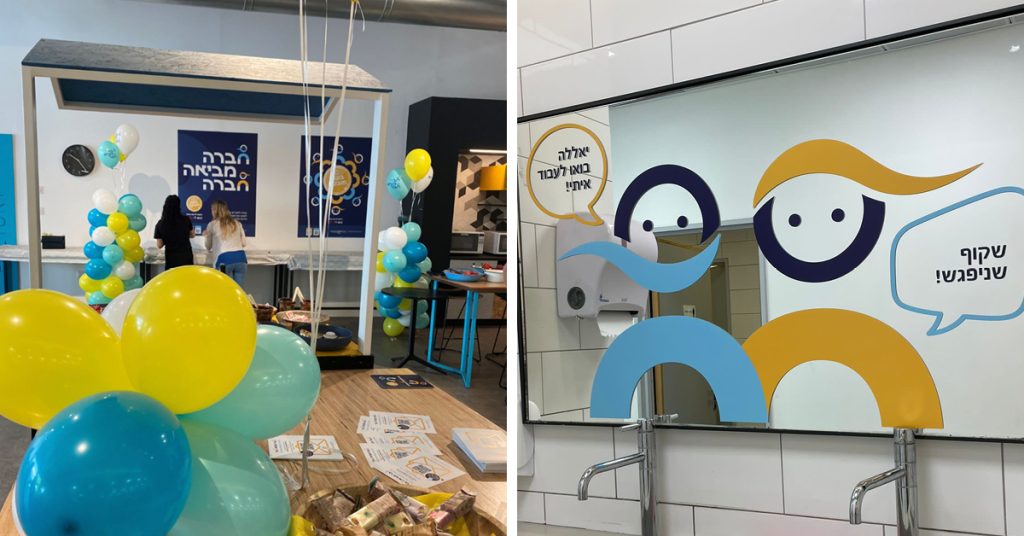
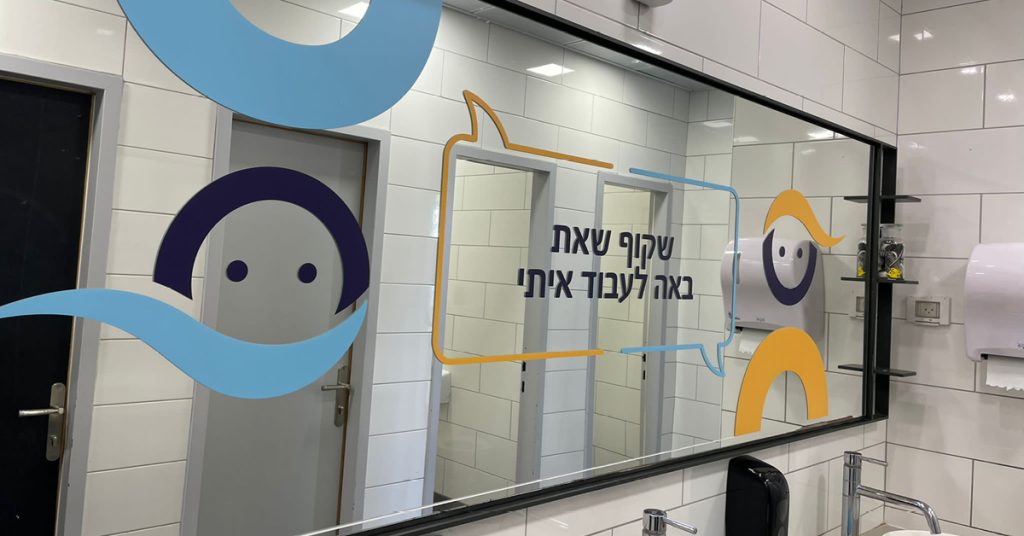
Maytronics - OZ Global B2B


Account Based Marketing (ABM) Vs. Lead Generation
By
Guy Toledano
, 17/08/2023
Are you struggling to decide between account-based marketing (ABM) and Lead Generation for your business? In this blog, we explore the key differences between the two strategies and how they can be used together to achieve optimal results. From understanding the benefits of demand generation to utilizing ABM for "land and expand" tactics. This guide provides valuable insights for marketers looking to boost their ROI. Additionally, the blog discusses how to effectively target the two main types of LinkedIn users to generate leads and increase engagement.
 While ABM and demand generation may seem like competing strategies, they can actually be used together to achieve optimal results. For example, demand generation can be used to create awareness and interest in a product or service, while ABM can be used to generate qualified leads and sign-up new customers.
This marketing tactic, can start with a broad-based demand generation campaign to create awareness, which will help to identify targeted leads or target market segments, which can then be used to inform a more targeted ABM campaign. An ABM activity can be used to reach out to specific named accounts with personalized content. These combined activities allow marketers to use both strategies to accelerate the buyer's journey and assist with selling.
It's also important to note that while ABM and demand generation are both outbound marketing strategies, inbound demand generation is also possible. By using inbound marketing tactics such as content marketing, SEO and other digital marketing strategies, you can drive leads and customers to your website and then use ABM to engage with them.
While ABM and demand generation may seem like competing strategies, they can actually be used together to achieve optimal results. For example, demand generation can be used to create awareness and interest in a product or service, while ABM can be used to generate qualified leads and sign-up new customers.
This marketing tactic, can start with a broad-based demand generation campaign to create awareness, which will help to identify targeted leads or target market segments, which can then be used to inform a more targeted ABM campaign. An ABM activity can be used to reach out to specific named accounts with personalized content. These combined activities allow marketers to use both strategies to accelerate the buyer's journey and assist with selling.
It's also important to note that while ABM and demand generation are both outbound marketing strategies, inbound demand generation is also possible. By using inbound marketing tactics such as content marketing, SEO and other digital marketing strategies, you can drive leads and customers to your website and then use ABM to engage with them.
 On LinkedIn, there are two primary types of users. The first group is known as "active users" and they exhibit a high level of engagement on the platform, such as performing searches, interacting with content, and sharing posts. These users also typically stay on top of their inbox and respond to relevant messages. These active users can be effectively targeted through an awareness campaign, followed by account-based marketing efforts.
The second main group of LinkedIn users are referred to as "basic users." These users tend to have a more limited level of activity on the platform, mostly just scrolling through their feed. They are less likely to respond to private messages. These basic users can be targeted through professional lead generation campaigns that will catch their attention while they are scrolling through their feed, with the use of an appealing message and creative content.
It is important to note that there are other types of users who fall somewhere between active and basic user, and by combining efforts of ABM with lead generation it will help in effectively reaching out to all types of users, with the right format and message.
In conclusion, account-based marketing and lead generation are both powerful strategies for generating revenue and boosting ROI. While they have their own unique benefits, it's important to understand how they can be used together to achieve optimal results. By using a targeted ABM approach in conjunction with a broad-based demand generation campaign, marketers can achieve their pipeline and revenue goals by capturing the attention of the right accounts and signing up new customers.
For more info and questions contact us.
On LinkedIn, there are two primary types of users. The first group is known as "active users" and they exhibit a high level of engagement on the platform, such as performing searches, interacting with content, and sharing posts. These users also typically stay on top of their inbox and respond to relevant messages. These active users can be effectively targeted through an awareness campaign, followed by account-based marketing efforts.
The second main group of LinkedIn users are referred to as "basic users." These users tend to have a more limited level of activity on the platform, mostly just scrolling through their feed. They are less likely to respond to private messages. These basic users can be targeted through professional lead generation campaigns that will catch their attention while they are scrolling through their feed, with the use of an appealing message and creative content.
It is important to note that there are other types of users who fall somewhere between active and basic user, and by combining efforts of ABM with lead generation it will help in effectively reaching out to all types of users, with the right format and message.
In conclusion, account-based marketing and lead generation are both powerful strategies for generating revenue and boosting ROI. While they have their own unique benefits, it's important to understand how they can be used together to achieve optimal results. By using a targeted ABM approach in conjunction with a broad-based demand generation campaign, marketers can achieve their pipeline and revenue goals by capturing the attention of the right accounts and signing up new customers.
For more info and questions contact us.

How to Meet & Influence Your Door Openers
Speakers: Nirit Elyovich and Rivi Kesten
The Door Openers strategy will bring you directly to the key people who will open the door for your company.

Using online marketing to generate a buzz (or a moo)
By
Miri Peled
, 15/05/2017
When Afimilk was preparing to launch its new AfiLab, the company turned to Oz Branding for assistance in creating a combined online and offline campaign.
Afimilk case study: all you need is lab
When Afimilk — a pioneer and global leader of management technology for dairy farming — was preparing to launch its In-line Milk Lab internationally, the company turned to Oz for assistance in creating a combined online and offline campaign for the launch.- Online – including digital ads in a variety of professional magazines, a social network campaign that was launched 6 weeks before the expo, the creation of a specific AfiLab mini-site, blog posts on the subject, a newsletter, a PR, and more.
- Offline – including brochures, a booth at the trade show, giveaways, printed ads, and more.
“Branding In” in International Branding
By
Dina Gidron
, 15/05/2017
The answer lies in understanding the clear link between your B2B brand and your employees’ connection to your brand promise
How can we ensure that we don’t lose or dilute our essential values and brand promise as we become a cross-continent corporation?
The answer lies in understanding the clear link between your B2B brand and your employees’ connection to your brand promise – no matter where they are in the world.By focusing on both implementing your brand in the global marketplace and strengthening your brand within your organization, you can more easily coordinate cross-continent corporate cultures and processes to define a common global branding language and presence that is consistently implemented across all touch points and markets.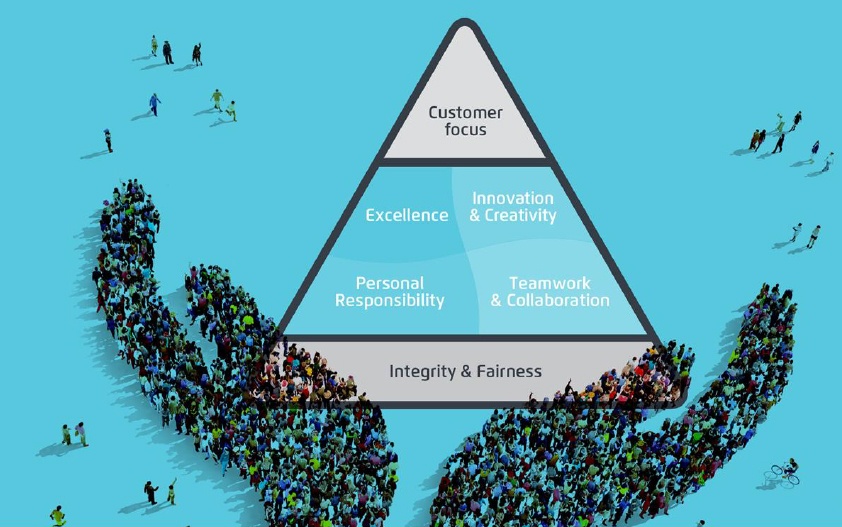 When Maytronics, a global leader in automated pool cleaning solutions, began to expand globally, the company looked for ways to build a strong and growing global brand while still maintaining a unique company culture, value, and DNA.
With a focus on its core values, Maytronics and Oz Branding began a worldwide organizational and branding process that included the enhancing of the internal company dialog to reinforce its brand promise of Exceptional Experience.
When Maytronics, a global leader in automated pool cleaning solutions, began to expand globally, the company looked for ways to build a strong and growing global brand while still maintaining a unique company culture, value, and DNA.
With a focus on its core values, Maytronics and Oz Branding began a worldwide organizational and branding process that included the enhancing of the internal company dialog to reinforce its brand promise of Exceptional Experience.
Global marketing challenges for B2B companies
By
Orit Oz
, 14/05/2017
Challenges in global marketing for B2B companies, the complexities involved in growing a global brand, and ideas on how we can overcome these challenges.
The International B2B Marketing Conference 2015
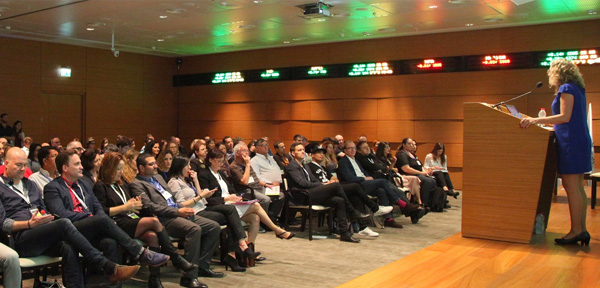
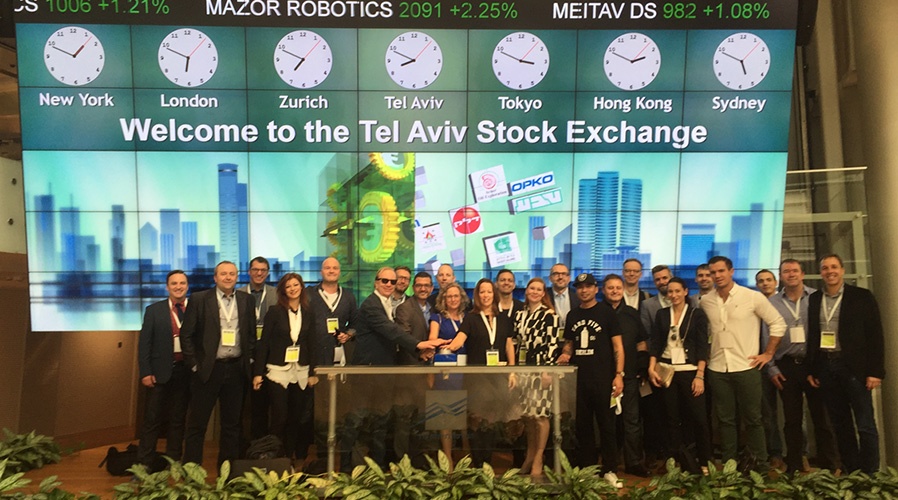
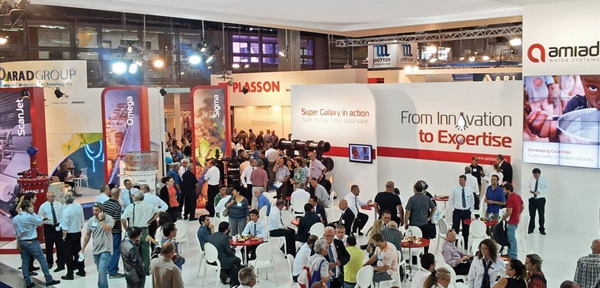
We had a wonderful time learning about and discussing the challenges in global marketing for B2B companies at our International B2B marketing Conference earlier this month. We'd like to give a big thank you to our partners at the E3 International Agency Network for working with us. And, we'd especially like to thank the over 200 people who attended, including executives who came from over 10 countries around the world!
 At our conference we had the pleasure to hear from several marketing and branding experts in different regions around the globe. Each of them spoke about the complexities involved in growing a global brand, the challenges all of us face, and ideas on how we can overcome these challenges.
The next few posts will cover each presentation in more detail, but in the meantime, we'll give you a short summary of the topics covered by each speaker:
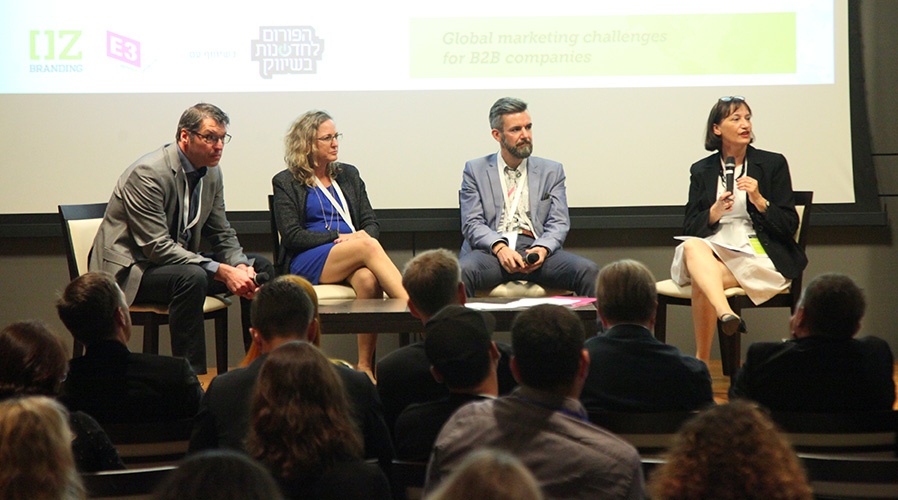
Dirk Assent, Managing Partner at Bernstein Gmbh, Bremen, spoke about how to tackle the internal and external challenges of a divided market (or, as he puts it: Why marketing in Europe is like a polar bear.) Mike Golden, the CEO of Adsmith China, Shanghai, spoke about the marketing successes as well as the many branding failures in bringing products to China.
At our conference we had the pleasure to hear from several marketing and branding experts in different regions around the globe. Each of them spoke about the complexities involved in growing a global brand, the challenges all of us face, and ideas on how we can overcome these challenges.
The next few posts will cover each presentation in more detail, but in the meantime, we'll give you a short summary of the topics covered by each speaker:
Dirk Assent, Managing Partner at Bernstein Gmbh, Bremen, spoke about how to tackle the internal and external challenges of a divided market (or, as he puts it: Why marketing in Europe is like a polar bear.) Mike Golden, the CEO of Adsmith China, Shanghai, spoke about the marketing successes as well as the many branding failures in bringing products to China.
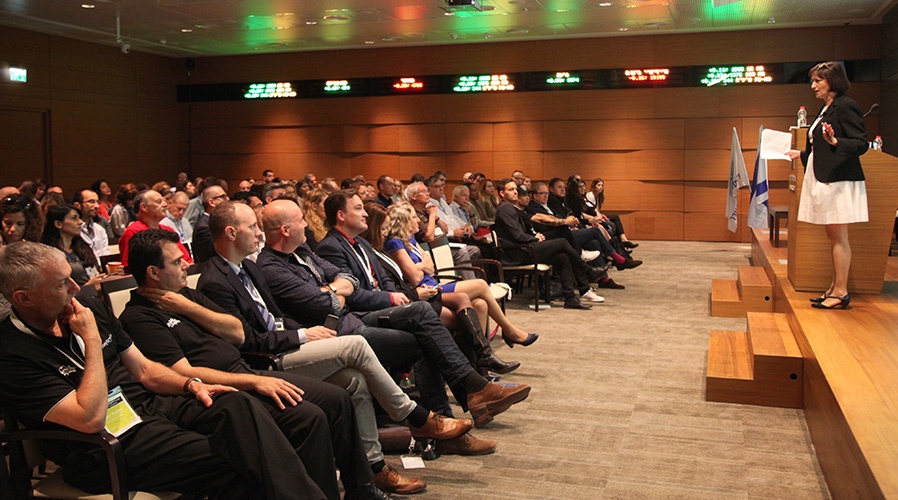 Our very own Dina Gidron at Oz Branding also addressed the crowd about the trends in online and offline marketing, and Eyal Tryber, CEO of the Israeli Maytronics company, shared fascinating insights about building the Maytronics brand globally. We also heard from Matt Bowen, President and CEO of Aloft Group in Boston, who shared with us the success factors involved in growing your brand in the US.
We gained a lot in insight at this conference and enjoyed seeing old colleagues and meeting new ones. We hope you did too!
Our very own Dina Gidron at Oz Branding also addressed the crowd about the trends in online and offline marketing, and Eyal Tryber, CEO of the Israeli Maytronics company, shared fascinating insights about building the Maytronics brand globally. We also heard from Matt Bowen, President and CEO of Aloft Group in Boston, who shared with us the success factors involved in growing your brand in the US.
We gained a lot in insight at this conference and enjoyed seeing old colleagues and meeting new ones. We hope you did too!
The Online Approach to Event Marketing
By
Miri Peled
, 14/05/2017
This post will explain how to effectively integrate the two to achieve your company's greater marketing goals when it comes to marketing a conference
1. The More Targeted the Event, the Better
At an industry conference, you want your booth and company to really stand out among the others. The larger the conference and broader the topic, the more challenging it will be for your product to grab the attention of potential customers. One of our customers, Elcam Medical, for instance, started to see fantastic results after attending more targeted events. After undergoing a branding process which sought to position the company as experts in ensuring safety in the hospital environment, they understood that they were marketing not only to their supplier, but also to their end user -- ICU nurses. You can read more about Elcam's success in integrating online and offline marketing strategies here>> As a result, instead of attending the usual larger medical conferences and trade shows, they began to attend more targeted professional conferences of nurses, albeit with a smaller booth. Since the subject was so targeted, Elcam Medical was often able to generate awareness of their product by speaking on the lecture panel at the conference.2. Be Really Clear About Your Inbound Goals
Make sure everyone in your marketing department is working together towards the same goals. Your inbound marketing activity before, during, and after events can support your greater marketing strategy of lead generation by:- Increasing both direct and indirect traffic to your company website
- Increasing the number of email or blog subscribers
- Educating potential customers about your specific product or service
- Increase the number of requests for a product demo
3. Identify your Call-to-Action (CTA)
A call-to-action, or CTA, is an action which you want potential customers to take. This is the method by which you achieve your goal, which you've properly defined in #2. Your CTA could be to convince potential customers to register for the event, download your ebook or white paper, sign up for your webinar, take a survey, or just visit your latest product or service page. By convincing potential customers to take this action, you are driving them further along the sales cycle. Other parts of your company can benefit from trade shows as well, so it is important to sit down and brainstorm with management in different departments to get their input. One of our clients, Afimilk, decided that in order to promote their new product, the AfiAct II at the World Dairy Expo, they would run a lottery during the event to give away the product to one lucky registrant for free. We integrated a CTA into all of their marketing materials for this event, adding it to the Afimilk website homepage, and creating landing page dedicated to registrations specifically for the event.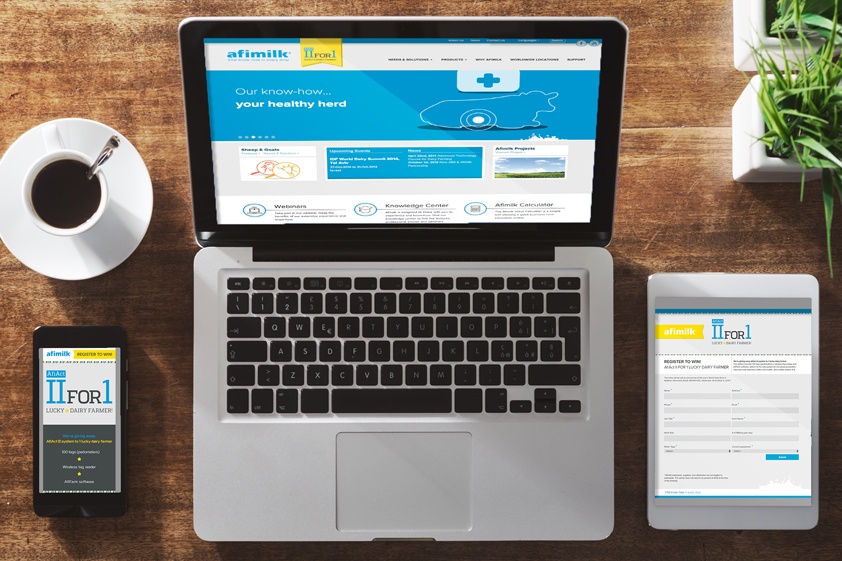
4. Create a Dedicated Landing Page to Promote your Event
The best landing pages promote events before and after the event. How? Before the event, they help to schedule appointments with your sales and marketing team, explain exactly what your company will be doing at the event, and promote a particular product or service. After the event, they publish reactions and insights from the event as well as the speaker's presentations on the landing page. Another purpose of your dedicated landing page before the event can be to get specific info from potential customers in order for your sales team to qualify them. But in an environment where you are competing with many other companies for the attention of the same people, you'll need to stand out from the crowd. Why would they want to give you information about themselves? You'll have to offer them something in return. Think really hard about what your potential customer's pain point is and how you can help them – for free, in exchange for their contact information. Here's an example from one of our customers, Plastopil, where we inspired customers to register to an event by offering them a free iPad mini: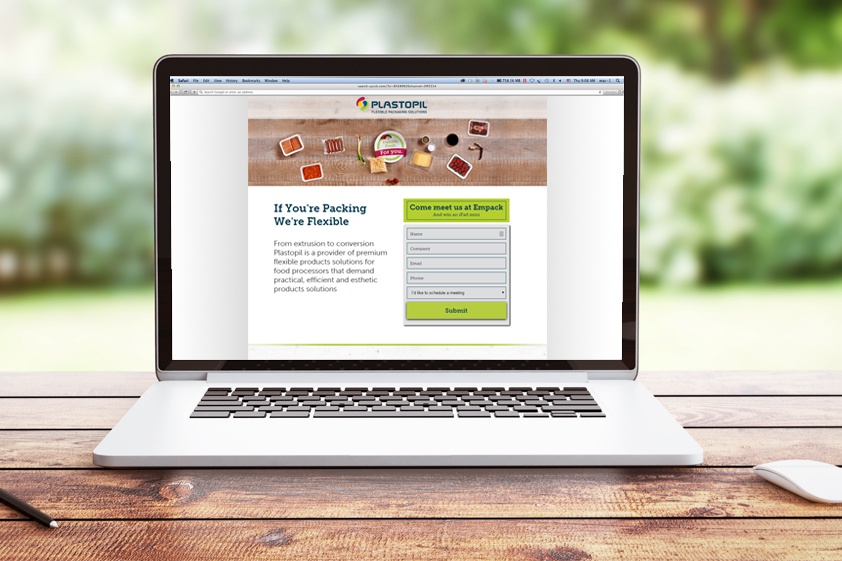
5. Promote Your Event via Email Marketing
Invite your contacts to the event with an email beforehand, sending them to your dedicated landing page in order to register for the event or schedule appointments, educating them about your services and products, or offering them a free ebook or white paper to show them you understand (and have a solution to) their main pain point. You may want to send an email promoting the event several times beforehand – perhaps a month, two weeks, and then the week of the event. Follow up afterwards with either a thank you or a newsletter that recalls the event. If you blogged about the event, include those posts in the newsletter as well.
6. Combining Online and Offline for Maximum Results
A major goal in B2B conferences is to build new business relationships and strengthen old ones, both of which are key in lead generation. This offline approach should not be underestimated. However, you can use inbound marketing to gain the attention of new potential business partners, educate them about your products and services, and have that first meeting be as effective as possible.
Overcoming Global Borders
By
Dina Gidron
, 14/05/2017
A Case Study in Effective Online and Offline Marketing. Trends in online marketing, Microtargeting, mobile, content, Amplification and Old-school marketing
A Case Study in Effective Online and Offline Marketing
Note: This is the last of a 5-part series on our annual international B2B marketing conference this past November. Read Part 4 here. As VP Strategy at Oz Branding, I decided to share our experience with Elcam Medical at the Global Marketing Challenges for B2B Companies conference, as it demonstrated the importance of combining both online and offline marketing approaches. Before delving into the Elcam Medical case study at the conference, howev er, I thought it important to remind you of five important trends in online marketing:- Microtargeting – which involves finding a specific subset of customers in your marketplace
- Mastery of mobile – Mobile will dominate your market, no matter what the industry.
- Quality content – You'll need to fill that mobile channel with quality content, not to mention all of your other channels (and differentiate between these channels).
- Amplification – You'll also want to figure out how to amplify that content so it reaches as many potential customers as possible.
- Old-school marketing – Nothing beats face-to-face interaction.

Elcam Medical– No Longer "Just" an OEM
Now that we have those trends in mind, I want to introduce you to Elcam Medical, a medical device company that is a world leader in medical stopcocks. This fluid control application is part of a larger set sold to a hospital through a multinational company. Elcam Medical, whose humble beginnings started at Kibbutz Baram, is a well-known OEM in the medical device industry. The challenge is creating awareness of the product to the end user who benefit from the patient safety and time-savings measures the device offers. Once the end users recognized the brand more, they would be able to create additional demand from the market, rather than relying solely on OEM representatives that may have a different agenda. How then could Elcam Medical go about positioning itself to be recognized more by the end users, in this case, ICU nurses in the medical device equipment industry? Oz Branding has been working with Elcam Medical for the past 4 years. In this case, we helped them devise a two-pronged strategy. The first challenge was to identify and understand their end user, a microtarget of ICU nurses, and develop channels to communicate with them. The second was to continue to strengthen its brand recognition with big multi-national companies, who are purchasers of Elcam Medical, but are familiar with it only as an OEM.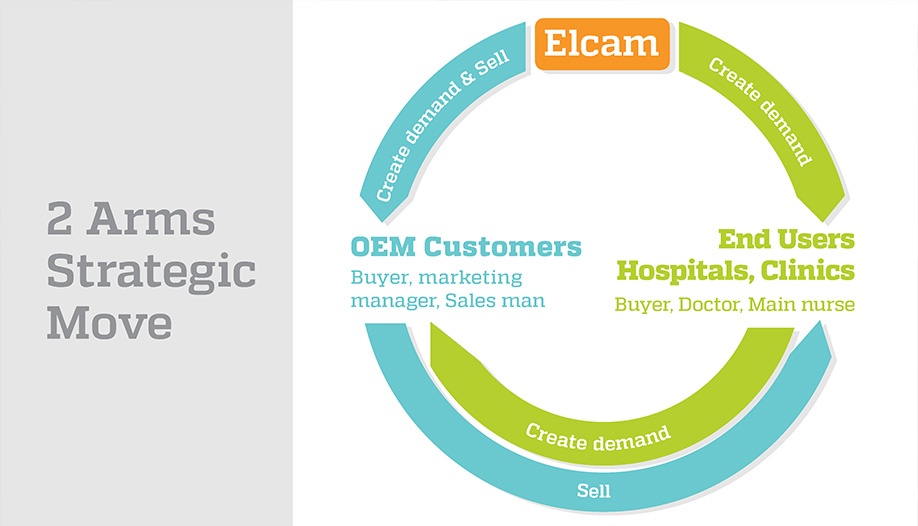 The purpose of this two-pronged strategy was to create demand with regular companies, and spark a conversation of why this product's value is high enough to justify raising its price. With increased demand generation, sales would rise.
A Risky Yet Effective Strategy
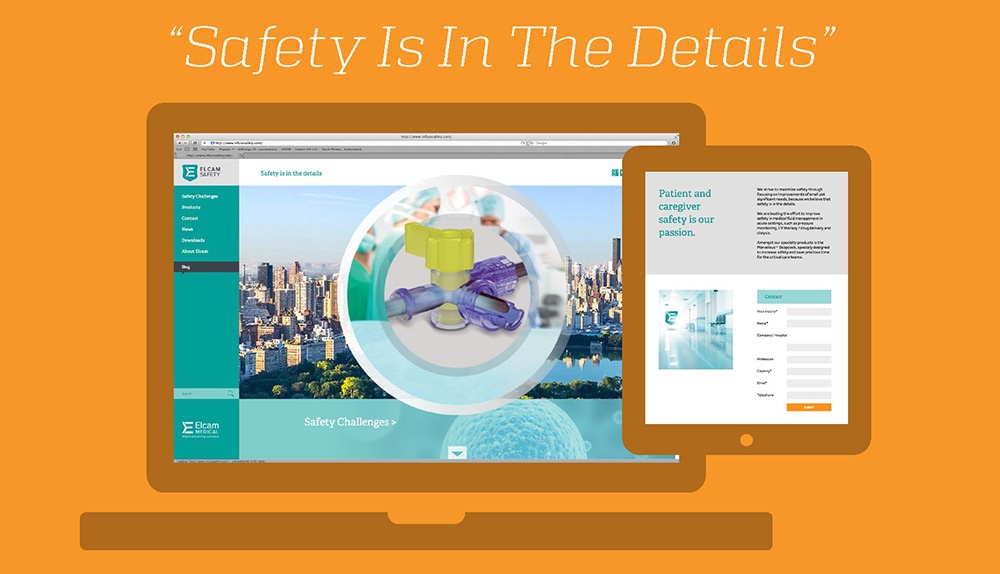
The approach Oz built with them was dramatic and involved big decisions. In truth, multi-national companies don't want suppliers talking to customers. The question became how Elcam Medical would implement its strategy without damaging customer relations. First, all project work was done with complete transparency between Elcam Medical and its customers. The customers understood Elcam Medical would not sell directly to the hospitals and since there was no conflict of interest, sales have increased as a result of this project. Secondly, the idea was to focus on a concept of concern to end-users which wouldn't affect the suppliers. Fortunately, this concept had already been thought of and built into the product and reflected in the Marvelous stopcock, specially designed to increase safety and save precious time for the critical care teams. In order to have this concept strengthen the entire brand rather than one specific product, a designated website was created to promote Elcam Medical's most important feature for the ICU nurses: patient safety. This turned out to be the main benefit for end users. They wanted to know: How did Elcam Medical ensure patient safety? That became the agenda of the website – to position Elcam Medical as experts in insuring safety in the hospital environment, especially within the ICU.
As new products develop they will also be shown on the website. More than just a promotion of the company's latest technology, the website helps to share a lot of professional data and information among medical professionals.
In order to identify the issues and concerns Elcam Medical's end users face, 12 LinkedIn groups were identified and scoured. Blog articles were written and posted to this website addressing these topics and continue to be expanded upon. For even wider distribution and increased awareness, professional online publications are approached with these same topics, helping to position Elcam Medical as leaders in patient safety.
This turned out to be the main benefit for end users. They wanted to know: How did Elcam Medical ensure patient safety? That became the agenda of the website – to position Elcam Medical as experts in insuring safety in the hospital environment, especially within the ICU.
As new products develop they will also be shown on the website. More than just a promotion of the company's latest technology, the website helps to share a lot of professional data and information among medical professionals.
In order to identify the issues and concerns Elcam Medical's end users face, 12 LinkedIn groups were identified and scoured. Blog articles were written and posted to this website addressing these topics and continue to be expanded upon. For even wider distribution and increased awareness, professional online publications are approached with these same topics, helping to position Elcam Medical as leaders in patient safety.

Online and Offline Equals 100% Success
The best approach combines online and offline marketing. Simply put: You have to get out there. In contrast to attending the usual larger medical conferences and big trade shows, Elcam Medical started to attend more targeted professional conferences of nurses, albeit with a smaller booth. Whenever possible, they tried to generate awareness by getting on the lecture panel at the conference. Of course, paid online advertising promoting these conferences helped, but at the end of the day, online activity leads to offline activity, which leads to a personal relationship. As a result of this two-pronged branding strategy, many personal relationships have developed, both between Elcam Medical and the end user, as well as between Elcam Medical and suppliers. As an example of the results generated from this type of online and offline approach, I read an email we received from a big company representative who wrote to one of Elcam Medical's representatives she had met at a critical-care nursing conference: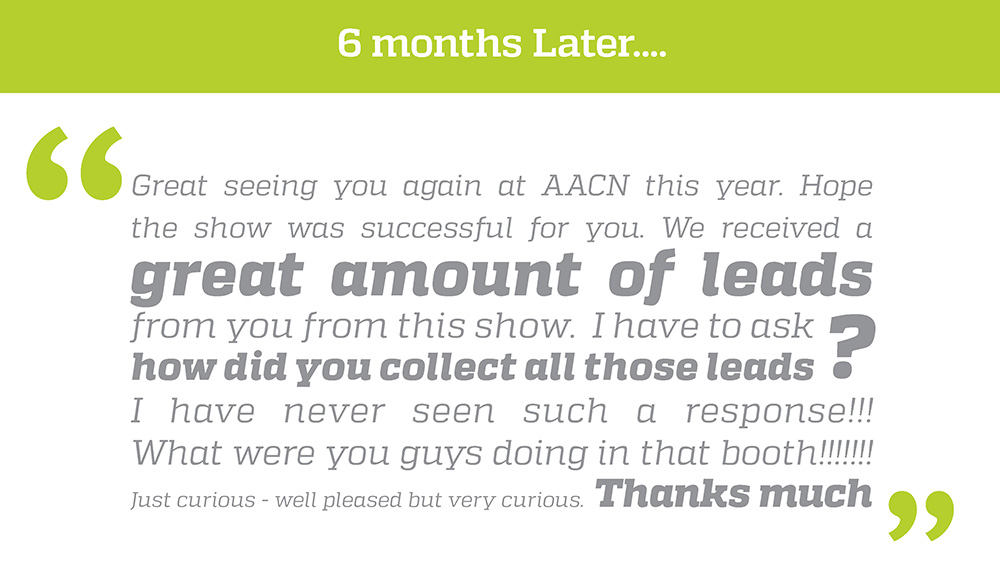
This email was sent just 6-8 months into the branding process, the results are still in process.
The shift is dramatic in that it has changed the rules of the game – Elcam Medical now talks to nurses directly, creating its own relationships with the end user, which in this case, resulted in a huge amount of leads from one particular nursing conference. It shouldn't be a surprise that sales increased by 35% in 2015, the same year that Oz started working with Marvelous. As a takeaway from the conference, I believe that this combination of online marketing and the creation of offline personal connections can move many Israeli companies further into the international marketplace than they are today. As they expand and move abroad, I'd like companies to remember this combined approach when considering how to overcome global borders.
This is the last post in our series about the annual international B2B marketing conference this past November.
As a takeaway from the conference, I believe that this combination of online marketing and the creation of offline personal connections can move many Israeli companies further into the international marketplace than they are today. As they expand and move abroad, I'd like companies to remember this combined approach when considering how to overcome global borders.
This is the last post in our series about the annual international B2B marketing conference this past November.

Growing Your Brand in the USA: Key Success Factors
By
Orit Oz
, 14/05/2017
Matt Bowen, shared with us at the Global Marketing Challenges for B2B Companies the key success factors for Israeli companies to scale their product in the U.S.
Mr. Bowen cited this article from Harvard business review which noted that in a survey of 112 Israeli companies founded between 1996 and 2013 that met or exceeded $20 million in revenue, most shared two common characteristics. The vast majority – 91% -- had both Israeli CEOs and had received funding from foreign VCs.
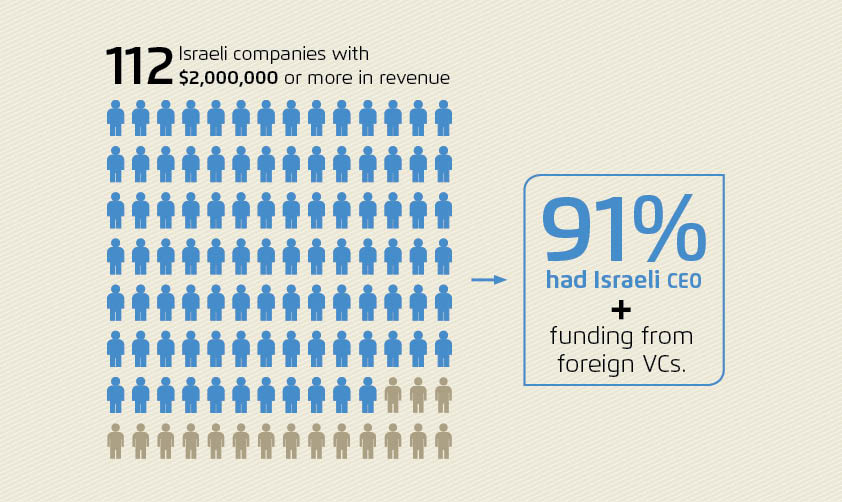 Mr. Bowen believes that in addition to these factors, Israeli companies that desire to successfully penetrate the US market must be truly remarkable. We'll examine three key factors that contribute to a company's "remarkability" in this post.
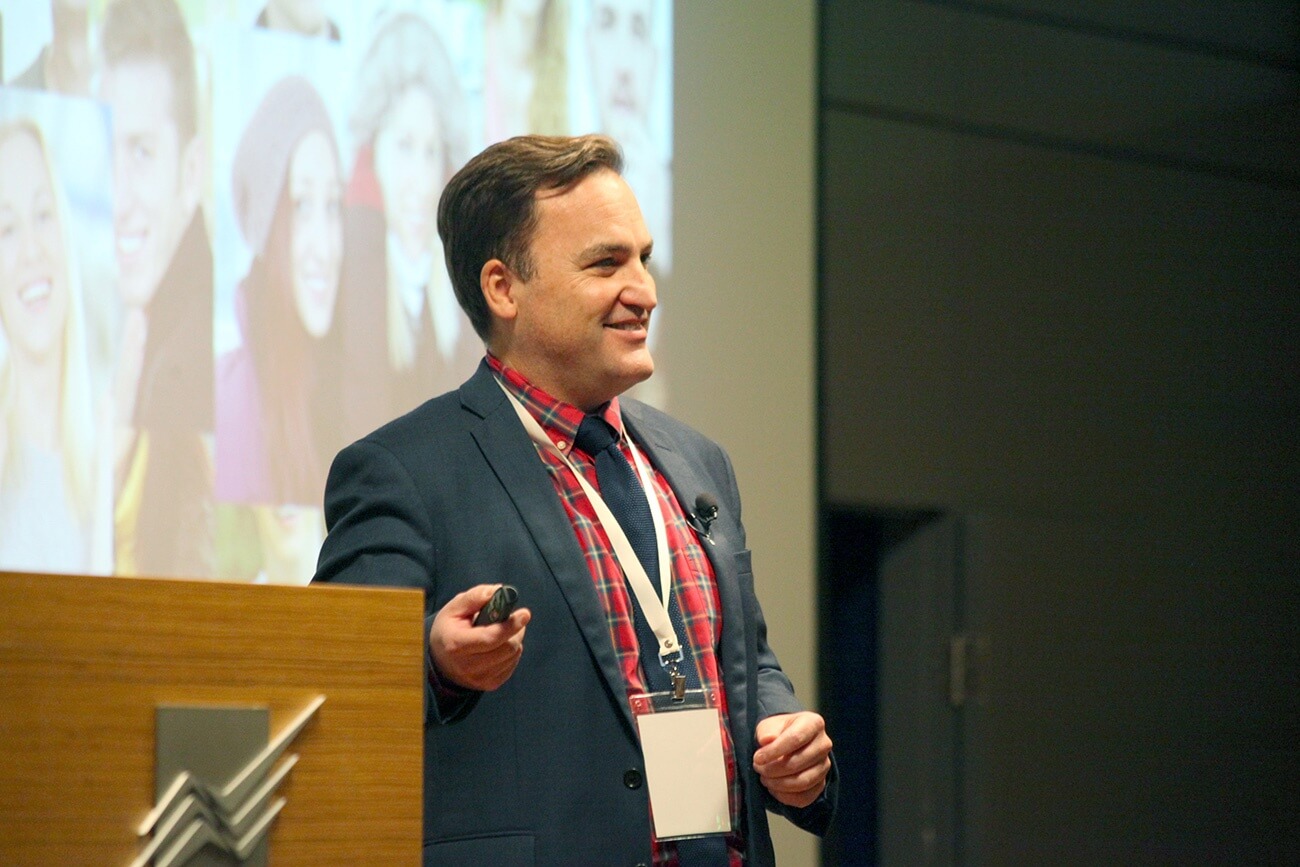
Step 1 – Zoom and Focus
 While the US market offers a lot of exciting opportunity for growth for any Israeli company, it is also quite diverse. The market forces can create a lot of voices, as well as choices, and your company's brand needs to be able to be heard above the noise. Mr. Bowen showed us how his company was able to zoom and focus on the market for one client, Greiner Packing, by creating customer personas. By focusing on specific personas and understanding what these personas do on a typical day, their pain points, values and possible objections to the product, his company gained a much clearer focus of who would benefit from the product and how. Here's a detailed example of a customer persona:
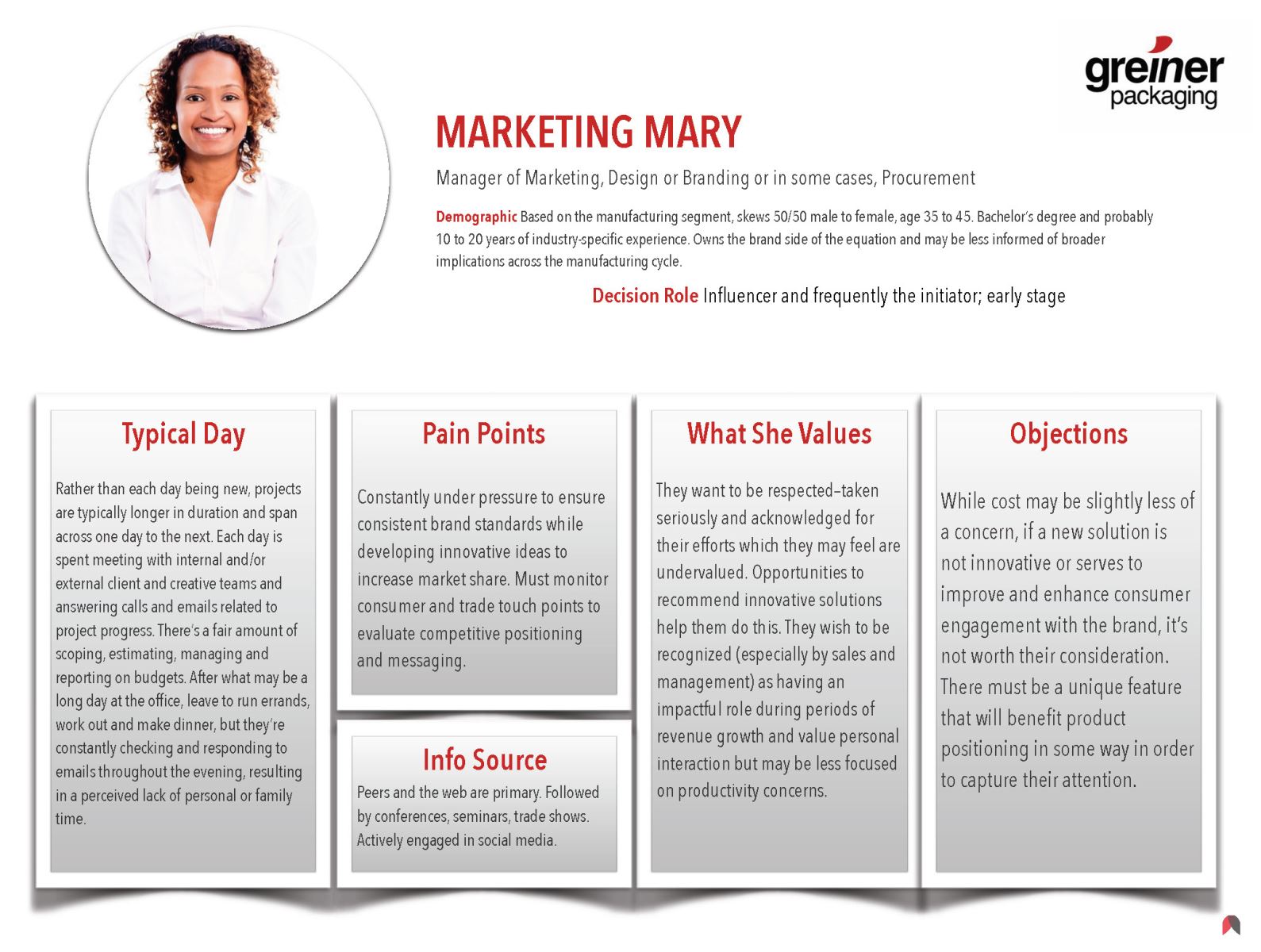 From this type in-depth understanding of your customers, you can start to build your company's story more clearly.
Step 2 - Tell a Bigger Story
From his vast experience in the field, Mr. Bowen told us: "Companies that seek to enter the US market successfully need a bigger story." That also means not overly focusing on your products or technology, but how it can make your customer's lives better. It's the customer's emotional connection to the brand that ultimately builds your customer relationships and brand loyalty.Step 3 - Cultivate Relationships to Inspire Brand Loyalty
Brand loyalty is a goal that is achieved by a journey - a journey with each customer. Through focusing and zooming in on your market and telling the right story, you'll start to build relationships. Customers with good experiences will be happy to share it with the world, especially if they believe in your product. Many of these relationships will develop into brand advocates and slowly build your brand and customer loyalty.
To Make it In America, Be Remarkable
As we've explained, there are three key factors to successfully entering the US market. First, your company must focus and zoom in on its market. Creating in-depth customer personas can help with this. Secondly, you'll need to come up with a way to tell a "bigger story" – one that doesn't focus too much on your products and technology, but how it will add value to your customer's life. Finally, you'll need to build relationships with customers based on exceptional customer experiences in order to create brand advocates and loyalty. These three factors can go a long way in making your company truly remarkable and successfully scale in the US.
From Israel to Global: Lessons Learned in Building a Global Brand
By
Orit Oz
, 14/05/2017
Mr. Eyal Tryber,CEO of Maytronics and former CMO, talks about the lessons learned from his own first-hand experience, from building a global brand
 Let's start off with a bit of background about the company. A company with humble beginnings – it was founded on Kibbutz Yizreel in Northern Israel in 1983 – Maytronics has come a long way in the automated pool cleaning market. With over a billion shekels in market value, over 400 employees and operations in 46 countries and more than one million pool-cleaning robots sold, Maytronics is now a prosperous global company. The company is publicly traded both on the NASDAQ and the Tel Aviv Stock Exchange.
After going public in 2004, the company embarked on a new marketing strategy: creating anchors in strategic markets. Company branches were established in Argentina, the US, France, Australia and Spain. Their strategy paid off as the company began to achieve unprecedented growth. As it grew, however, new challenges arose. First, each company branch started to create its own multi-culture, which created tension between local and global brands. Secondly, as the company grew, it risked losing its unique Maytronics company culture – stemming from its humble Israeli kibbutz origin and culture.
Let's start off with a bit of background about the company. A company with humble beginnings – it was founded on Kibbutz Yizreel in Northern Israel in 1983 – Maytronics has come a long way in the automated pool cleaning market. With over a billion shekels in market value, over 400 employees and operations in 46 countries and more than one million pool-cleaning robots sold, Maytronics is now a prosperous global company. The company is publicly traded both on the NASDAQ and the Tel Aviv Stock Exchange.
After going public in 2004, the company embarked on a new marketing strategy: creating anchors in strategic markets. Company branches were established in Argentina, the US, France, Australia and Spain. Their strategy paid off as the company began to achieve unprecedented growth. As it grew, however, new challenges arose. First, each company branch started to create its own multi-culture, which created tension between local and global brands. Secondly, as the company grew, it risked losing its unique Maytronics company culture – stemming from its humble Israeli kibbutz origin and culture.
Bridging Gaps in Cultural Differences While Sustaining Continuous Growth
And thus, Maytronics embarked on an international organization process with Oz. Oz carried out this process in two ways. First, it enhanced the company dialog in order to form one distinct Maytronics company culture. This in turn helped build a strong global brand with a highly committed team located all over the world. Or as Tony Hsieh, CEO of Zappos put it: "We believe that your company's culture and your company's brand are really just two sides of the same coin." In order to form this distinct company brand and culture, Oz and Maytronics brainstormed together a list of its core values, applying the "Golden Circle" concept of Simon Sinek. According to this concept, products (the what) and the development (the how) serve to achieve a company purpose (the why). This also assists in creating an understanding of the company's competitive edge in the marketplace.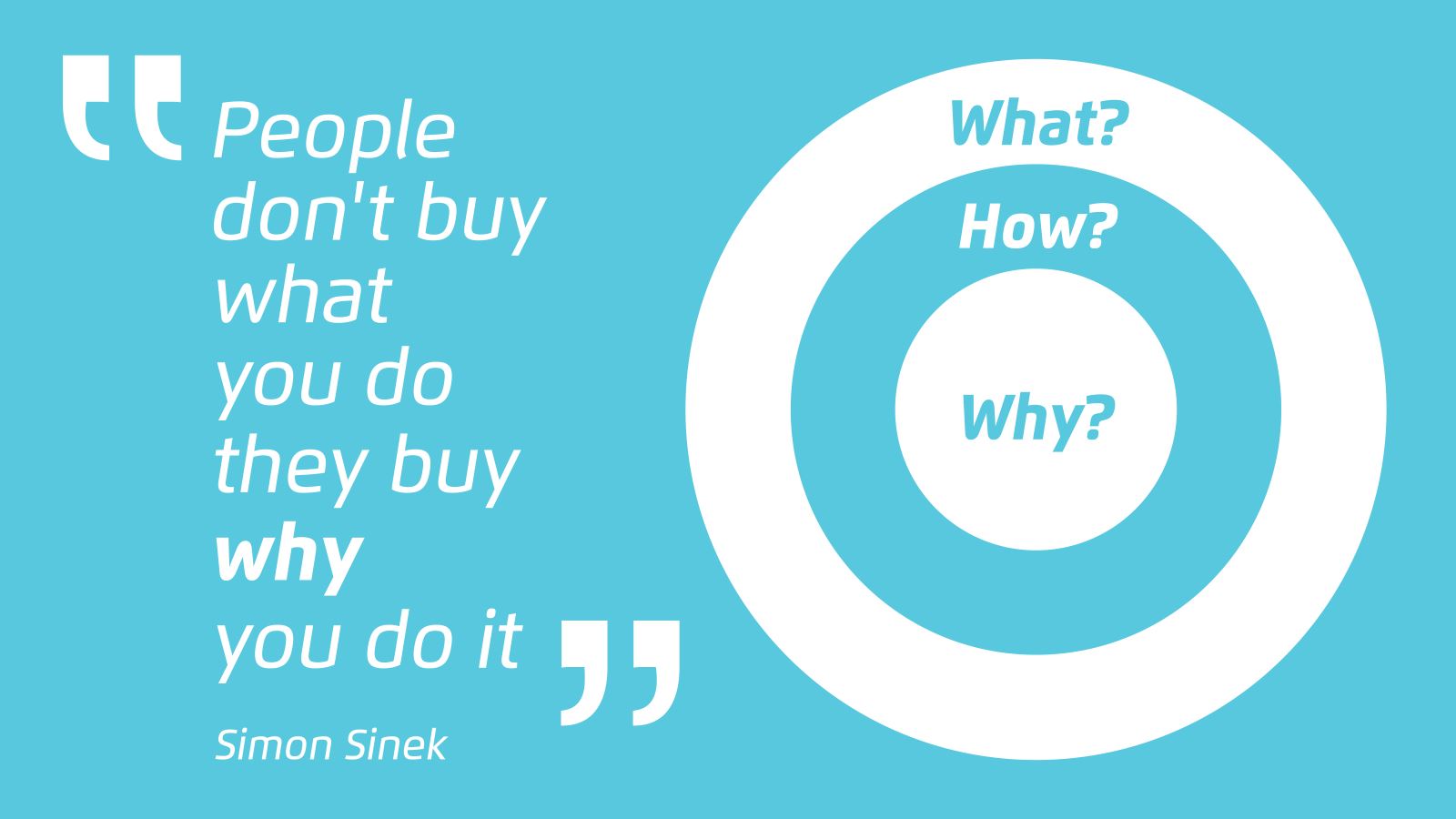 What are Maytronics' core values? Most importantly, the company believes in focusing on the customer. Along with this are professional values of integrity and fairness. Together these are the internal values, or company culture, of Maytronics.
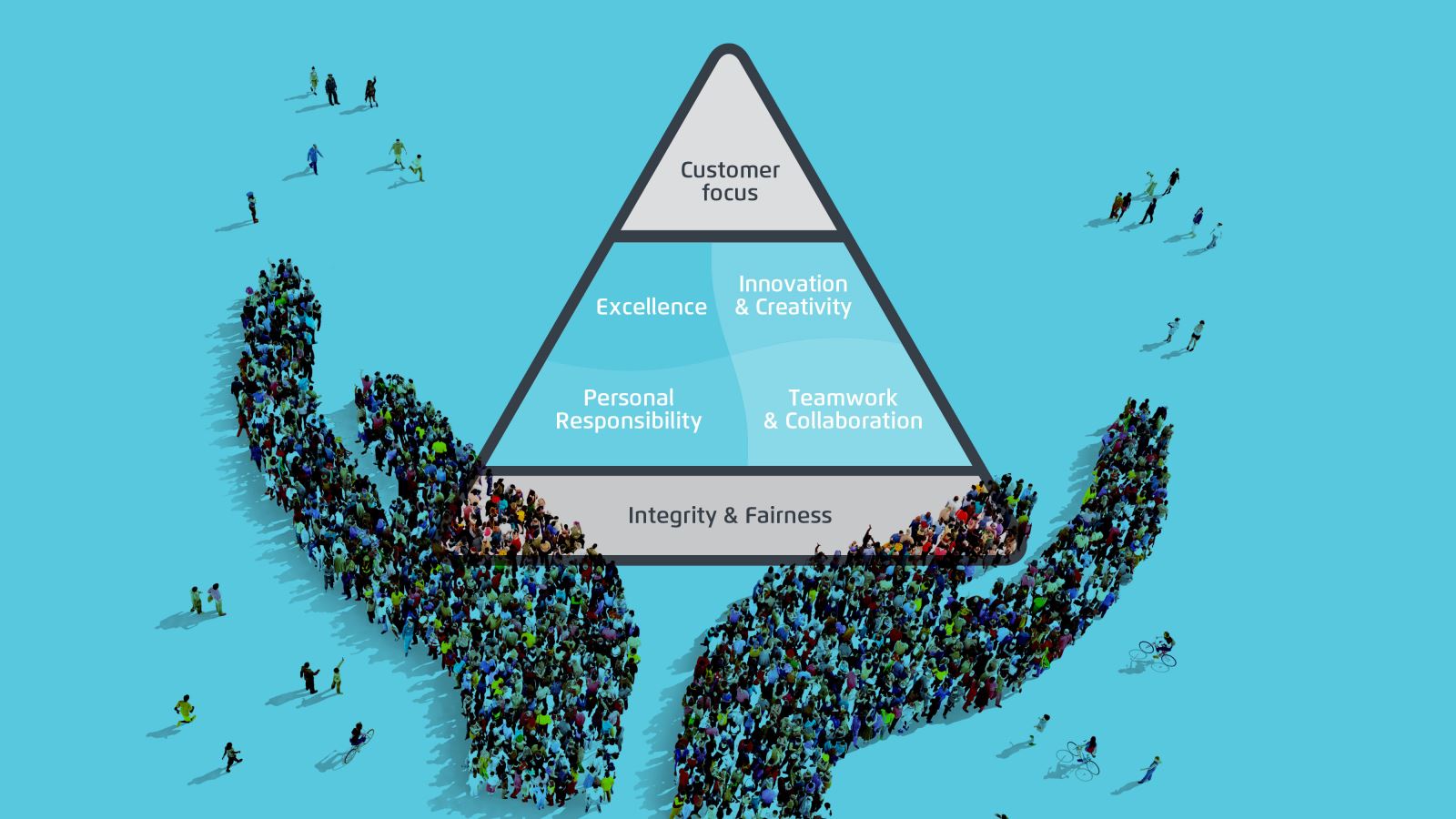 Other values, while important, are components assisting in delivering these primary values. Although Maytronics develops pool cleaning robots, this alone doesn't fully encapsulate the company's purpose. As Mr. Tryber stated in his talk at the conference: "We don't sell robots, we sell an exceptional customer experience."
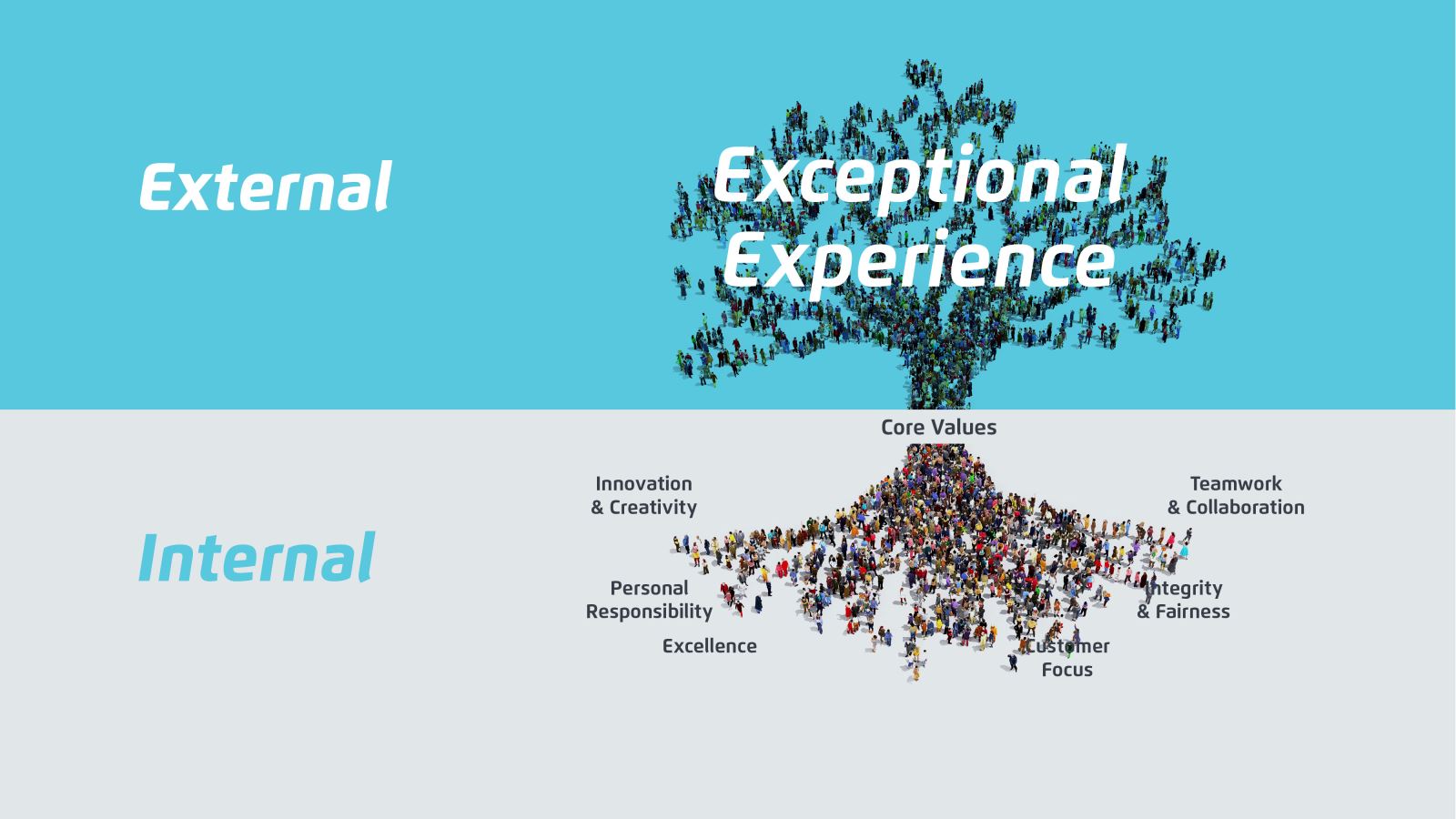 Oz successfully transformed the company's internal values, or company culture, flipping them to discover the other side of the coin: the company's brand.
Drastic Results Which are Just the Beginning
The branding process with Maytronics was successful in that it quickly unified the global team, facilitating increased teamwork and collaboration. In addition, its company collateral and imaging are consistent both globally and locally. Although these results were the most immediate, the new branding left an impact which will be felt in the company, both internally and externally, for the long-term future as well.
Getting Over the Great Wall: Marketing Successes and Failures in China
By
Orit Oz
, 14/05/2017
Mike Golden, CEO of Adsmith, gave us some tips at the B2B International Conference about what to do (and what not to do) when marketing your brand in China.
Fail Small, Fail Large
Although China offers a lot of opportunity, it can also be an overwhelming experience. "Some people come to China to try it for a year. It's a disaster, and they leave. That's a large fail," explains Mr. Golden. "The small fails are going up this very steep learning curve and learning the problems marketing in China." Mr. Bowden then detailed a practical list of marketing challenges companies face when entering the Chinese market and how to alleviate these "small fails."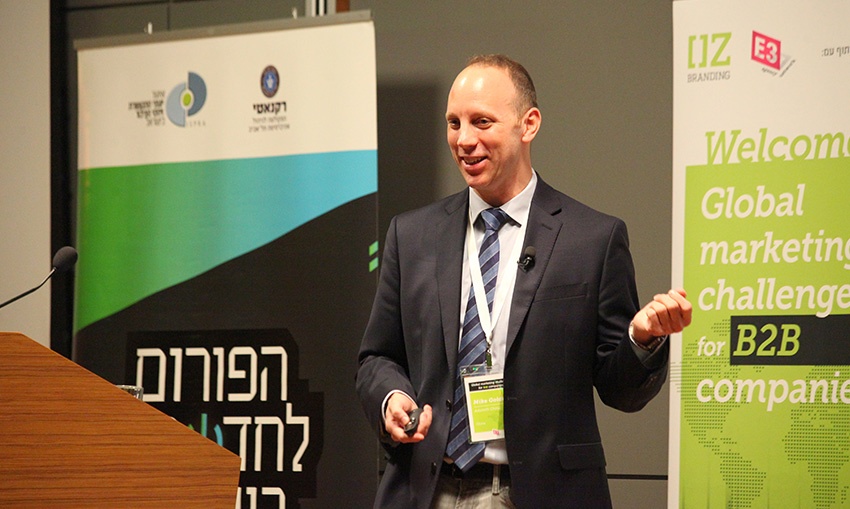
Challenge #1: No one Can Read or Understand Your Company Name
He brings the example of Heineken and Coca-Cola, who not only create Chinese versions of their names, but made sure that the Chinese characters that formed the words were meaningful and related to the brand as well. For example, Heineken in Chinese means “happy power," and Coca-Cola means "happy mouth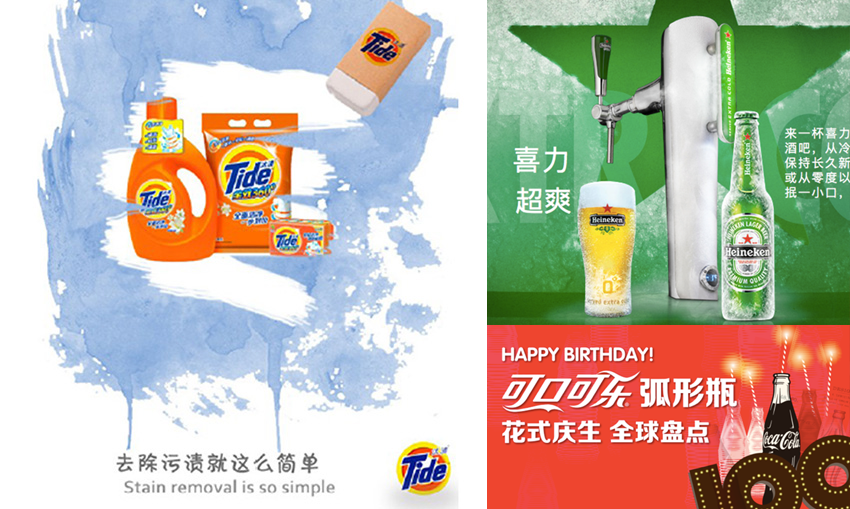 He told a cautionary tale of a luxury brand company that decided they didn't need a name in China. As a result, newspapers came up with their own competing versions of the same brand. At one point, people started to trademark those names. That's another reason why it's so important to create a Chinese version of your company name. If you don't do it, someone else will.
Challenge #2: Your Website and Marketing Collateral isn't Localized
One method of localizing all of your marketing collateral is to have it translated into Chinese. But that's not necessarily enough, Mr. Golden warns. The next step is to take the marketing collateral and give it to real Chinese marketing people and copywriters. Good copy is extremely important. Visuals are just as important as copy. While it isn't necessary to completely disregard the global brand, you do need to combine it with some amount of localization. The amount of localization depends on the market and the brand. For B2B companies, you want to strike the right amount of balance between global and local branding. (For an example of localized content, see the example in Challenge #4).Challenge #3: The Great Firewall of China
In terms of the web, China is a particular challenge to global brands, since it blocks many sites such as Google, Twitter and Facebook. Even if your site sits on the same server as a site China has decided to ban, your website page might not load. And according to Mr. Golden, this happens a lot. Make sure people can open and use your website to learn about your company and product.Challenge #4: Creating a Website with Clean White Space
According to Mr. Golden, the Chinese don't seem to appreciate the beauty of clean, white space on their homepages. He gives an example of an online trade magazine which shows the typical layout of many Chinese websites: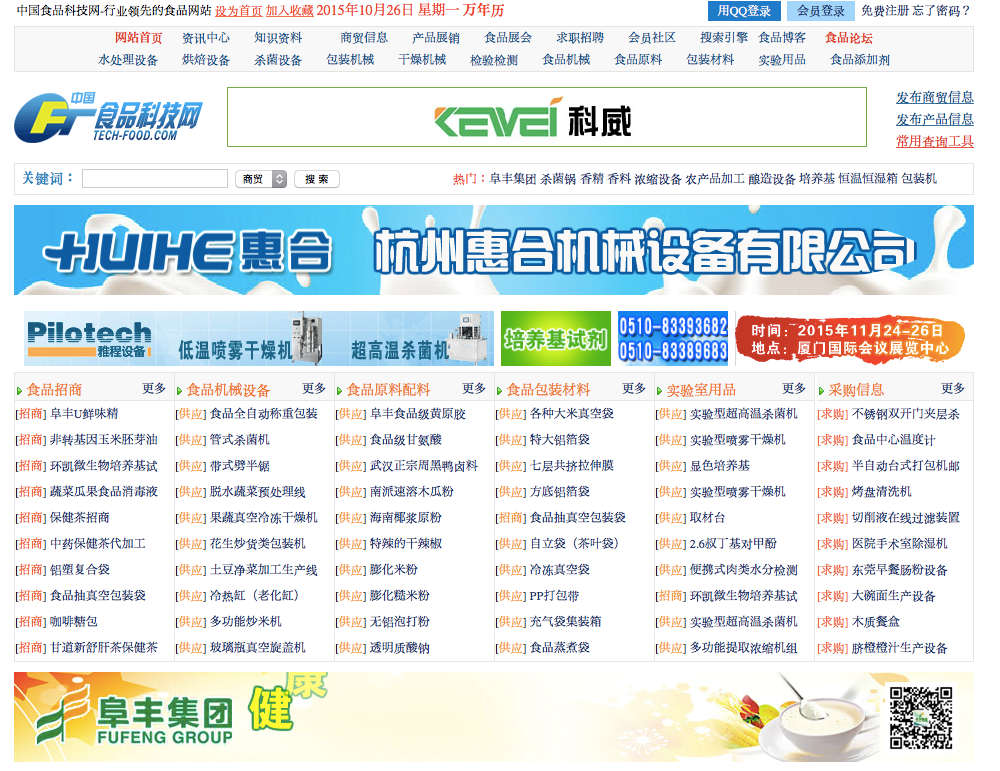 Fortunately, his company is successful at transforming Chinese versions of websites into clean, white homepages. One example he showed us was Lycored, a company specializing in food ingredients. They were able to localize the Chinese version of their website with images while at the same time create a nice, clean homepage:
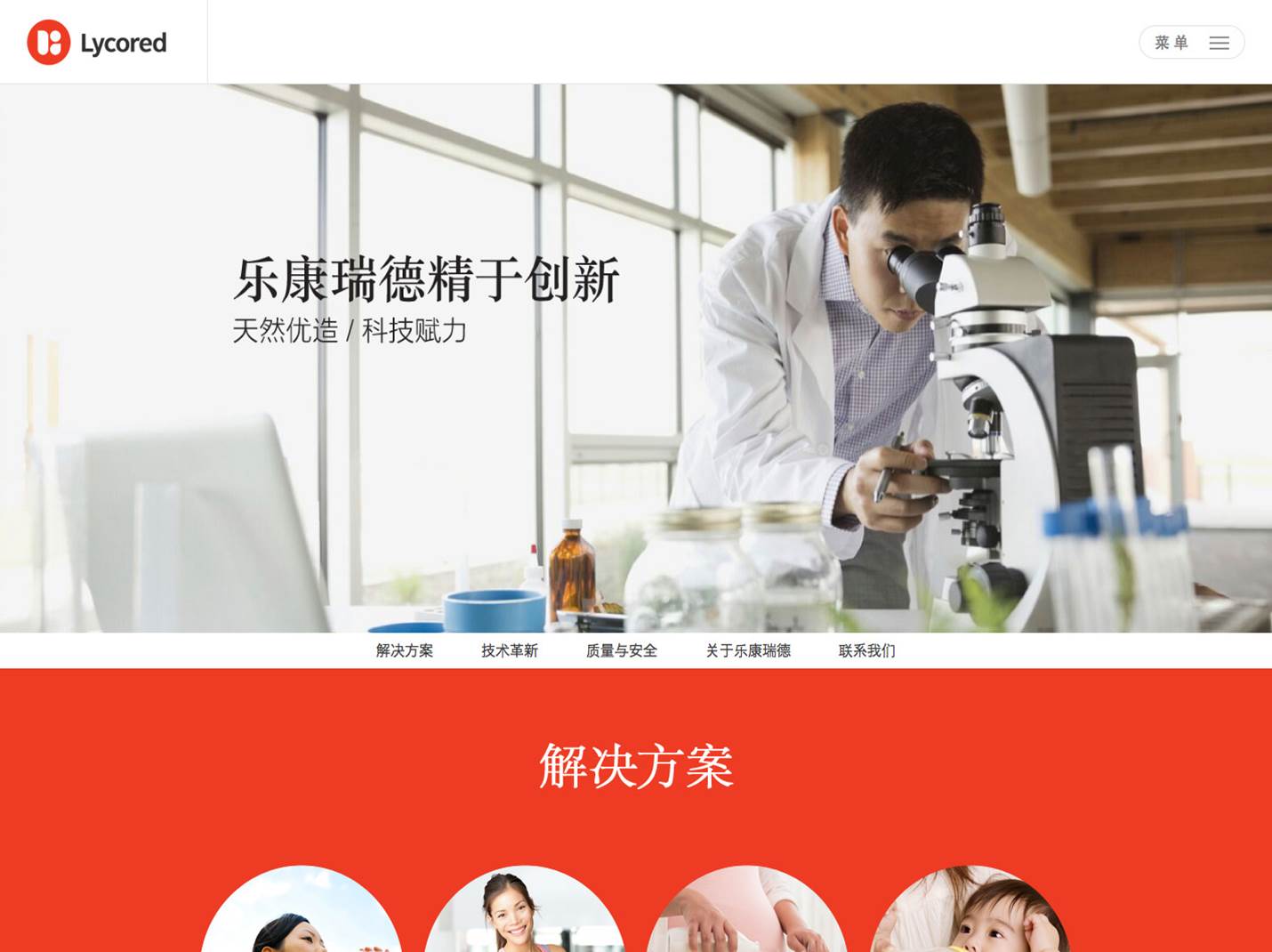 "No one was talking about the threat of resistance. It was an invisible threat – but once it appeared, it was already too late. We gave this threat a face and a name, so people could start talking about it," Mr. Asset explained. "There's an old saying, `If you want to own the solution, you have own the problem.' So we were the ones to start talking about it."
They were also able to use a lot of red. Red is a very lucky color in China, Mr. Golden explained, so it was great that Lycored uses red.
"No one was talking about the threat of resistance. It was an invisible threat – but once it appeared, it was already too late. We gave this threat a face and a name, so people could start talking about it," Mr. Asset explained. "There's an old saying, `If you want to own the solution, you have own the problem.' So we were the ones to start talking about it."
They were also able to use a lot of red. Red is a very lucky color in China, Mr. Golden explained, so it was great that Lycored uses red.
Challenge #5: Distributing Your Content in China
Since China blocks all of the mainstream sites from the US, it has created Chinese alternatives. Your company will have to familiarize themselves with sites such as Baidu, WeChat, Weibo, and Youku and the differences between them and their US counterparts. The numbers on these sites and networks are huge, Mr. Golden says, but it can still be hard to reach the people. For instance, Baidu, he explains, uses a completely different algorithm than Google. Speed and number of pages are major factor, as are metatags and other factors that Google no longer takes into account. In addition, sites with more pages rank higher. From Mr. Golden's experience, sometimes companies will need to call Baidu personally in order to increase their website's loading time. Trade magazines are another excellent source for distributing content. They can offer cost-effective advertising opportunities, as well as paid advertorial opportunities. Advertising laws, however, are very strict. Any advertising consisting of experts that speak of benefits of a product must be cleared with the Chinese government beforehand or risk being fined.Successful Penetration of the Chinese Market
Mr. Golden ended his presentation by telling companies interested in entering the Chinese market to first ask themselves the following questions:- Is your brand ready to travel? If not, maybe go to a branding company (Oz or one of the E3 partners :P)
- Do you have a solid strategy? Don't go to China just to try it out.
- What are your priorities? Think especially in terms of your geography, people, and target markets.
- What marketing actions are right for your brand and your customers? Do you understand the media your customers are using?
- Do you have all the information you need? It takes talking to a lot of people to find out what's really going on.

Why Marketing in Europe is Like a Polar Bear
By
Orit Oz
, 14/04/2017
There's no blueprint for the perfect European campaign, There's no list of boxes that you can check off. That's why marketing in Europe in like a polar bear
"There's no blueprint for the perfect European campaign. There's no list of boxes that you can check off to find out if you're doing wrong or right in Europe. That's why today I'm going to talk to you about why marketing in Europe in like a polar bear," Mr. Assent announced.
Mr. Assent continued to explain that although life in Europe seems quite romantic and uncomplicated, this perception changes when we talk about the European Union.
He explained that although the term "union" implies that it works in coordination with other countries in a unified manner. In reality, the European Union is far from a unified entity, especially as a marketplace. To illustrate this point, he explained that the United States has 300 million people who are unified by the same language. Europe, in contrast, has 500 million people and 23 official languages.
"If you're doing business in Europe as a whole, you have to do whatever you do for the US times 23."
It's an oversimplified example, he admitted, yet it clearly presents the magnitude of the challenge of marketing in Europe.
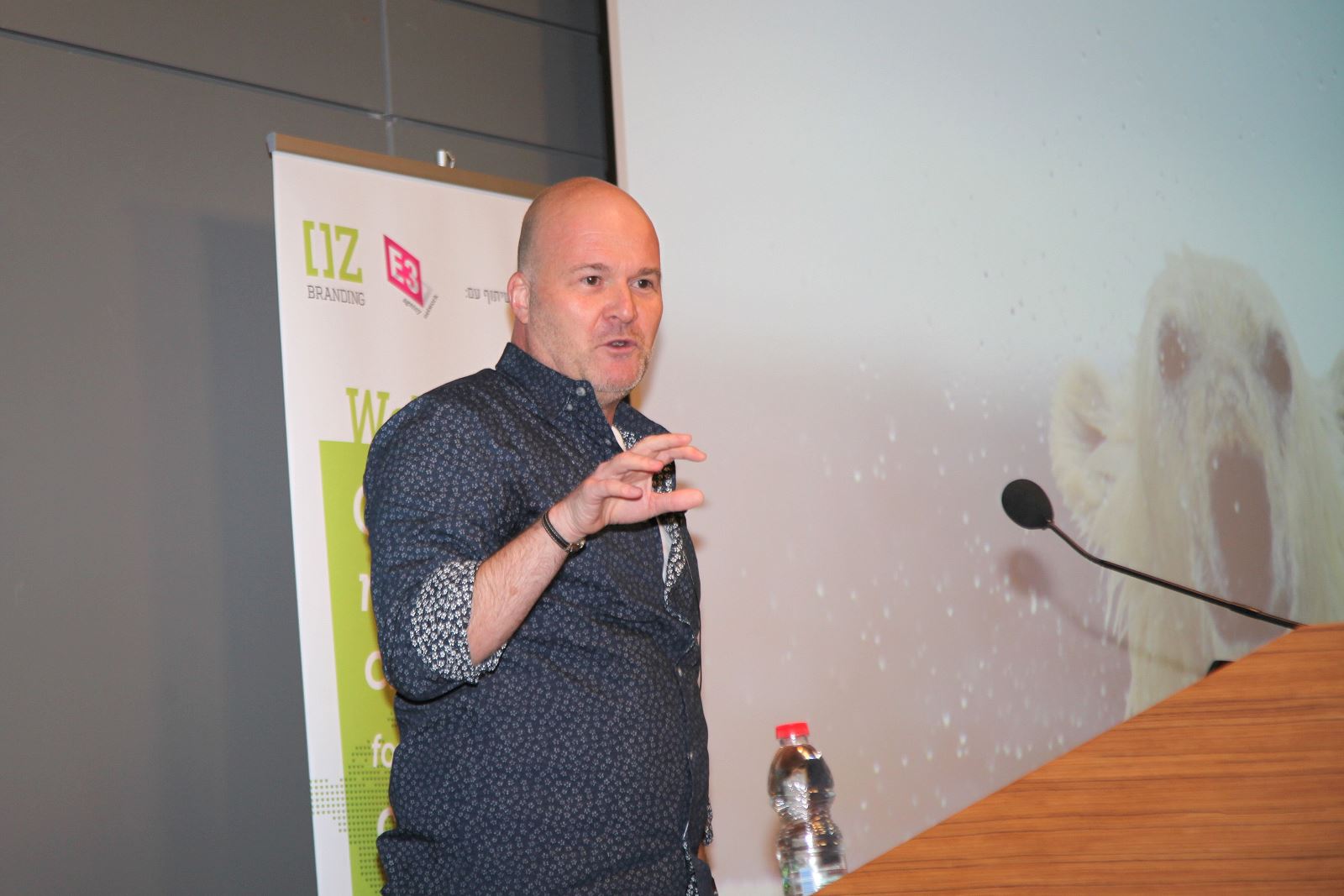 Discovering the Synergies between Different Countries (The Polar Bear Analogy)
Of course, language is only one of the many things dividing the countries. There are also vast social, legal and cultural differences. Instead of harping on these differences, Mr. Asset cautions, they need to be embraced. At the same time, you need to find the common denominator, or synergies, between the many countries.
When marketing in the European Union, he explained, you simply can't create a campaign that tells different groups of people the same story, uses the same pictures, and talks about the same issues.
"It doesn't work, because you aren't embracing the differences", he says. "You have to instead create a flexible structure that adapts to their needs."
At first glance, it seems quite contradictory to try to both embrace differences while adapting to different needs. How can we accomplish this in marketing?
In order to demonstrate how to accomplish this, he made an analogy of marketing in Europe to the anatomical design of a polar bear. At first, Mother Nature asked the polar bear what it wanted to look like, and he requested black skin in order to soak up the sun's rays. Later, the polar bear realized that it might be better to have white skin because there's a lot of snow, since if he's white he'll be protected from his enemies.
Amazingly, Mother Nature found a solution that takes both needs into account. Polar bears have black skins which soak up the sun's rays, and are stored by a layer of blubber underneath this skin. On top of this black skin, the polar bear has a layer of white fur that camouflages him in the snowy climate and helps to keep him safe from his enemies.
He even illustrated Mother Nature's idea of this flexible structure with a diagram of his own (We loved your diagram, Dirk!):
Discovering the Synergies between Different Countries (The Polar Bear Analogy)
Of course, language is only one of the many things dividing the countries. There are also vast social, legal and cultural differences. Instead of harping on these differences, Mr. Asset cautions, they need to be embraced. At the same time, you need to find the common denominator, or synergies, between the many countries.
When marketing in the European Union, he explained, you simply can't create a campaign that tells different groups of people the same story, uses the same pictures, and talks about the same issues.
"It doesn't work, because you aren't embracing the differences", he says. "You have to instead create a flexible structure that adapts to their needs."
At first glance, it seems quite contradictory to try to both embrace differences while adapting to different needs. How can we accomplish this in marketing?
In order to demonstrate how to accomplish this, he made an analogy of marketing in Europe to the anatomical design of a polar bear. At first, Mother Nature asked the polar bear what it wanted to look like, and he requested black skin in order to soak up the sun's rays. Later, the polar bear realized that it might be better to have white skin because there's a lot of snow, since if he's white he'll be protected from his enemies.
Amazingly, Mother Nature found a solution that takes both needs into account. Polar bears have black skins which soak up the sun's rays, and are stored by a layer of blubber underneath this skin. On top of this black skin, the polar bear has a layer of white fur that camouflages him in the snowy climate and helps to keep him safe from his enemies.
He even illustrated Mother Nature's idea of this flexible structure with a diagram of his own (We loved your diagram, Dirk!):
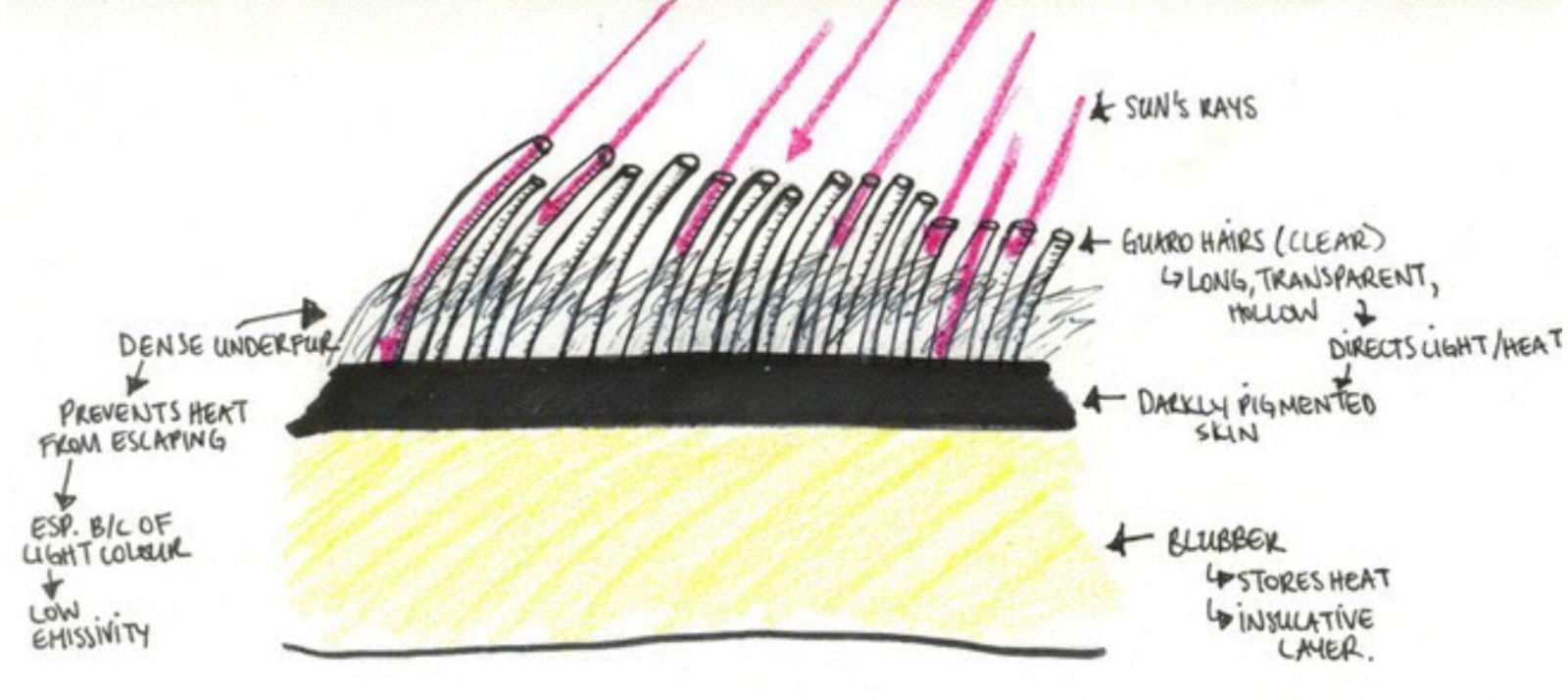
BayerCrop Science: Finding the Common Denominator for all Markets
One of his company's clients, BayerCrop Science, a major player in the herbicide market, offers a wonderful example of a marketing campaign that was successfully turned into a polar bear. Bayer is a company faced with a huge threat to the herbicide market: Resistance. Resistance is similar to the idea of immunity in medications; if a certain type of herbicide is used too much, it's useless in preventing weed growth. One simple solution to the problem is the use of rotation in certain herbicides. But this seemingly simple solution becomes very complicated to discuss in a marketplace such as the European Union. You have different crops in each country, in addition to different products, portfolios, product and trade structures, and topics. How did his company create a marketing campaign that would address the issue individually for each country, in a universal way? They decided to start with talking about the common denominator in each market.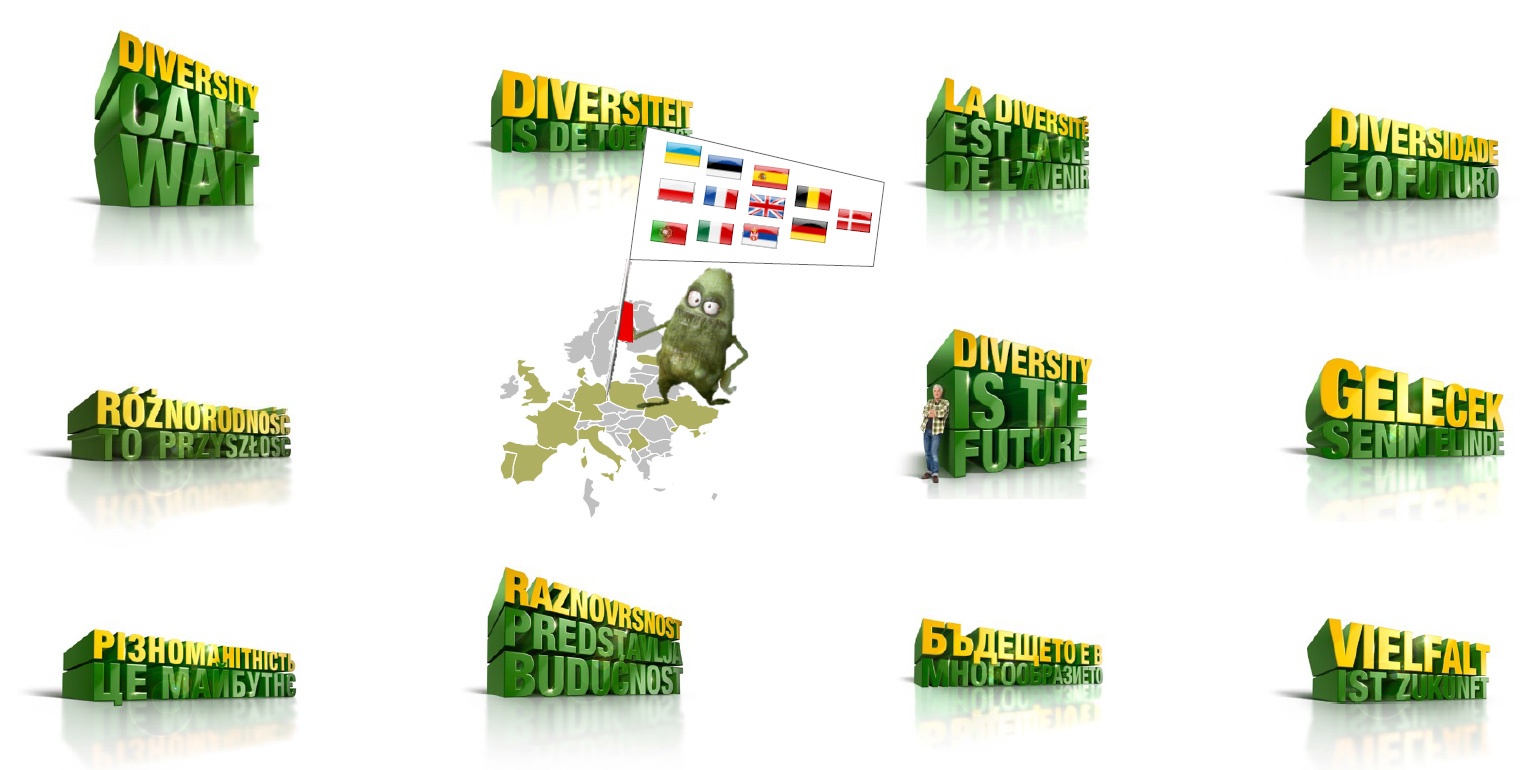 "No one was talking about the threat of resistance. It was an invisible threat – but once it appeared, it was already too late. We gave this threat a face and a name, so people could start talking about it," Mr. Asset explained. "There's an old saying, `If you want to own the solution, you have own the problem.' So we were the ones to start talking about it."
Mr. Assent cautioned that this is only one way of marketing in Europe. Again, there is no official blueprint for marketing in the European Union, only thousands of examples, including this one. However, this was a successful example of how his company was able to create a flexible structure with a coherent message that allowed each individual country to continue to build upon that structure. Each country could change the theme, language, type of crop, and even the story, but the central concept would remain the same.
The end result of this marketing campaign? Bayer was successfully positioned as the leader and preferred partner in integrated weed management.
"No one was talking about the threat of resistance. It was an invisible threat – but once it appeared, it was already too late. We gave this threat a face and a name, so people could start talking about it," Mr. Asset explained. "There's an old saying, `If you want to own the solution, you have own the problem.' So we were the ones to start talking about it."
Mr. Assent cautioned that this is only one way of marketing in Europe. Again, there is no official blueprint for marketing in the European Union, only thousands of examples, including this one. However, this was a successful example of how his company was able to create a flexible structure with a coherent message that allowed each individual country to continue to build upon that structure. Each country could change the theme, language, type of crop, and even the story, but the central concept would remain the same.
The end result of this marketing campaign? Bayer was successfully positioned as the leader and preferred partner in integrated weed management.