The BL[OZ]
AI, Sugar, and Side Effects
By
Dorin Peleg
, 30/03/2026
AI isn't a magic fix; it’s an endless candy store where it’s easy to get lost in the noise. Discover why a surplus of tools makes selection your biggest strategic challenge, and how to shift from chasing "the next shiny thing" to a purposeful process that puts business goals before technology.
Why More Tools Don’t Always Help
The problem with abundance isn’t the technology itself-it’s understanding what we’re actually trying to solve. Every tool can look appealing. It can offer automated writing, visual creation, smart diagrams, marketing content, advanced research, and more. But without a clear process, it all becomes noise. Like a child in a candy store who can only choose two candies before checkout, we need selection tools-not just solution tools.
How to Get It Right (Without a Sugar Overdose)
When we work with B2B brands, we always come back to a simple question: What do our customers really need? And what is our business goal? Once the goal is clear, the abundance of tools stops being overwhelming. It becomes a repertoire of solutions tailored to what’s needed—instead of what’s possible.- The key is: Define the need, not the tool
- Before choosing an AI tool, start with the question: What outcome am I trying to achieve? What does success look like?
- Build a decision framework Don’t let every shiny new idea set the pace. Create a structured set of questions and criteria that connect to real KPIs.
- Don’t lose the human context AI is the result of human creativity-not the answer itself.

So What Does Choice Look Like in Practice?
If we go back to the candy store-not every candy fits every moment. The same goes for AI. There are great tools for every task, but the choice doesn’t start with the tool’s name—it starts with the need. For example: When I need to generate text, I usually work with ChatGPT or Gemini. Both are fast and powerful, but the choice depends on tone, precision, and the outcome I’m aiming for. When it comes to visuals-surprisingly-ChatGPT delivers great results as well. Gemini (especially Nano Banana) excels when combining existing products, and in other cases, I like working with Midjourney or Artlist-each offering a slightly different level of control and style. For animation, I often use Freepick and Gemini-especially when I need fast solutions without fully compromising on quality. For voiceovers, ElevenLabs is almost always my go-to, delivering results that sound more natural and accurate for most use cases. And for music, while you can generate it with Suno, if you’re not a professional musician, it’s often more efficient to use platforms like Freepik, which now offer a solid and user-friendly music feature. In practice, we almost never rely on a single tool. The real choice is always a combination-between multiple tools, and between those tools and human thinking that connects them. So the real question isn’t “Which tool is the best?” It’s “Which combination of tools serves the goal most effectively?”What Actually Makes It Work
Earlier, I mentioned a confused child in a candy store. But the one who really knows how to choose isn’t the child-it’s someone with experience, knowledge, and an understanding of what to look for. Behind every valuable AI tool are people: developers, researchers, creators, designers-those who know how to connect technology to real business needs. They’re the ones who give these tools meaning. Without human intention, context, and strategy-even the most advanced tools won’t lead to real results. AI is not magic. It’s the outcome of accumulated human creativity.The Real Choice
In an age of abundance, the advantage isn’t the newest AI tool. The advantage lies in the ability to:- Choose wisely
- Execute with understanding
- Stay focused on clear, business-driven goals

Animations In The World Of Ai
By
Eliav Yosef
, 23/03/2026
AI didn’t make motion design easier—it made it more strategic. Discover how the world of animations is shifting from manual execution to high-level direction, and why the human element is now your brand's most critical asset.
Animations have been changed forever by AI — but not in the way many people first imagined. If you're a B2B marketing leader, you might assume AI-driven animations are simply a cheaper, faster way to churn out content. But this isn’t a story about replacing motion designers or animators; it’s a story about redefining the craft, reshaping workflows, and clarifying where human creativity and brand strategy in animations become more important than ever.
In 2026, creating animations with AI is not about pressing a button. It’s about directing systems, shaping narrative, and knowing where automation ends and design begins. More importantly, it is a tool that allows complex B2B brands to visualize abstract technologies through high-quality animations faster and more effectively before committing to a final, expensive 3D render.
Here is a look at the modern AI ecosystem for animations, how the workflow has evolved, and why the human element remains your brand's biggest asset.

The AI Animation Toolbox: What’s Actually Being Used
AI animation is not powered by one “magic tool,” but by ecosystems of platforms, each serving a different creative role.- Cinematic AI Video Generation: Tools like Higgsfield focus on video as cinema, not as motion graphics. They allow creators to define camera movement, pacing, and visual language using prompts that resemble directing notes more than animation instructions. These are ideal for short cinematic sequences and concept films with strong mood and intent.
- Workflow & Creative Orchestration: Freepik Spaces, Weavy, ComfyUi or any node-based AI platform represents a new category: AI as a workflow environment. Instead of jumping between disconnected tools, designers can build idea-to-video flows, experiment visually, and treat animation as a system rather than a single file. This is especially powerful for B2B studios managing complex creative pipelines.
- Experimental Ideation & Visual Exploration: Platforms like Google Labs are less about production, and more about creative exploration. They help designers rapidly test visual directions and build moodboards to explore aesthetics before animation begins.
From 2D to 3D: AI-Driven Dimensional Thinking
One of the most impactful shifts in AI animation is the ability to move from flat images to spatial scenes. Modern AI engines can infer depth from a single image, generate basic 3D structures from 2D visuals, and enable camera movement inside static compositions. For B2B brands selling complex hardware or medical devices, this is revolutionary. It allows motion designers to start with intuition and sketches, and only later move into structured 3D workflows—reversing the traditional, time-heavy pipeline.
The Right AI Animation Workflow (Step by Step)
AI doesn’t eliminate process—it demands a better one.- Concept & Narrative Definition Before touching any tool, you must ask: What is the story? Is this cinematic, playful, abstract, or informative? AI performs best when creative intent is crystal clear.
- Visual Language & Mood Exploration This is where AI shines. Designers can rapidly generate visual styles, test lighting, and explore pacing. At this stage, speed matters more than precision.
- AI-Generated Motion & Video Using video diffusion engines, creators generate motion drafts and experiment with rhythm and transitions. Think of these as rough cuts, not final films.
- Human Refinement & Direction (The Brand Check) This is the most critical step, and the one AI cannot replace. This is where designers shape timing, ensure narrative clarity, and fix inconsistencies AI inevitably introduces. Most importantly, this is where the visuals are strictly aligned with your brand guidelines. B2B brands need exact hex codes, corporate typography, and regulatory compliance—nuances AI simply cannot manage alone.

What AI Enables vs. Where Professionals Are Essential
The Democratization of Ideation: AI enables anyone to generate basic animated visuals, create short experimental videos, and prototype ideas without technical expertise. This democratization is powerful — and positive. Where AI Alone Falls Short: However, when it comes to high-stakes B2B marketing, "almost right" isn't good enough. AI struggles with:- Strategic storytelling and complex narrative structures
- Strict brand consistency
- Emotional nuance and long-form animation logic
The New Role of the Animator
In the AI era, motion designers and animators are no longer just executors of movement. They have evolved into visual directors, narrative architects, and AI system orchestrators. They act as the vital translators between brand, story, and technology. AI handles generation. Designers handle meaning.Final Thought: AI Doesn’t Replace Motion Design, It Raises the Bar
Animation has always been about movement. But today, it’s about intentional motion. The designers and marketing teams who thrive in this era won’t be the ones who master every new software update. They will be the ones who know when to use AI, when to override it, and when human judgment is the difference between digital noise and a compelling brand story. AI didn’t make motion design easier. It made it more important.
The Secret to a Winning Dish: Building a B2B Presentation That Drives Results
By
Efrat Hemsi
, 02/03/2026
A B2B presentation isn't just a slide deck; it's a strategic business asset. Learn why crafting a presentation is like preparing a gourmet meal, and why strategy must always come before design to seal the deal.

Strategy first. Design second.
One of the most common mistakes I see is jumping straight into design. Colors, icons, layouts, before anyone stops to ask the questions that actually affect outcomes:- Who is the audience?
- What action do we want to happen at the end of this presentation?
- What is the one message every slide must deliver?

Simplicity wins. Story connects.
Especially in complex B2B environments, simplicity is a real competitive advantage.- One slide = one idea
- Less content = more clarity
- A strong story = decisions happen
Presentations that generate real business results
A good presentation doesn’t just look good. It works for the business.- Drives sales by translating complexity into clear value
- Attracts investors by building credibility and highlighting potential
- Accelerates onboarding by helping teams quickly understand what matters
- Strengthens the brand by projecting professionalism and consistency

A presentation is a business tool, not a graphic file
A presentation keeps working even when you’re not in the room.- It gets passed along to decision makers you never meet
- It creates an internal narrative inside the organization
- It reinforces the brand over time
Turning presentations into a growth engine
A presentation becomes a strategic asset when it:- Connects the audience to the solution, not just the company
- Communicates value clearly, even in complex industries
- Supports the customer throughout the decision journey
- Maintains brand consistency at every touchpoint

So before serving the dish, a quick recap:
- Start with strategy, not visuals
- Simplicity and a strong story beat overload
- Measure presentations by outcomes, not aesthetics
- It’s a business tool, not a design file
Marketing in China: Not Just Another Market- A World of Its Own!
By
Sivan Barkay Menachem
, 10/02/2026
China isn’t just another market—it’s a parallel universe with its own rules for AI, social media, and visual language that every global brand must learn.

Color, Visual Language, and Regulation: More Than Aesthetic Choices
In China, color is not a matter of taste, it is a language. Colors carry deep cultural, symbolic, and sometimes political meaning, and incorrect use can confuse audiences, weaken trust, or even lead to content being restricted. For example:- Red is associated with luck, success, and celebration. It is widely used, but poor balance can feel loud or low-end.
- White is strongly linked to mourning and loss, making it problematic as a dominant color in celebratory or brand-driven contexts.
- Black conveys formality and authority, but in certain contexts can feel distant or somber.
- Certain color combinations, symbols, icons, or visual metaphors may be culturally or politically sensitive, even if they are considered neutral in Western markets.

Social Media: Same Goals, Completely Different Ecosystem
China does not use Facebook, Instagram, LinkedIn, or X. Instead, it operates within its own ecosystem of platforms such as WeChat, Weibo, Rednote, Douyin, and others, each of which functions far beyond what Western audiences think of as “social media.” WeChat, for example, combines content, community, CRM, customer service, payments, and commerce in one tightly integrated environment. As a result, effective marketing in China, particularly on WeChat, goes beyond reach or engagement and focuses on building long-term relationships within a closed, all-in-one platform.Search Engines: Google Is Not Part of the Equation
Google is largely irrelevant in China. Search behavior is driven primarily by Baidu and other local engines, each with different algorithms, SEO rules, and content expectations. Simply translating a website or blog into Chinese is not enough. Effective visibility requires content structure, hierarchy, and language that align with how Chinese users search for and evaluate information.
Chinese AI: A Parallel Universe, not a Local Version
Artificial intelligence in China also operates in a parallel ecosystem. Many Western AI tools are restricted or unavailable, replaced by local models such as ERNIE, Qwen, Doubao, and others. The differences are not only technical, but conceptual:- These models are trained on different datasets, in different cultural and regulatory contexts.
- Clear limitations exist on topics, phrasing, and types of content.
- AI is often embedded directly into Chinese platforms rather than offered as open, standalone tools – especially in Baidu’s case.

Local Partnerships as a Strategic Advantage
Marketing in China is extremely difficult to manage remotely. Language, regulation, culture, platform behavior, and business norms require deep, on-the-ground understanding. This is where local expertise becomes essential. We have worked for many years with Brandigo, and have seen firsthand their deep expertise in B2B marketing within the Chinese market- from strategic positioning and message localization to smart use of local platforms and cultural nuance. Strong local partners bridge the gap between Western brands and Chinese audiences without sacrificing credibility.The Bottom Line
China is not “just another large market.” It is a self-contained system with its own rules, pace, and internal logic. Succeeding there requires humility, learning, true localization, and the right partners. We are not experts in Chinese marketing, but we know when expertise is required. And in a market like China, that distinction makes all the difference.Want to dive deeper into B2B marketing in China?
We highly recommend exploring the Brandigo blog, where they share in-depth insights, practical experience, and up-to-date perspectives on navigating the Chinese B2B market- https://www.brandigochina.com/blog
B2B Design & Tech Trends 2026: From Visual Appeal to Strategic Experience
By
Amit Sakal
, 12/01/2026
In 2026, B2B design is more than just a modern look—it’s a strategic engine for clarity. Discover the six key shifts, from Hybrid Intelligence to Vibe Code, that help users understand complex products and drive faster decisions.

Multi-Sensory Experiences & Hybrid Intelligence When design is felt, not just seen
2026 marks a clear shift from purely visual design to multi-sensory digital experiences. After years of screen fatigue, users crave interfaces that feel richer, more immersive, and more human. Even in digital environments, design now aims to evoke sensations associated with touch, depth, motion, and materiality. This is where Hybrid Intelligence: the collaboration between AI and human creativity becomes a powerful driver. AI is deeply embedded into the creative workflow:- Generating visual directions and variations
- Exploring textures, motion, and spatial depth
- Accelerating experimentation and ideation
- Soft, tactile, and inflated textures
- Hyper-realistic objects combined with playful distortions
- Subtle motion that suggests weight, resistance, and flow
- Interfaces that feel immersive rather than flat

Glassmorphism, Evolved Transparency as a system, not a decoration
Glassmorphism continues into 2026 - but in a more mature and intentional form. What once appeared as a visual trend is now becoming a functional design system used to manage hierarchy, density, and focus. In B2B interfaces especially, where dashboards, data layers, and dense content are common, glass-like surfaces help:- Separate layers without heavy borders
- Maintain context while guiding attention
- Create depth without visual noise

Vibe Code & Self-Serve UX Design that explains before sales ever enter the room
Modern B2B buyers don’t want to be sold to first - they want to understand. In 2026, the most effective B2B experiences are built around self-serve exploration:- Interactive demos
- Calculators and simulators
- Product explorers and configurators
- Guided journeys that adapt to user intent
- Answering questions before they are asked
- Allowing users to test scenarios on their own
- Building confidence before human interaction

White, Minimalism & Visual Calm Less noise, more authority
White and near-white palettes dominate B2B design in 2026, not as an aesthetic trend, but as a strategic choice. Minimalist layouts, generous spacing, and visual restraint are essential when:- Products are complex
- Messages need credibility
- Decisions carry high business impact

Dynamic Personalization at Scale One interface, many audiences
B2B audiences are rarely uniform. Different roles, industries, regions, and levels of expertise require different messaging and in 2026, design finally reflects that reality. Interfaces are becoming more adaptive:- Content shifts based on industry or role
- Messaging adjusts to user behavior or entry point
- Visual emphasis changes according to intent

Design as a System, Not a Page Modular, scalable, and built for growth
In 2026, strong B2B design is rarely page-based. It’s system-based. Design systems evolve to support:- Rapid scaling across products and markets
- Consistency across platforms and touchpoints
- Faster iteration without breaking brand integrity
Closing Thought
Design in 2026 is not about trends for the sake of trends. It’s about using design to reduce complexity, build trust, and create meaningful experiences in an increasingly technical world. For B2B brands, the opportunity is clear: Those who treat design as a strategic layer - not a visual afterthought — will lead the conversation, not follow it.
Why not build your own tools? It’s Easier Than You Think
By
Nevo Levin
, 29/12/2025
AI can generate code in seconds, but building an internal tool that fits your exact workflow is where the real value lies.
What if I told you that the internal tools you use today don’t have to come from a plugin, an off-the-shelf system, or a solution that doesn’t quite fit?
And what if the most precise tools for your workflow are the ones that don’t even exist yet—until you build them?
In recent years, something profound has been happening quietly. Internal tools—those that once required developers, endless work hours, and a significant budget—have suddenly become accessible to everyone. AI is not just changing the way we work; it’s changing who can build the tools we work with.
Systems that used to be massive projects can now be built within hours. The person writing the brief can become the one creating the solution. Internal tools no longer have to be bought off-the-shelf or from an external vendor. They can be born out of a daily process, a recognized need, and a deep understanding of how we actually work.
This is exactly what happened with us. Time and again, we discovered that a certain process was stalling us, that communication was dragging, or that a small action was turning into a major task. So, instead of searching for a plugin that "sort of" fits, we built tools that were precise for us: a task-sharing system for clients, an email signature generator based on an existing design, custom forms, and finally, a QA tool that grew from a small idea into a system that works on any website.

When the Process Needs a Tool, Not Another Meeting
In most projects, the problem isn’t the people or the understanding. The problem is the tools—or more accurately, the lack thereof.
We learned long ago that the solution to ambiguity isn't another meeting or another document. Sometimes, all you need is a small tool that organizes reality right where the process gets stuck.
That’s how we started building our own internal tools with AI.
No heavy systems, no generic plugins; just solutions born from our real needs and those of our clients. Just as we build websites for our clients, we began designing our own internal work processes.
During the past year, we created several internal tools using AI, including:
-
A task sharing and tracking system between clients and the team.
-
An email signature generator that creates a customized version for every user.
-
Interactive forms for various clients as needed.
-
A visual QA system that operates directly on the website.
-
A smart system for creating digital business cards.
Every one of these tools was born from the same point: a small pain point that grew. AI made the development of these solutions simple, fast, and accessible.
This is perhaps the greatest AI revolution. It allows businesses like ours to build internal tools that were previously reserved for corporate giants. Today, you can create a precise solution the moment it's required, instead of adapting to what already exists.
How a Small Idea Became a Plugin That Works on Any Site
It all started with a pain point familiar to every digital team: scattered comments, long review cycles, endless question marks, and conversations that lead to no clear conclusion. So, we built a tool.
We opened ChatGPT and described the experience we wanted, rather than the code. From there, we began to refine and improve.
Within days, a QA plugin was born that felt like working inside Figma, only it takes place on the live website. No documents, no infinite calls, and no guessing. Just pins on the screen and comments appearing exactly where they need to be.

See How Simple It Is
When the QA layer is activated, the website becomes a workspace.
A click adds a pin. A pin opens a card. A card allows you to write a comment, add a small image, mark a status, or have a brief chat between team members.
No files, no links, no mess.
To keep things organized, there is also a side panel that aggregates all comments. You can filter by status, toggle between colors, jump to a specific point, and see thumbnails that provide context.
Everything is clear and easy to understand. That’s the beauty of it: a good tool doesn’t have to be heavy. It has to be precise.
The Future of Internal Tools Starts Here
The most significant takeaway isn't necessarily the plugin itself, but the new approach.
AI allows every business to build precise internal tools tailored to how they actually work.
No heavy systems, no forced adaptations, and no long development processes.
Instead of adapting ourselves to existing tools, we are starting to design the tools around us. Processes that were cumbersome become simple. Communication that was once overloaded becomes direct. And what used to be "that's just how it is" becomes "this is how we decided it should be."
It’s not just a matter of efficiency; it’s independence. The ability to build tools in real-time, without waiting and without external dependencies.
AI opens a new possibility where every small idea can become a real tool that advances the company, strengthens processes, and allows us to work smarter every single day.

Synthetic Humans and Brand Stories
By
Yoav Sondak
, 25/12/2025
AI can create faces in seconds, but trust, character, and good storytelling still take human judgment.
Synthetic humans are quickly becoming the newest wildcard in the marketing world. They promise instant faces, infinite diversity, zero scheduling conflicts, and a level of visual flexibility that traditional photoshoots could never match. At the same time, they introduce new questions about realism, accuracy, and what it truly means to build trust through images. The result is a strange mix of creative freedom and creative chaos, efficiency and unpredictability, impressive breakthroughs and very real failures. In other words, exactly the kind of shift that forces brands and designers to rethink how they tell visual stories.
If you work with visuals, you cannot ignore this technology. And if you use it, you need to understand both its possibilities and its pitfalls. Here is what synthetic humans actually make easier, what they complicate, and how smart teams are learning to use them without losing their focus or their brand integrity.
What AI really makes easier in client visuals Let us start with the fun part. AI lets us create very specific personas in minutes. If a campaign needs a clinic nurse in her early 40s with a calm presence and warm eyes, an irrigation engineer with sun-tanned skin and slightly dusty trousers, or a farmer in his fields who looks like he actually knows how to repair a dripline by hand, we can dial that in. No casting, no schedules, no “our best model canceled at the last minute” drama. It also helps when we need groups that stock libraries do not always represent well. A mixed team of engineers with balanced ethnic diversity. A group of middle-aged professionals for a B2B product. A family that does not look like a toothpaste commercial from 1992. AI gives us a bigger playground and fewer excuses. And yes, budget wise it saves time. Generating a range of visual directions early in a project helps a client choose a tone before any real production happens. This is especially valuable in B2B where you often want a mix of realism and polish without spending a fortune on photoshoots for niche equipment. But let us be clear. It is faster than a real shoot, not magic. Getting the right facial expression, personality, lighting, emotional tone and cultural nuance still takes iteration and artistry. Someone still needs to do the work and make creative decisions. AI is a sketchbook, not a photographer. Representation and diversity. Easier to specify, easier to mess up
AI absolutely makes it easier to design for diversity on purpose. We can ask for specific mixes of age, gender, skin tone, and cultural background that reflect a brand’s real audience rather than a generic Western template.
But here comes the cynical part. If you do not direct the AI explicitly, it has the tendency to give you the same person over and over. A smiling young white male doctor. A slender white woman in a “corporate success” pose. A suspiciously symmetrical engineer that looks more like an NBA star than someone who works in a metal factory.
AI does not magically fix representation. It mirrors the biases of its training data unless we intervene with clear prompts and visual QA. So yes, AI is powerful, but it also needs supervision. Otherwise you get a multicultural team that all somehow look… the same.
The continuity problem (The serious one and the ridiculous one)
This is where things get interesting.
Keeping a synthetic person the same
If you generate a character once, they will look great. If you generate the same character again in a different pose or setting, there is a good chance the face will be slightly off. Or very off. Or suddenly look like their cousin.
This is a known limitation. Generic text to image models do not remember a specific face across multiple scenes. To fix that you need either a consistency-focused tool, a custom trained character, or a very precise workflow.
The Real Model Dilemma
Stock Faces, Influencers, and the Question of Trust
At some point in almost every campaign, a very human question appears: should this face be real?
Sometimes a client selects a specific real person from a stock library. A nurse who looks exactly right for a clinic campaign. An engineer who feels credible on the factory floor. A farmer whose face tells a story of experience without saying a word. The problem begins when the campaign grows. One image is no longer enough. The client needs variations, new scenes, seasonal updates, and continuity over time. Stock libraries rarely deliver that level of flexibility.
This is where AI enters the conversation. With the right tools and workflows, it is now possible to generate synthetic variations of an existing stock model. The same person, placed in new environments, wearing different outfits, interacting with new products. When done carefully, this can extend the life of a chosen face without repeated licensing fees or logistical constraints. When done carelessly, the result is uncanny. The face looks familiar but not identical. Subtle features drift. Expressions change personality. The person becomes almost themselves, which is often worse than being clearly fictional.
This tension becomes even sharper when the conversation moves from models to influencers.
Influencers are not just faces. They are identities built over time. Their value is not only how they look, but the perception of authenticity, lived experience, and continuity across platforms. An influencer has a history, opinions, imperfections, and a relationship with their audience. These are things AI can simulate visually, but not fully embody.
For this reason, real influencers still cannot be replaced in many contexts. When trust is personal, when credibility depends on lived experience, or when a brand relies on long-term emotional connection, a synthetic figure falls short. An AI generated wellness coach or skincare expert may look convincing, but it does not age, struggle, contradict itself, or evolve in the way people do. And audiences notice.
That said, artificial models are already stepping into influencer-like roles in limited and carefully framed scenarios. Virtual brand ambassadors, synthetic characters, and fictional personas can work when transparency is clear and expectations are managed. They can represent ideals, explain complex products, or act as consistent brand guides. But they are closer to mascots than humans, even when they look realistic.
The real question is not whether an artificial model can gain attention. It already can. The question is whether it can earn trust. And trust, at least for now, still depends on the belief that there is a real person behind the voice, the choices, and the imperfections.
In practice, the smartest campaigns treat AI models as extensions, not replacements. They support real people, fill visual gaps, and offer flexibility where human logistics fail. But when a brand needs genuine influence rather than visual presence, the human factor remains difficult to fake.
Product continuity. A reality check
Trying to show a specific irrigation valve, cosmetic device, sensor probe or medical connector in an AI generated image is its own adventure. AI tends to simplify or distort product details, change proportions, or invent buttons that do not exist.
So for product accuracy we still rely on photography, vector illustration, or 3D renders. AI is usually used around the product, not instead of it.
Representation and diversity. Easier to specify, easier to mess up
AI absolutely makes it easier to design for diversity on purpose. We can ask for specific mixes of age, gender, skin tone, and cultural background that reflect a brand’s real audience rather than a generic Western template.
But here comes the cynical part. If you do not direct the AI explicitly, it has the tendency to give you the same person over and over. A smiling young white male doctor. A slender white woman in a “corporate success” pose. A suspiciously symmetrical engineer that looks more like an NBA star than someone who works in a metal factory.
AI does not magically fix representation. It mirrors the biases of its training data unless we intervene with clear prompts and visual QA. So yes, AI is powerful, but it also needs supervision. Otherwise you get a multicultural team that all somehow look… the same.
The continuity problem (The serious one and the ridiculous one)
This is where things get interesting.
Keeping a synthetic person the same
If you generate a character once, they will look great. If you generate the same character again in a different pose or setting, there is a good chance the face will be slightly off. Or very off. Or suddenly look like their cousin.
This is a known limitation. Generic text to image models do not remember a specific face across multiple scenes. To fix that you need either a consistency-focused tool, a custom trained character, or a very precise workflow.
The Real Model Dilemma
Stock Faces, Influencers, and the Question of Trust
At some point in almost every campaign, a very human question appears: should this face be real?
Sometimes a client selects a specific real person from a stock library. A nurse who looks exactly right for a clinic campaign. An engineer who feels credible on the factory floor. A farmer whose face tells a story of experience without saying a word. The problem begins when the campaign grows. One image is no longer enough. The client needs variations, new scenes, seasonal updates, and continuity over time. Stock libraries rarely deliver that level of flexibility.
This is where AI enters the conversation. With the right tools and workflows, it is now possible to generate synthetic variations of an existing stock model. The same person, placed in new environments, wearing different outfits, interacting with new products. When done carefully, this can extend the life of a chosen face without repeated licensing fees or logistical constraints. When done carelessly, the result is uncanny. The face looks familiar but not identical. Subtle features drift. Expressions change personality. The person becomes almost themselves, which is often worse than being clearly fictional.
This tension becomes even sharper when the conversation moves from models to influencers.
Influencers are not just faces. They are identities built over time. Their value is not only how they look, but the perception of authenticity, lived experience, and continuity across platforms. An influencer has a history, opinions, imperfections, and a relationship with their audience. These are things AI can simulate visually, but not fully embody.
For this reason, real influencers still cannot be replaced in many contexts. When trust is personal, when credibility depends on lived experience, or when a brand relies on long-term emotional connection, a synthetic figure falls short. An AI generated wellness coach or skincare expert may look convincing, but it does not age, struggle, contradict itself, or evolve in the way people do. And audiences notice.
That said, artificial models are already stepping into influencer-like roles in limited and carefully framed scenarios. Virtual brand ambassadors, synthetic characters, and fictional personas can work when transparency is clear and expectations are managed. They can represent ideals, explain complex products, or act as consistent brand guides. But they are closer to mascots than humans, even when they look realistic.
The real question is not whether an artificial model can gain attention. It already can. The question is whether it can earn trust. And trust, at least for now, still depends on the belief that there is a real person behind the voice, the choices, and the imperfections.
In practice, the smartest campaigns treat AI models as extensions, not replacements. They support real people, fill visual gaps, and offer flexibility where human logistics fail. But when a brand needs genuine influence rather than visual presence, the human factor remains difficult to fake.
Product continuity. A reality check
Trying to show a specific irrigation valve, cosmetic device, sensor probe or medical connector in an AI generated image is its own adventure. AI tends to simplify or distort product details, change proportions, or invent buttons that do not exist.
So for product accuracy we still rely on photography, vector illustration, or 3D renders. AI is usually used around the product, not instead of it.
 The legal, ethical and trust layer
Clients trust visuals. And as AI grows, so do the expectations for transparency.
There is still legal uncertainty around how some models were trained, how copyrights apply, and how synthetic humans should be disclosed in sensitive industries. The EU is moving toward stricter transparency rules. Customers are becoming more aware of what looks AI generated.
So we treat AI the same way we treat any production tool. We choose platforms with clearer IP practices, we avoid misleading imagery, and we recommend disclosure when it matters for trust.
Our philosophy is simple. A great brand story should feel honest even when the people in the picture are not.
So where does this leave us?
AI models are not replacing real photography. They are not replacing human creativity. But they have become a natural part of the workflow in branding and marketing. They help us iterate faster, visualize concepts earlier, explore diversity with more intention, and tell better stories without waiting for permissions, flights or makeup.
They also require discipline. They require artistic guidance. They require common sense. And sometimes they require a designer to say “No, we are not showing the irrigation engineer as a flawless fashion model. Let us try again”.
As for the future, it is moving fast. Character consistency tools are improving. Product level accuracy is improving. Ethical guidelines are being written. The hybrid workflow of real photography, 3D, and AI will probably become the default rather than the exception.
The conclusion is simple. AI models are not the answer to everything, but they have opened a creative door that is not going to close. The brands that benefit most will be the ones that use this tool with intelligence, taste, humor, and responsibility.
The legal, ethical and trust layer
Clients trust visuals. And as AI grows, so do the expectations for transparency.
There is still legal uncertainty around how some models were trained, how copyrights apply, and how synthetic humans should be disclosed in sensitive industries. The EU is moving toward stricter transparency rules. Customers are becoming more aware of what looks AI generated.
So we treat AI the same way we treat any production tool. We choose platforms with clearer IP practices, we avoid misleading imagery, and we recommend disclosure when it matters for trust.
Our philosophy is simple. A great brand story should feel honest even when the people in the picture are not.
So where does this leave us?
AI models are not replacing real photography. They are not replacing human creativity. But they have become a natural part of the workflow in branding and marketing. They help us iterate faster, visualize concepts earlier, explore diversity with more intention, and tell better stories without waiting for permissions, flights or makeup.
They also require discipline. They require artistic guidance. They require common sense. And sometimes they require a designer to say “No, we are not showing the irrigation engineer as a flawless fashion model. Let us try again”.
As for the future, it is moving fast. Character consistency tools are improving. Product level accuracy is improving. Ethical guidelines are being written. The hybrid workflow of real photography, 3D, and AI will probably become the default rather than the exception.
The conclusion is simple. AI models are not the answer to everything, but they have opened a creative door that is not going to close. The brands that benefit most will be the ones that use this tool with intelligence, taste, humor, and responsibility.

Design as an Anchor in a World of Constant Disruption
By
Amit Sakal
, 19/11/2025
When the market shifts fast, design becomes your anchor—creating clarity, stability, and trust at every touchpoint.

Why design matters now more than ever
In the B2B world, design has often been treated as an afterthought, something that comes after strategy, product, or pricing. But that view is outdated. Design today does something deeper. It shapes how people feel about your brand, before they even read a word or see a product demo. When the world outside feels unpredictable, a clear and consistent design system becomes your anchor. It tells your customers: “We know who we are, and we’re not going anywhere.” Consistency across your website, social channels, trade shows, and sales decks helps people navigate complexity without getting lost. It’s like a compass - helping them find their way back to you, no matter how much the landscape shifts
Stability and innovation aren’t opposites
Here’s the misconception: that consistency limits creativity. In reality, good design gives innovation a safe place to land. Take IBM. They’ve reinvented themselves countless times - from hardware to cloud to AI, but their design DNA has stayed recognizable: bold typography, clean grids, and that unmistakable IBM blue. The message? Technology evolves, but our foundation is steady. Or Siemens. They operate in industries that are changing by the minute - energy, healthcare, infrastructure, yet their design system ties everything together. It’s what makes them feel like one brand, no matter where you meet them in the world. And Adobe, a masterclass in transformation. They moved from selling software boxes to building creative ecosystems in the cloud. Now they’re redefining creativity with AI tools - but the red square, the simple geometry, and the minimal style haven’t changed. That visual continuity made it easy for their customers to follow them through every pivot. These brands prove a simple truth: Consistency in design doesn’t stop innovation. It makes innovation trustworthy.
What B2B brands should take from this
Many industrial or tech companies still believe design is “just aesthetics.” They assume customers only care about ROI, performance, or reliability. But customers are human. And humans notice design - even subconsciously. A strong design system sends emotional signals of stability and confidence. It helps people trust your innovation, not fear it. So if you want to build long-term relationships, treat your design system as your North Star:- Keep it consistent across every touchpoint.
- Use it to simplify complexity, not add to it.
- Let it evolve, but never drift away from your brand’s essence.
The AI twist
Now that AI can generate visuals, videos, and brand assets in seconds, design systems matter more than ever!. Without clear guidelines, AI will create a hundred different versions of “you.” That’s not innovation - that’s confusion. Your design language gives AI the guardrails it needs to stay on-brand. So every ad, presentation, or post still feels unmistakably you - even if it was made by a machine.Final thought
When the world keeps changing, people look for what feels steady. In business, that steadiness often shows up through design. So ask yourself: When your company launches a new product or pivots strategy - will your customers still recognize you? Because in uncertain times, design isn’t just what people see — it’s what makes them stay.
From SEO to GEO: How to Make Sure Your Content Shows Up in AI Engines
By
Einat Talal-Cohen
, 29/06/2025
Your brand is more than just a logo - it’s a powerful strategic tool. Discover how CEOs can leverage branding to build trust, differentiate, and drive business growth.
SEO to GEO marks a new phase in online success. For years, success online meant ranking high on Google. And that’s still true - but search itself is expanding. Today, visibility doesn’t stop with search engines.
It also means showing up in AI-generated answers from tools like GPT-4o, Gemini, and Claude.Here are some facts you need to know:
- 67% of technical queries never make it to Google
- They’re being answered instantly by ChatGPT, Claude, or Perplexity
- Google’s AI Overviews now appear in ~13% of all searches - up from 6.5% in January 2025

If your brand isn’t part of those answers, you’re invisible to a growing share of your market.
Search behavior is evolving:
- Queries are longer (23 words on average, not 4)
- Sessions are deeper (lasting around 6 minutes)
- And AI engines don’t just search - they remember, reason, and respond with personalized, conversational synthesis
SEO still matters. But it’s no longer enough on its own. That’s where GEO - Generative Engine Optimization - comes in: the next evolution in making sure your content gets seen wherever people search for answers.

Here’s how to start positioning your content to show up where it matters most:
5 Ways to Optimize Your Content for AI Engines
1. Build Topical Authority, Not Just Keyword Lists SEO taught us to chase keywords. GEO rewards expertise. AI engines prefer trusted sources that consistently publish valuable content on specific subjects. What to do: Create content clusters. Go beyond isolated blog posts and build topic ecosystems: guides, FAQs, thought leadership pieces, and deep dives. 2. Write Like You’re Explaining It to a Smart Friend AI engines favor content written in a natural, conversational tone. If it reads like stiff marketing jargon, it’s likely to be ignored by LLMs. What to do: Break down complex topics clearly and simply. Use questions, summaries, and direct answers. Write to inform, not impress. 3. Format for Easy Extraction AI engines love content that’s easy to lift, quote, and summarize. Dense paragraphs are ignored - clarity wins. What to do:- Use H2s and H3s properly
- Add bullet points and numbered lists Start with a TL;DR or summary whenever possible Think: Could ChatGPT easily use this paragraph in an answer?
Final Thought: Be Part of the Answer
SEO isn’t dead. It’s evolving. GEO is the next layer, giving your brand the power to show up not just in search engines but in the AI-generated answers people increasingly trust.
Will AI Replace Designers or Serve as Their Creative Allies?
By
Yoav Sondak
, 21/02/2024
Will AI replace designers, or will it become their indispensable assistant? Can anyone become a designer with AI's help? Discover Yoav's insights after extensive experimentation with AI tools, and learn what AI itself has to say about the matter
- Automated image editing features — analyzes images to intelligently suggest enhancements and automatically makes adjustments such as color neutralizers and detail enhancers. This speeds up the editing process and is a valuable resource if you’re looking for inspiration or need to make quick refinements.
- Content-aware fill and object removal tools — by understanding the content of the image, enables you to easily remove unwanted objects or fill in gaps within a scene. This allows greater flexibility and streamlines the editing workflow.
- Accelerates the ideation and iteration phases — lets you explore diverse concepts efficiently.
- Intelligent recommendations — makes suggestions for shapes, layouts, and color schemes based on the context of their project. This makes the conceptualization phase faster and may even help you overcome a creative block.
- Organization and management of design assets — automated tagging and content categorization make asset management easier and help you quickly navigate vast libraries of resources. It’s able to analyze vast datasets and identify patterns that we might miss.
- Rapid prototyping — enables quick experimentation with lots of variations.
Traditional graphic tools have also made huge strides
In recent years, existing software and applications we’ve been using for years have incorporated a variety of tools that shorten processes and streamline design work. Because designers can give online feedback, the tools' capabilities keep getting better. During image processing, design tools can complete missing details, increase resolution, carry out color corrections, and produce more controlled and accurate results. There are also lots of options for image manipulations and variations. These advances have meant that the time between planning and the finished product is much shorter, and have saved me and many others from a tiring technical struggle with traditional design tools. However, AI has added new superpowers which can create impressive artwork at warp speed.
If AI can do all that, why do we need humans?
While AI provides a broad range of design options and there is a wealth of tools to choose from, the act of selection and focus during the design process has become more challenging. The need to differentiate the customer’s brand, memorably present their messages, and tell their unique story means that every designer needs a clear understanding of what they want to create using the tools. Formulating the design prompt and selecting results, when every result seems to be ‘beautiful and impressive’, means that designers need to carefully examine what is ‘right and appropriate’ — and ask themselves what will yield the desired results. It’s the same question that we’ve been asking for years when approaching a design task, long before AI tools entered our lives.
The human touch
“While AI excels at generating designs based on existing patterns, it lacks the intrinsic understanding of cultural nuances, emotional subtleties, and context that human designers bring to the table,” responds ChatGPT, adding that design is not only about aesthetics but also about storytelling, conveying emotions, and understanding the audience – elements that are deeply embedded in human experience. It goes on to point out that the human mind possesses the ability to empathize, interpret abstract concepts, and infuse designs with cultural relevance. Designers are adept at translating complex ideas into visual narratives that resonate with people on a profound level. “The intangible aspects of creativity, intuition, and emotional intelligence are quintessentially human and crucial to the design process,” it notes.
Don’t fire your designers!
Bearing these unique human attributes in mind, ChatGPT’s conclusion is almost inevitable: While AI image generators are valuable tools, amplifying designers’ creative capacities and streamlining workflows, they are best seen as collaborators rather than replacements. The future of design lies in a harmonious collaboration between human designers and AI, where each contributes its strengths. While AI enhances the design process by offering efficiency and inspiration, according to ChatGPT, “the unique qualities of human creativity, ingenuity, and understanding will continue to be an indispensable force in the world of design.” As with any AI application, there are ethical considerations. Designers must “be mindful of potential biases in AI algorithms and exercise discretion in their application. Striking a balance between automation and human intuition remains crucial to preserving the authenticity and creative vision of the designer.” ChatGPT predicts that “As technology continues to advance, the symbiotic relationship between AI and design is poised to reshape the industry, unlocking new realms of creative possibilities.” On a personal level, I use AI design tools daily to carry out various tasks and to fuel my creative process. I also find that ChatGPT is useful in helping to formulate prompts and finding the right wording for the industry or application. The more accurate the prompt, the better the results. However, personal experience has shown AI can’t replace the invaluable interactions between our design team and our clients. We’re able to dig deep into their story and translate that into unique and powerful visuals that communicate their brand promise. It’s the ‘secret sauce’ that makes the difference. In short, AI will become our creative allies, but they’re not going to replace us any time soon.
How AI Powers Your Marketing & Sales Engine
By
Liron Ramot
, 03/10/2023
Ready to supercharge your inbound marketing game with AI? Say "Aye!" If you're a HubSpot user looking to boost your content creation and sales processes, we've got something exciting for you. Discover how AI can be your secret weapon! Curious to learn more? Click the link to unveil the full potential of HubSpot's AI tools and start revolutionizing your marketing strategy today.
If you’re already using HubSpot to fuel your inbound marketing strategy and drive sales, it’s time you took AI out for a spin
Constantly writing content to fuel your inbound marketing funnel can be time-consuming and costly. While ChatGPT isn’t going to replace your talented content team anytime soon (if at all), it can prove very useful in helping your team conduct research, generate content ideas, and write basic drafts for your team to finetune — so that you can generate more content, faster. It also helps your sales teams focus on closing deals instead of being bogged down by manual tasks. As a HubSpot user, it’s all your fingertips.Say goodbye to writer’s block
Having trouble generating the volume of content you need? Call on HubSpot’s friendly Content Assistant to create or refine web copy, blogs, articles, emails, and more. Using AI, you can generate ideas, outlines, or paragraphs for your required topics. You can also generate sales emails, titles and meta descriptions for pages and posts, and social posts. Simply answer the prompt, “What’s this social post about?” review the result, and tweak until you’re satisfied the post meets your standards. Not writing in English? Set the target language for the required content. Once a language is set, any generated text will automatically be output in that language.Four ways to tweak existing content
Using the “highlight” command, you can rewrite, expand, summarize, or change the tone of the text you’ve highlighted. It’s quick and efficient. Rewrite - Generates different wording for the highlighted text Expand - Elaborates on the content of the highlighted text Summarize - Condenses the highlighted text Change tone - Rewrites the highlighted text in the selected tone: friendly, professional, witty, heartfelt, or educational Beyond using the highlight command, you can also generate headings, paragraphs, and subsections based on your existing content. Clearly describe the content you require and select the required output. Remember to be very specific, use simple language, and provide examples to clarify the context and tone of your request. If at first you don’t succeed, try, try again. Experiment with different prompts until you get the output you need.Best practices for AI-generated content
- Always proofread and edit all your content before you publish it.
- Maintain your brand's voice and style – your tone of voice must be consistent through all marketing materials.
- It’s not all or nothing — remember to balance your AI-generated content with human-generated content.
- Check, check, and check again. While HubSpot has put security measures in place, content assistant may occasionally generate inaccurate, skewed, inappropriate, or misleading information. Make sure you verify the accuracy of the output's content, particularly any statistics or facts.
Streamline your daily sales workflow with ChatSpot.ai
Another great AI tool in the HubSpot toolbox is ChatSpot.ai, which helps your sales team save time and maximizes productivity by carrying numerous daily tasks. It can assist with lead management, adding contacts and companies to HubSpot’s CRM, including specific notes, assigning tasks, and sending reminders as well as personalized follow-up emails – all through simple chat-based commands. It quickly identifies prospects based on specific criteria (such as industry, location, and size) and provides a list of high-potential leads. It’s easy to create real-time custom reports on key metrics, including website visits, lead conversions, and revenue in an easily digestible format. It also aids with forecasting, listing the deals closing within a specific timeframe, the deal stage, as well as anticipated revenues. In short: It simplifies and streamlines your team’s daily workflow, cuts down on time-consuming manual tasks, and helps your sales team do more in less time. All those ready to start using AI, say “Aye!”
Is your website “Bing-ready”?
By
Orly Gilad
, 16/07/2023
This blog highlights essential points for SEO practitioners targeting Bing and Google. Topics include keyword research, social media integration, backlinks, local SEO, rich media content, and technical SEO. Stay updated with evolving algorithms for the best results. For more information, consult reputable SEO blogs and industry websites.
Here are some general points to consider when comparing SEO for Bing and Google:
- Keyword Research: While Bing and Google both consider keywords relevancy as an important factor for SEO, they may have different algorithms for how they interpret and rank keywords. It's important to research and optimize for search terms that are relevant to both Bing and Google search results. ➭ For example, After conducting keyword research, you may find that [your company solution] + USA are popular search terms on both Bing and Google. By optimizing your content for these keywords, you'll increase the chances of appearing in search results on both search engines.
- Social Media Integration: Bing tends to give more importance to social media integration and social signals, such as social media shares, likes, and comments, compared to Google. Incorporating social media strategies into your SEO efforts may be more beneficial for Bing rankings, so be sure to promote your content on social media platforms like LinkedIn, Twitter, and Facebook, encouraging shares, likes, and comments to improve Bing rankings.
- Backlinks: Both Bing and Google consider backlinks as an important ranking factor, but they may have different algorithms for evaluating the quality and relevance of backlinks. It's important to understand the differences and optimize your backlink strategy accordingly. ➭Request backlinks from authoritative industry websites or thought leaders to enhance your website's credibility and rankings on both Bing and Google.
- Local SEO: Bing tends to place more emphasis on local search results compared to Google. Optimizing your website for local SEO, by including location-specific keywords like "top Global B2B agencies in [Israel]" ;) will help optimize your local listing, and getting local citations, will be beneficial for both Bing and GMB rankings.
- Rich Media Content: Bing tends to place more importance on rich media content, such as images and videos, compared to Google. Including relevant images and videos with proper optimization may help improve your rankings on Bing.
- Technical SEO: Both Bing and Google consider technical SEO factors, such as website speed, mobile-friendliness, and crawlability. Optimizing your website's technical aspects according to the guidelines of both search engines can help improve your SEO performance on both Bing and Google.
➭ To find the technical guidelines for both Bing and Google, you can refer to the official documentation and resources provided by each search engine:
Additionally, both Bing and Google offer webmaster tools that provide insights into your website's performance, indexing status, and potential issues. These tools can help you optimize your website according to the search engine guidelines, improving your overall SEO performance.
- Bing Webmaster Tools: https://www.bing.com/webmasters/
- Google Search Console: https://search.google.com/search-console
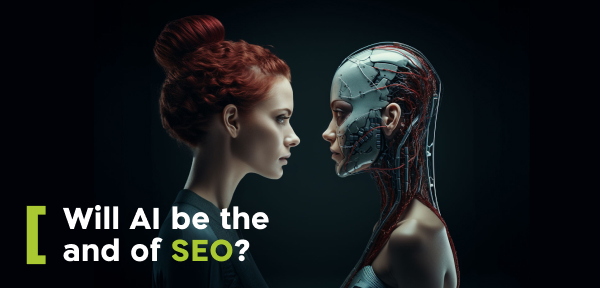
AI vs SEO: Will AI be the end of SEO?
By
Orly Gilad
, 14/06/2023
As ChatGPT gains momentum, concerns are growing regarding its impact on everything from coding to SEO. It depends on who you ask, but the current consensus is that AI is not likely to kill Search Engine Optimization. In fact, it may actually prove quite useful in enhancing and optimizing SEO efforts. AI-powered technologies can provide insights, automate tasks, and improve the efficiency of SEO strategies.
As ChatGPT gains momentum, concerns are growing regarding its impact on everything from coding to SEO.
It depends on who you ask, but the current consensus is that AI will not likely kill Search Engine Optimization. It may actually prove quite useful in enhancing and optimizing SEO efforts. AI-powered technologies can provide insights, automate tasks, and improve the efficiency of SEO strategies. If it’s repetitive and time-consuming, AI has got you covered Why spend time on keyword research, competitor analysis, and content optimization, when you can be focusing on strategic planning and higher-level tasks? Here are three key ways AI can help:- Data Analysis AI can process and analyze large amounts of data quickly and accurately, which can help identify patterns, trends, and opportunities for SEO optimization. This can include analyzing search data, website analytics, and user behavior data to inform SEO strategies and tactics.
- Content OptimizationAI-powered content generation tools can assist in creating high-volume and optimized content. These tools can provide insights on keyword usage, content structure, readability, and relevance to improve the overall quality of content for SEO purposes.
- PersonalizationAI can analyze user data and behavior to deliver personalized search results and content recommendations. This can help improve user engagement and satisfaction, which can indirectly impact SEO rankings.
AI is your assistant, not your replacement
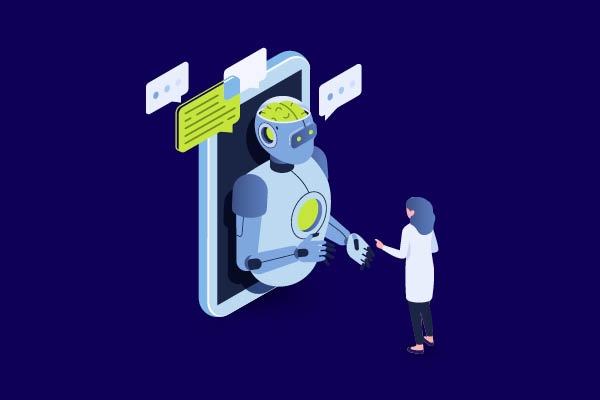
AI can’t replace human expertise in SEO. SEO professionals will still play a crucial role in interpreting and implementing the insights provided by AI, as well as adapting SEO strategies to changing algorithms, user behaviors, and business goals. AI tools can be powerful to support and enhance SEO efforts, but human creativity and strategic thinking will remain crucial in the SEO landscape.How can you utilize ChatGPT for SEO purposes?
Here are its suggestions:- Content Generation: Use ChatGPT to generate ideas for quick content for your website, blog, or social media posts. You can input keywords, topic ideas, or specific questions related to your SEO strategy, and ChatGPT can generate content that aligns with your SEO goals.
- Keyword Research: Utilize ChatGPT to brainstorm and generate keyword ideas for your SEO campaigns. You can input seed keywords or topic ideas, and ChatGPT can generate a list of related keywords that can help you identify opportunities for content creation and optimization.
- Meta Tags Optimization: Use ChatGPT to generate optimized meta tags, including title tags and meta descriptions, that are relevant to your target keywords and audience. ChatGPT can provide suggestions and variations for meta tags that can improve your website's click-through rates (CTRs) and search engine visibility.
- SEO Content Optimization: Input your existing content into ChatGPT to get suggestions on how to optimize it for SEO. ChatGPT can provide recommendations on improving content structure, keyword placement, and readability to make your content more search-engine-friendly.
- On-Page SEO: Use ChatGPT to get suggestions on optimizing various on-page SEO elements, such as headings, image alt tags, and URL structure. ChatGPT can provide insights on how to improve these elements for better search engine visibility and user experience.
- SEO Strategy assistance: Utilize ChatGPT to brainstorm and generate ideas for your overall SEO strategy, including content topics, and social media integration. ChatGPT can provide wide suggestions and insights that can inform your SEO planning and execution.
- SEO Troubleshooting: Input specific SEO challenges or issues into ChatGPT to get insights and suggestions on how to resolve them. ChatGPT can provide troubleshooting tips and recommendations to overcome common SEO obstacles.
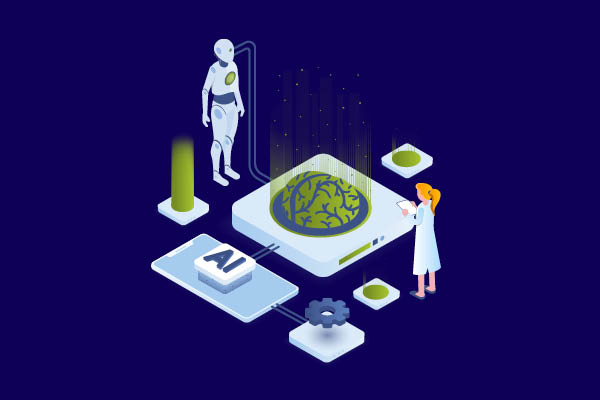 While ChatGPT can provide valuable insights and suggestions for SEO purposes, it's still essential to use human judgment and expertise in evaluating and implementing the recommendations.
SEO best practices may vary depending on your specific industry, audience, and search engine algorithms, so it's crucial to conduct thorough research and consult with SEO professionals to build a comprehensive SEO strategy.
While ChatGPT can provide valuable insights and suggestions for SEO purposes, it's still essential to use human judgment and expertise in evaluating and implementing the recommendations.
SEO best practices may vary depending on your specific industry, audience, and search engine algorithms, so it's crucial to conduct thorough research and consult with SEO professionals to build a comprehensive SEO strategy.
Watch Google's update on Search Generative Experience: