The BL[OZ]

B2B Design & Tech Trends 2026: From Visual Appeal to Strategic Experience
By
Amit Sakal
, 12/01/2026
In 2026, B2B design is more than just a modern look—it’s a strategic engine for clarity. Discover the six key shifts, from Hybrid Intelligence to Vibe Code, that help users understand complex products and drive faster decisions.

Multi-Sensory Experiences & Hybrid Intelligence When design is felt, not just seen
2026 marks a clear shift from purely visual design to multi-sensory digital experiences. After years of screen fatigue, users crave interfaces that feel richer, more immersive, and more human. Even in digital environments, design now aims to evoke sensations associated with touch, depth, motion, and materiality. This is where Hybrid Intelligence: the collaboration between AI and human creativity becomes a powerful driver. AI is deeply embedded into the creative workflow:- Generating visual directions and variations
- Exploring textures, motion, and spatial depth
- Accelerating experimentation and ideation
- Soft, tactile, and inflated textures
- Hyper-realistic objects combined with playful distortions
- Subtle motion that suggests weight, resistance, and flow
- Interfaces that feel immersive rather than flat

Glassmorphism, Evolved Transparency as a system, not a decoration
Glassmorphism continues into 2026 - but in a more mature and intentional form. What once appeared as a visual trend is now becoming a functional design system used to manage hierarchy, density, and focus. In B2B interfaces especially, where dashboards, data layers, and dense content are common, glass-like surfaces help:- Separate layers without heavy borders
- Maintain context while guiding attention
- Create depth without visual noise

Vibe Code & Self-Serve UX Design that explains before sales ever enter the room
Modern B2B buyers don’t want to be sold to first - they want to understand. In 2026, the most effective B2B experiences are built around self-serve exploration:- Interactive demos
- Calculators and simulators
- Product explorers and configurators
- Guided journeys that adapt to user intent
- Answering questions before they are asked
- Allowing users to test scenarios on their own
- Building confidence before human interaction

White, Minimalism & Visual Calm Less noise, more authority
White and near-white palettes dominate B2B design in 2026, not as an aesthetic trend, but as a strategic choice. Minimalist layouts, generous spacing, and visual restraint are essential when:- Products are complex
- Messages need credibility
- Decisions carry high business impact

Dynamic Personalization at Scale One interface, many audiences
B2B audiences are rarely uniform. Different roles, industries, regions, and levels of expertise require different messaging and in 2026, design finally reflects that reality. Interfaces are becoming more adaptive:- Content shifts based on industry or role
- Messaging adjusts to user behavior or entry point
- Visual emphasis changes according to intent

Design as a System, Not a Page Modular, scalable, and built for growth
In 2026, strong B2B design is rarely page-based. It’s system-based. Design systems evolve to support:- Rapid scaling across products and markets
- Consistency across platforms and touchpoints
- Faster iteration without breaking brand integrity
Closing Thought
Design in 2026 is not about trends for the sake of trends. It’s about using design to reduce complexity, build trust, and create meaningful experiences in an increasingly technical world. For B2B brands, the opportunity is clear: Those who treat design as a strategic layer - not a visual afterthought — will lead the conversation, not follow it.
Why not build your own tools? It’s Easier Than You Think
By
Nevo Levin
, 29/12/2025
AI can generate code in seconds, but building an internal tool that fits your exact workflow is where the real value lies.
What if I told you that the internal tools you use today don’t have to come from a plugin, an off-the-shelf system, or a solution that doesn’t quite fit?
And what if the most precise tools for your workflow are the ones that don’t even exist yet—until you build them?
In recent years, something profound has been happening quietly. Internal tools—those that once required developers, endless work hours, and a significant budget—have suddenly become accessible to everyone. AI is not just changing the way we work; it’s changing who can build the tools we work with.
Systems that used to be massive projects can now be built within hours. The person writing the brief can become the one creating the solution. Internal tools no longer have to be bought off-the-shelf or from an external vendor. They can be born out of a daily process, a recognized need, and a deep understanding of how we actually work.
This is exactly what happened with us. Time and again, we discovered that a certain process was stalling us, that communication was dragging, or that a small action was turning into a major task. So, instead of searching for a plugin that "sort of" fits, we built tools that were precise for us: a task-sharing system for clients, an email signature generator based on an existing design, custom forms, and finally, a QA tool that grew from a small idea into a system that works on any website.

When the Process Needs a Tool, Not Another Meeting
In most projects, the problem isn’t the people or the understanding. The problem is the tools—or more accurately, the lack thereof.
We learned long ago that the solution to ambiguity isn't another meeting or another document. Sometimes, all you need is a small tool that organizes reality right where the process gets stuck.
That’s how we started building our own internal tools with AI.
No heavy systems, no generic plugins; just solutions born from our real needs and those of our clients. Just as we build websites for our clients, we began designing our own internal work processes.
During the past year, we created several internal tools using AI, including:
-
A task sharing and tracking system between clients and the team.
-
An email signature generator that creates a customized version for every user.
-
Interactive forms for various clients as needed.
-
A visual QA system that operates directly on the website.
-
A smart system for creating digital business cards.
Every one of these tools was born from the same point: a small pain point that grew. AI made the development of these solutions simple, fast, and accessible.
This is perhaps the greatest AI revolution. It allows businesses like ours to build internal tools that were previously reserved for corporate giants. Today, you can create a precise solution the moment it's required, instead of adapting to what already exists.
How a Small Idea Became a Plugin That Works on Any Site
It all started with a pain point familiar to every digital team: scattered comments, long review cycles, endless question marks, and conversations that lead to no clear conclusion. So, we built a tool.
We opened ChatGPT and described the experience we wanted, rather than the code. From there, we began to refine and improve.
Within days, a QA plugin was born that felt like working inside Figma, only it takes place on the live website. No documents, no infinite calls, and no guessing. Just pins on the screen and comments appearing exactly where they need to be.

See How Simple It Is
When the QA layer is activated, the website becomes a workspace.
A click adds a pin. A pin opens a card. A card allows you to write a comment, add a small image, mark a status, or have a brief chat between team members.
No files, no links, no mess.
To keep things organized, there is also a side panel that aggregates all comments. You can filter by status, toggle between colors, jump to a specific point, and see thumbnails that provide context.
Everything is clear and easy to understand. That’s the beauty of it: a good tool doesn’t have to be heavy. It has to be precise.
The Future of Internal Tools Starts Here
The most significant takeaway isn't necessarily the plugin itself, but the new approach.
AI allows every business to build precise internal tools tailored to how they actually work.
No heavy systems, no forced adaptations, and no long development processes.
Instead of adapting ourselves to existing tools, we are starting to design the tools around us. Processes that were cumbersome become simple. Communication that was once overloaded becomes direct. And what used to be "that's just how it is" becomes "this is how we decided it should be."
It’s not just a matter of efficiency; it’s independence. The ability to build tools in real-time, without waiting and without external dependencies.
AI opens a new possibility where every small idea can become a real tool that advances the company, strengthens processes, and allows us to work smarter every single day.

Synthetic Humans and Brand Stories
By
Yoav Sondak
, 25/12/2025
AI can create faces in seconds, but trust, character, and good storytelling still take human judgment.
Synthetic humans are quickly becoming the newest wildcard in the marketing world. They promise instant faces, infinite diversity, zero scheduling conflicts, and a level of visual flexibility that traditional photoshoots could never match. At the same time, they introduce new questions about realism, accuracy, and what it truly means to build trust through images. The result is a strange mix of creative freedom and creative chaos, efficiency and unpredictability, impressive breakthroughs and very real failures. In other words, exactly the kind of shift that forces brands and designers to rethink how they tell visual stories.
If you work with visuals, you cannot ignore this technology. And if you use it, you need to understand both its possibilities and its pitfalls. Here is what synthetic humans actually make easier, what they complicate, and how smart teams are learning to use them without losing their focus or their brand integrity.
What AI really makes easier in client visuals Let us start with the fun part. AI lets us create very specific personas in minutes. If a campaign needs a clinic nurse in her early 40s with a calm presence and warm eyes, an irrigation engineer with sun-tanned skin and slightly dusty trousers, or a farmer in his fields who looks like he actually knows how to repair a dripline by hand, we can dial that in. No casting, no schedules, no “our best model canceled at the last minute” drama. It also helps when we need groups that stock libraries do not always represent well. A mixed team of engineers with balanced ethnic diversity. A group of middle-aged professionals for a B2B product. A family that does not look like a toothpaste commercial from 1992. AI gives us a bigger playground and fewer excuses. And yes, budget wise it saves time. Generating a range of visual directions early in a project helps a client choose a tone before any real production happens. This is especially valuable in B2B where you often want a mix of realism and polish without spending a fortune on photoshoots for niche equipment. But let us be clear. It is faster than a real shoot, not magic. Getting the right facial expression, personality, lighting, emotional tone and cultural nuance still takes iteration and artistry. Someone still needs to do the work and make creative decisions. AI is a sketchbook, not a photographer. Representation and diversity. Easier to specify, easier to mess up
AI absolutely makes it easier to design for diversity on purpose. We can ask for specific mixes of age, gender, skin tone, and cultural background that reflect a brand’s real audience rather than a generic Western template.
But here comes the cynical part. If you do not direct the AI explicitly, it has the tendency to give you the same person over and over. A smiling young white male doctor. A slender white woman in a “corporate success” pose. A suspiciously symmetrical engineer that looks more like an NBA star than someone who works in a metal factory.
AI does not magically fix representation. It mirrors the biases of its training data unless we intervene with clear prompts and visual QA. So yes, AI is powerful, but it also needs supervision. Otherwise you get a multicultural team that all somehow look… the same.
The continuity problem (The serious one and the ridiculous one)
This is where things get interesting.
Keeping a synthetic person the same
If you generate a character once, they will look great. If you generate the same character again in a different pose or setting, there is a good chance the face will be slightly off. Or very off. Or suddenly look like their cousin.
This is a known limitation. Generic text to image models do not remember a specific face across multiple scenes. To fix that you need either a consistency-focused tool, a custom trained character, or a very precise workflow.
The Real Model Dilemma
Stock Faces, Influencers, and the Question of Trust
At some point in almost every campaign, a very human question appears: should this face be real?
Sometimes a client selects a specific real person from a stock library. A nurse who looks exactly right for a clinic campaign. An engineer who feels credible on the factory floor. A farmer whose face tells a story of experience without saying a word. The problem begins when the campaign grows. One image is no longer enough. The client needs variations, new scenes, seasonal updates, and continuity over time. Stock libraries rarely deliver that level of flexibility.
This is where AI enters the conversation. With the right tools and workflows, it is now possible to generate synthetic variations of an existing stock model. The same person, placed in new environments, wearing different outfits, interacting with new products. When done carefully, this can extend the life of a chosen face without repeated licensing fees or logistical constraints. When done carelessly, the result is uncanny. The face looks familiar but not identical. Subtle features drift. Expressions change personality. The person becomes almost themselves, which is often worse than being clearly fictional.
This tension becomes even sharper when the conversation moves from models to influencers.
Influencers are not just faces. They are identities built over time. Their value is not only how they look, but the perception of authenticity, lived experience, and continuity across platforms. An influencer has a history, opinions, imperfections, and a relationship with their audience. These are things AI can simulate visually, but not fully embody.
For this reason, real influencers still cannot be replaced in many contexts. When trust is personal, when credibility depends on lived experience, or when a brand relies on long-term emotional connection, a synthetic figure falls short. An AI generated wellness coach or skincare expert may look convincing, but it does not age, struggle, contradict itself, or evolve in the way people do. And audiences notice.
That said, artificial models are already stepping into influencer-like roles in limited and carefully framed scenarios. Virtual brand ambassadors, synthetic characters, and fictional personas can work when transparency is clear and expectations are managed. They can represent ideals, explain complex products, or act as consistent brand guides. But they are closer to mascots than humans, even when they look realistic.
The real question is not whether an artificial model can gain attention. It already can. The question is whether it can earn trust. And trust, at least for now, still depends on the belief that there is a real person behind the voice, the choices, and the imperfections.
In practice, the smartest campaigns treat AI models as extensions, not replacements. They support real people, fill visual gaps, and offer flexibility where human logistics fail. But when a brand needs genuine influence rather than visual presence, the human factor remains difficult to fake.
Product continuity. A reality check
Trying to show a specific irrigation valve, cosmetic device, sensor probe or medical connector in an AI generated image is its own adventure. AI tends to simplify or distort product details, change proportions, or invent buttons that do not exist.
So for product accuracy we still rely on photography, vector illustration, or 3D renders. AI is usually used around the product, not instead of it.
Representation and diversity. Easier to specify, easier to mess up
AI absolutely makes it easier to design for diversity on purpose. We can ask for specific mixes of age, gender, skin tone, and cultural background that reflect a brand’s real audience rather than a generic Western template.
But here comes the cynical part. If you do not direct the AI explicitly, it has the tendency to give you the same person over and over. A smiling young white male doctor. A slender white woman in a “corporate success” pose. A suspiciously symmetrical engineer that looks more like an NBA star than someone who works in a metal factory.
AI does not magically fix representation. It mirrors the biases of its training data unless we intervene with clear prompts and visual QA. So yes, AI is powerful, but it also needs supervision. Otherwise you get a multicultural team that all somehow look… the same.
The continuity problem (The serious one and the ridiculous one)
This is where things get interesting.
Keeping a synthetic person the same
If you generate a character once, they will look great. If you generate the same character again in a different pose or setting, there is a good chance the face will be slightly off. Or very off. Or suddenly look like their cousin.
This is a known limitation. Generic text to image models do not remember a specific face across multiple scenes. To fix that you need either a consistency-focused tool, a custom trained character, or a very precise workflow.
The Real Model Dilemma
Stock Faces, Influencers, and the Question of Trust
At some point in almost every campaign, a very human question appears: should this face be real?
Sometimes a client selects a specific real person from a stock library. A nurse who looks exactly right for a clinic campaign. An engineer who feels credible on the factory floor. A farmer whose face tells a story of experience without saying a word. The problem begins when the campaign grows. One image is no longer enough. The client needs variations, new scenes, seasonal updates, and continuity over time. Stock libraries rarely deliver that level of flexibility.
This is where AI enters the conversation. With the right tools and workflows, it is now possible to generate synthetic variations of an existing stock model. The same person, placed in new environments, wearing different outfits, interacting with new products. When done carefully, this can extend the life of a chosen face without repeated licensing fees or logistical constraints. When done carelessly, the result is uncanny. The face looks familiar but not identical. Subtle features drift. Expressions change personality. The person becomes almost themselves, which is often worse than being clearly fictional.
This tension becomes even sharper when the conversation moves from models to influencers.
Influencers are not just faces. They are identities built over time. Their value is not only how they look, but the perception of authenticity, lived experience, and continuity across platforms. An influencer has a history, opinions, imperfections, and a relationship with their audience. These are things AI can simulate visually, but not fully embody.
For this reason, real influencers still cannot be replaced in many contexts. When trust is personal, when credibility depends on lived experience, or when a brand relies on long-term emotional connection, a synthetic figure falls short. An AI generated wellness coach or skincare expert may look convincing, but it does not age, struggle, contradict itself, or evolve in the way people do. And audiences notice.
That said, artificial models are already stepping into influencer-like roles in limited and carefully framed scenarios. Virtual brand ambassadors, synthetic characters, and fictional personas can work when transparency is clear and expectations are managed. They can represent ideals, explain complex products, or act as consistent brand guides. But they are closer to mascots than humans, even when they look realistic.
The real question is not whether an artificial model can gain attention. It already can. The question is whether it can earn trust. And trust, at least for now, still depends on the belief that there is a real person behind the voice, the choices, and the imperfections.
In practice, the smartest campaigns treat AI models as extensions, not replacements. They support real people, fill visual gaps, and offer flexibility where human logistics fail. But when a brand needs genuine influence rather than visual presence, the human factor remains difficult to fake.
Product continuity. A reality check
Trying to show a specific irrigation valve, cosmetic device, sensor probe or medical connector in an AI generated image is its own adventure. AI tends to simplify or distort product details, change proportions, or invent buttons that do not exist.
So for product accuracy we still rely on photography, vector illustration, or 3D renders. AI is usually used around the product, not instead of it.
 The legal, ethical and trust layer
Clients trust visuals. And as AI grows, so do the expectations for transparency.
There is still legal uncertainty around how some models were trained, how copyrights apply, and how synthetic humans should be disclosed in sensitive industries. The EU is moving toward stricter transparency rules. Customers are becoming more aware of what looks AI generated.
So we treat AI the same way we treat any production tool. We choose platforms with clearer IP practices, we avoid misleading imagery, and we recommend disclosure when it matters for trust.
Our philosophy is simple. A great brand story should feel honest even when the people in the picture are not.
So where does this leave us?
AI models are not replacing real photography. They are not replacing human creativity. But they have become a natural part of the workflow in branding and marketing. They help us iterate faster, visualize concepts earlier, explore diversity with more intention, and tell better stories without waiting for permissions, flights or makeup.
They also require discipline. They require artistic guidance. They require common sense. And sometimes they require a designer to say “No, we are not showing the irrigation engineer as a flawless fashion model. Let us try again”.
As for the future, it is moving fast. Character consistency tools are improving. Product level accuracy is improving. Ethical guidelines are being written. The hybrid workflow of real photography, 3D, and AI will probably become the default rather than the exception.
The conclusion is simple. AI models are not the answer to everything, but they have opened a creative door that is not going to close. The brands that benefit most will be the ones that use this tool with intelligence, taste, humor, and responsibility.
The legal, ethical and trust layer
Clients trust visuals. And as AI grows, so do the expectations for transparency.
There is still legal uncertainty around how some models were trained, how copyrights apply, and how synthetic humans should be disclosed in sensitive industries. The EU is moving toward stricter transparency rules. Customers are becoming more aware of what looks AI generated.
So we treat AI the same way we treat any production tool. We choose platforms with clearer IP practices, we avoid misleading imagery, and we recommend disclosure when it matters for trust.
Our philosophy is simple. A great brand story should feel honest even when the people in the picture are not.
So where does this leave us?
AI models are not replacing real photography. They are not replacing human creativity. But they have become a natural part of the workflow in branding and marketing. They help us iterate faster, visualize concepts earlier, explore diversity with more intention, and tell better stories without waiting for permissions, flights or makeup.
They also require discipline. They require artistic guidance. They require common sense. And sometimes they require a designer to say “No, we are not showing the irrigation engineer as a flawless fashion model. Let us try again”.
As for the future, it is moving fast. Character consistency tools are improving. Product level accuracy is improving. Ethical guidelines are being written. The hybrid workflow of real photography, 3D, and AI will probably become the default rather than the exception.
The conclusion is simple. AI models are not the answer to everything, but they have opened a creative door that is not going to close. The brands that benefit most will be the ones that use this tool with intelligence, taste, humor, and responsibility.

Don’t Be Afraid of the Monster: B2B Websites Aren’t Actually That Scary
By
Naomi Lifshitz
, 01/12/2025
When B2B sites become complex, smart design brings order and clarity — guiding users, strengthening trust, and helping them move forward with confidence.
“Honestly? Above everything else, it just looks like you’re really enjoying working on this.”
And she was right. I really am.
Because websites are one of the things I love most in the world.
Why do B2B websites always seem a bit more intimidating?
When people hear “B2B website,” they immediately imagine something heavy: catalogs, products, integrations, CRM systems, and a content tree with thirty pages. And it’s true - this isn’t the website of a jewelry shop or a restaurant. But that’s exactly what makes it interesting. When handled correctly, this complexity turns into clarity.
So how do you actually make it simple?
A website is not a filing cabinet that needs to store every piece of information accumulated over the years. It needs to be focused and relevant. In almost every B2B website I work on, the same pattern repeats itself — templates that help organize the information clearly. And once every piece of content knows where it belongs, everything starts to fall into place. There’s the product - sometimes physical, sometimes digital, sometimes an entire range that needs to be sorted into a clear catalog. Sometimes products are scattered across applications, technologies, or different solutions. In those cases, it’s better to centralize everything under one catalog with smart filtering. This preserves a clear hierarchy and creates a smooth, intuitive user experience. Behind the product lies the technology, which often interests professional audiences and differentiates the company from competitors. On this page, we presented technical and seemingly “dry” information — but in an airy, clean, and clear way. We added a scrolling visual element inspired by the client’s industry, which made the page feel less mechanical and more pleasant and flowing. Then there are the industries or segments where the product operates — because in B2B, there is no “everyone,” only context. There’s also the company’s reputation, the services it provides, and the people behind the scenes. On the Agmatix website, we organized the entire Case Studies archive in a simple, comfortable way. “About” and “Management” pages are almost always among the most visited. Because even in B2B, people look for people. They want to see faces, understand who stands behind the company, and sometimes even recognize someone they know. Look at this innovative About page we created for trendlineslab, It’s innovative because it’s not just “About” - it tells a story. A brand is a story, and that’s exactly what users feel here: a short, clear journey that presents the company through a narrative rather than dry text. And then there’s one of the most important parts — knowledge hubs B2B customers aren’t looking for slogans; they’re looking for information. Articles, guides, real-world examples, case studies. Knowledge that builds trust.Staying focused throughout the process
One of the biggest challenges in B2B website projects isn’t necessarily design or technology - it’s the people. Every company has several departments with different viewpoints: marketing, sales, product, support, leadership. Everyone has something to say - and rightly so. But if each person sees the website as theirs, the project quickly spreads in all directions. The solution is to work with a small decision-making team: three to four key personas representing the core needs. They don’t need to agree on everything - but they do need to speak the same language and hold the same goal. Once you have that core, every decision becomes easier.
And what about all the content?
Almost every company has a sea of materials - presentations, brochures, PDFs, guides, old documents. Instead of trying to “fit everything in,” it’s better to start with the opposite question: What does the user actually need to know here? Not everything needs to become a page. Topics like customer stories, updates, or technological innovations are often better as blog posts or part of the Resources section. Blogs are an excellent way to add knowledge and context without overwhelming the site. You can write about almost anything, and the volume can be endless. You can always enrich the content hub, and with smart filtering, still maintain order and clarity.Functionality comes first
Not long ago I finished designing an especially complex website - catalog-based, with many digital tools and templates. What made it truly successful was its functionality: clear, intuitive, and easy to use. Visitors know exactly where to find what they’re looking for - and to me, that’s the biggest achievement. B2B websites are, first and foremost, work tools. They need to be functional, comfortable, and clear for users. That doesn’t mean giving up on design - the opposite. A modern look that conveys innovation is part of the message: if the website feels up-to-date, the user will feel the company behind it is moving forward. Like on the Aquestia website, where we highlighted the certifications clearly.It’s all a matter of mindset
If you approach a B2B website with fear - it really will feel like a monster. But if you approach it as a process of organization, structure, and listening - everything becomes clear. A good website doesn’t need to be big, it just needs to work. And to me, that’s the heart of it: turning complexity into clarity - step by step, methodically, and with a small smile along the way.
Trends in Digital Design for Social Media in 2025
By
Timrat Erez
, 21/01/2025
A detailed exploration of the top digital design trends for social media in 2025, focusing on interactivity, video content, templates, and more. Learn how to keep your brand's digital presence fresh, consistent, and impactful.
The Importance of a Digital Brand Guideline
In the fast-paced world of social media, consistency is crucial for building brand awareness. A digital brand book, or brand guideline document, plays a pivotal role in ensuring that every piece of content across platforms aligns with the brand’s identity. A well-structured digital brand book for digital defines your brand's voice, color scheme, typography, imagery style, and logo usage. This not only helps maintain consistency but also strengthens your brand's presence on social media. Whether you're creating videos, carousel posts, or stories, having a digital brand book ensures that all design elements are cohesive and instantly recognizable to your audience. With the rise of user-generated content and templates, a brand book becomes even more essential. As more individuals and tools contribute to your brand’s digital presence, keeping a unified, professional look across all content is key to standing out and building trust with your audience.
1. Video Takes Center Stage
Video content is no longer just a trend—it's the driving force behind social media engagement. Studies show that video posts generate 38% more engagement than image-based posts on platforms like Instagram and Facebook (Hootsuite Social Media Trends Report 2025). Short-form videos, like Instagram Reels, and YouTube Shorts, dominate social feeds. These bite-sized, attention-grabbing clips not only entertain but also inform. Marketers focus on creating high-quality, snappy videos that deliver value quickly, whether through tutorials, behind-the-scenes looks, or product demos. For designers, this shift means optimizing visuals for mobile viewing, using eye-catching thumbnails, and incorporating motion graphics to enhance storytelling. With video, the goal is to be visually engaging while delivering the message in a way that keeps viewers hooked.2. Carousel Posts for Storytelling
Carousel posts—where multiple images or videos are swiped through in a single post—have grown in popularity because they allow for rich storytelling and deeper engagement. A well-designed carousel can show step-by-step processes, tell a sequential story, or display a collection of related products. Carousel posts have grown in popularity, generating 1.4x more reach and 3x more engagement compared to single-image posts (Later Social Media Analysis, 2024). Designers are getting creative with carousels, blending static images with motion, using contrasting colors, and ensuring each slide is part of a cohesive narrative. The challenge is to keep users interested across all slides, so the visuals need to be both informative and visually stimulating.3. Template-Driven Design
Templates are becoming a game-changer for creators looking to maintain a consistent aesthetic across platforms. Tools like Canva, Adobe Spark, and others offer customizable templates, making it easier to create on-brand posts quickly. These templates are not just for graphics anymore; they now include layouts for videos, stories, and reels. These templates improve design efficiency by up to 60% (Adobe’s Future of Creativity Report 2024), allowing designers to focus on creativity while reducing production time. The rise of templates has led to a democratization of design. Whether you’re a small business or a content creator, you can produce polished, professional designs with minimal effort. Templates allow you to focus on customization, ensuring your content stands out while saving time on design work.
4. Interactive and Immersive Content
Interactive design elements, such as polls, quizzes, and sliders, increase audience engagement by 30% compared to static posts (Sprout Social Engagement Study, 2024). Instagram Stories with interactive stickers (like polls or questions) receive 15-20% higher completion rates (Instagram Insights 2024). As social media platforms continue to incorporate advanced features, interactive design is becoming more important. Polls, quizzes, sliders, and other interactive elements are a great way to keep your audience engaged and involved. On Instagram, for example, Stories with interactive stickers (like questions or reactions) provide instant feedback and encourage participation. Additionally, with the rise of augmented reality (AR) filters and virtual experiences, brands are exploring more immersive ways to engage users. Designers are now creating AR filters, 3D objects, and interactive designs that allow users to engage in a more hands-on way, elevating the traditional post into an experience.
5. Minimalist Aesthetics with Bold Typography
In a world where attention spans are shrinking, simplicity is key. Minimalist design continues to thrive in social media content, focusing on clean lines, white space, and strong focal points. Bold typography plays a crucial role here, making statements and headlines pop while maintaining an uncluttered look. Big, readable fonts help convey the message quickly, whether for a meme, announcement, or call-to-action. Minimalist aesthetics combined with striking typography create a powerful visual impact that stands out in crowded feeds. Minimalist design continues to thrive in social media content, focusing on clean lines, white space, and strong focal points. Posts featuring bold typography and minimalist layouts see 24% higher engagement rates (HubSpot Social Media Trends Report 2024) due to their ability to capture attention quickly in crowded feeds.6. User-Generated Content (UGC) Integration
Designers are increasingly working with UGC in creative ways to showcase real-life interactions with products or services. Curated customer testimonials, review snapshots, or creative reposts add authenticity to brand messaging. Social media users are more likely to trust peer-generated content, making it a valuable asset for brands looking to build trust. By integrating UGC into their designs, brands can foster a sense of community, turning users into active participants in the brand’s visual story. The trend also highlights the importance of authenticity and transparency in modern digital marketing.
7. AI in Creative Design, 3D, and Illustration
Artificial Intelligence (AI) is revolutionizing the way designers approach creative projects. AI tools are now being used to generate new design elements, streamline workflows, and enhance creative processes. From automated image editing to AI-generated illustrations and even personalized content creation, AI is making it easier for designers to produce high-quality visuals in less time. In addition, AI-powered platforms are enabling the integration of 3D models and illustrations into social media content. This allows brands to create more dynamic and visually striking posts that stand out from traditional 2D designs. Whether it’s for product mockups, animated 3D assets, or hyper-realistic digital art, AI is helping bring complex, interactive visuals to life, giving social media content a fresh, futuristic feel. With AI, creativity is not just about working smarter; it’s about exploring new possibilities and pushing the boundaries of what’s possible in digital design.Conclusion
In 2025, digital design on social media is all about creating content that is dynamic, interactive, and visually engaging. From the explosion of video content to the use of carousel posts and templates, designers have more tools than ever to craft impactful visuals that resonate with audiences. Additionally, having a digital brand book ensures that your content remains consistent and strengthens brand awareness across platforms. By embracing these trends, including the use of AI in creative work, brands, and creators can ensure that their social media presence remains relevant and stands out in an increasingly crowded digital world.
Even Great Content Can Miss the Mark and How a Strategy Pause Can Make All the Difference
By
Liron Ramot
, 22/09/2024
Digital marketing is essential for B2B companies to reach their target audience, generate leads, and stay competitive. Many lack the resources to handle it in-house, making outsourced digital marketing a valuable solution.
Why Often Misses the Mark?
Creating digital content that truly connects with your audience is no small feat. The landscape is crowded, the competition is intense, and audiences are more critical than ever. While many businesses pour resources into content creation, they find that their efforts do not translate into engagement or conversions. Most of the time, it's just a lack of alignment between content and the organization's overall business goals. Without a clear, strategic framework, content can become scattered, inconsistent, and ultimately ineffective. This is exactly why companies should consider stepping back to take a broader view. Rather than rushing ahead with the next campaign or content piece, a strategic pause to reassess and realign can be incredibly valuable. This is the essence of the discovery and study processes, a strategic approach that will build a solid foundation for your digital marketing campaign.
Understanding the Study Process
The primary aim of the Study process is to provide a focused analysis of your current digital marketing efforts. It’s about taking a step back and evaluating what’s working and what isn’t, allowing for strategic adjustments that enhance performance. This process is ideal for annual strategy reviews, specific campaign assessments, or when there’s a need to refresh the approach to your digital marketing.What It Achieves?
The Study process delivers actionable insights that help fine-tune your digital strategy. By concentrating on specific areas, such as target audience engagement, campaign effectiveness, or digital content performance, the Study process allows businesses to make data-driven decisions that improve ROI. It helps you understand where your content may be falling short and offers concrete steps to address these issues.How It’s Done?
- Initial Consultation: In-depth session to clarify your business’s current digital marketing objectives and identify the key areas that require attention.
- Targeted Research: Assessing the performance of specific campaigns, audience engagement metrics, and the effectiveness of your content in driving desired outcomes.
- Strategy Refinement: Adjust and optimize existing strategies based on findings.
- Implementation and Monitoring: Monitoring and tweaking the revised strategy as needed.

Exploring the Discovery Process
The Discovery process offers a broader, more comprehensive approach to digital strategy development. It’s designed for businesses that are launching new brands, undergoing a rebrand, or expanding into new markets. The Discovery process is about building a solid strategy that aligns with long-term business goals and keeps consistency across all digital channels. The Discovery process offers a deep dive into your brand’s identity, your market, and your audience. It provides a holistic understanding of your brand’s digital landscape. It uncovers opportunities for differentiation, identifies potential challenges, and sets a strategic direction that makes sure all digital efforts are aligned with your overarching business goals. One of the unique offerings of the Discovery process is the development of a visual language for your digital activities. This component ensures that your brand communicates consistently and effectively across all platforms, enhancing brand recognition and coherence, which is not typically included in the Study process. The goal is to develop a strategy that meets immediate needs as well as positions your brand for long-term success. This process is particularly beneficial for companies preparing for major changes, such as a new brand launch or market expansion.How It’s Done?
- Kick-off Meeting: Clarify goals and challenges.
- Comprehensive Research and Analysis: A thorough examination of the market, competitors, and internal capabilities. Key activities include identifying Buyer Personas, conducting a Competitive Digital Analysis, and performing a detailed SEO review.
- Digital Strategy Development: Based on the research insights, a full-scale digital strategy is formulated. This includes defining content pillars, creating a media plan, and developing creative visual guidelines that ensure brand consistency across all platforms.
- Presentation and Implementation: Once approved, the strategy is implemented, with ongoing support to ensure its success.
Why Discovery Is the Better Choice?
While both the Study and Discovery processes offer valuable insights and strategic direction, the Discovery process stands out as the more comprehensive and long-term solution. Here’s why Discovery might be the better choice for most businesses: Long-Term Strategic Value Discover aims to build a digital strategy that will serve your business for years to come, not just address immediate needs. By conducting thorough research and analysis, the Discovery process helps you create a strong, adaptable strategy that can evolve with your business. This long-term focus is particularly valuable in today’s fast-paced digital environment, where trends and technologies are constantly changing. Comprehensive Insights Unlike the Study process, which offers a more focused review, the Discovery process provides a holistic view of your digital strategy. This includes everything from a detailed SEO review to the development of creative visual language guidelines. These insights are crucial for making sure that all aspects of your digital presence. From content to design, everything is aligned with your brand's goals. Flexibility and Customization One of the key benefits of the Discovery process is its flexibility. The process can be adjusted to your specific needs - whether you’re launching a new product line, rebranding, entering a new market, or looking to create a unified visual identity for your campaigns. This customization helps make sure that your digital program is relevant, consistent, and effective. With the digital marketing arena being so fast-paced, it’s easy to get caught up in the rush to produce content and launch campaigns. Taking the time to reassess your digital strategy allows you to see what’s really working and where you might need to adjust course. It’s not simply about tweaking a campaign here or there, but rather making sure that every piece of content you create is connected to your broader goals and truly resonates with your audience. Whether you’re considering the focused approach of the Study process or the more comprehensive Discovery process, this strategic pause is crucial so your content doesn’t just reach your audience—it makes an impact.
Why the Digital Marketing as a Service Model is Driving B2B Business Growth
By
Liron Ramot
, 17/06/2024
Digital marketing is essential for B2B companies to reach their target audience, generate leads, and stay competitive. Many lack the resources to handle it in-house, making outsourced digital marketing a valuable solution.
Digital Marketing as a Service (DMaaS) is a model that works
As an on-demand model, DMaaS allows your company to access a wide range of digital marketing expertise, tools, and resources without hiring and maintaining an in-house marketing team. While digital marketing toolboxes, tactics, and strategies differ according to client needs, they frequently comprise smart content, webinars, outreach and Account-Based Marketing (ABM), Search Engine Optimization (SEO), sponsored campaigns, and marketing automation to reach target audiences and drive traffic or conversions.
4 great reasons why DMaaS makes sense for your B2B business
- Access top-tier talent without the overhead costs associated with traditional hires Budget constraints and HR challenges may be standing in the way of hiring an in-house digital marketing manager. DMaaS offers a cost-effective solution, allowing your company to alleviate the burden of recruitment, training, and retention, freeing up your resources to focus on your core business operations.
- Effectively navigate the complex digital landscape Tap into the expertise of seasoned professionals who possess a comprehensive understanding of digital marketing strategies, tactics, and execution skills that can help you achieve your marketing objectives.
- Adapt to changing market conditions Your business has to constantly adapt to market needs and business growth. DMaaS has built-in flexibility, allowing your business to scale up or down, based on your changing needs and budget.
- Set goals, measure results & change the game plan as needed In the dynamic world of digital, the goalposts are constantly changing. By setting key performance indicators (KPIs) and using accessible analytics tools such as those available in HubSpot, you can easily track the success of your marketing campaigns, optimize strategies as needed, and demonstrate the value of using DMaaS services.

Follow the yellow brick road
As a global B2B marketing expert, OZ has spent years building a strong reputation. Digital trends may come and go, but dedication, commitment to success, experience, and professionalism never go out of fashion. At OZ, we believe that long-lasting partnerships are based on deep listening, understanding, and transforming your goals into measurable results. That’s why many of our clients stay with us when they move companies, and why many clients come to us by word of mouth.Your dedicated digital account manager will be your work BFF
With OZ, your account will be managed by a dedicated digital account manager backed by a multidisciplinary team with expertise in every aspect of digital marketing, and more. Your OZ manager is always backed up by a team comprising a graphic designer, strategist, and content writer. Your OZ manager becomes an integral part of your marketing team, offering full commitment and dedication to your company's goals. It's not just one person, but an entire team of digital experts working behind the scenes to drive your digital marketing success. Every member of the OZ team brings with them a high standard of professionalism and expertise gained from working with numerous B2B companies across various industries.
Boost your bottom line
DMaaS enables you to reach and engage with your target audiences effectively, measure the success of your campaigns with precision, and adapt your strategies in real time based on insights and feedback. It’s there to act as a driving force in your marketing strategy, enabling you to access the resources and expertise required to enhance your brand visibility, attract and retain customers, and drive sustainable growth.
Don’t Get Lost in the Scroll: Why Your Marketing Campaign Needs a Unique Creative Concept
By
Timrat Erez
, 20/05/2024
Unlock the potential of every marketing move with the right creative concept that distinguishes your campaigns from the day-to-day brand strategies.
Creative Cracking: The Art of Standing Out
Creative cracking refers to the process of developing a distinctive creative concept that adds a layer of uniqueness and power to your digital marketing campaigns. It's about breaking through the norm, providing a fresh perspective that draws attention and maintains it, and achieving a high rate of engagement. This process is like how different products under the same brand differentiate themselves through packaging. Similarly, each marketing move should encapsulate a distinct message and visual style that communicates its unique value proposition and resonates with specific target audiences. A successful marketing campaign must go beyond the typical visibility of the brand. It must be distinctive in its visual presentation and messaging. This requires a deep understanding of the product's features, qualities, and the demographics it aims to attract. By aligning these elements with a creative concept that pops, the campaign delivers its message with increased impact and memorability.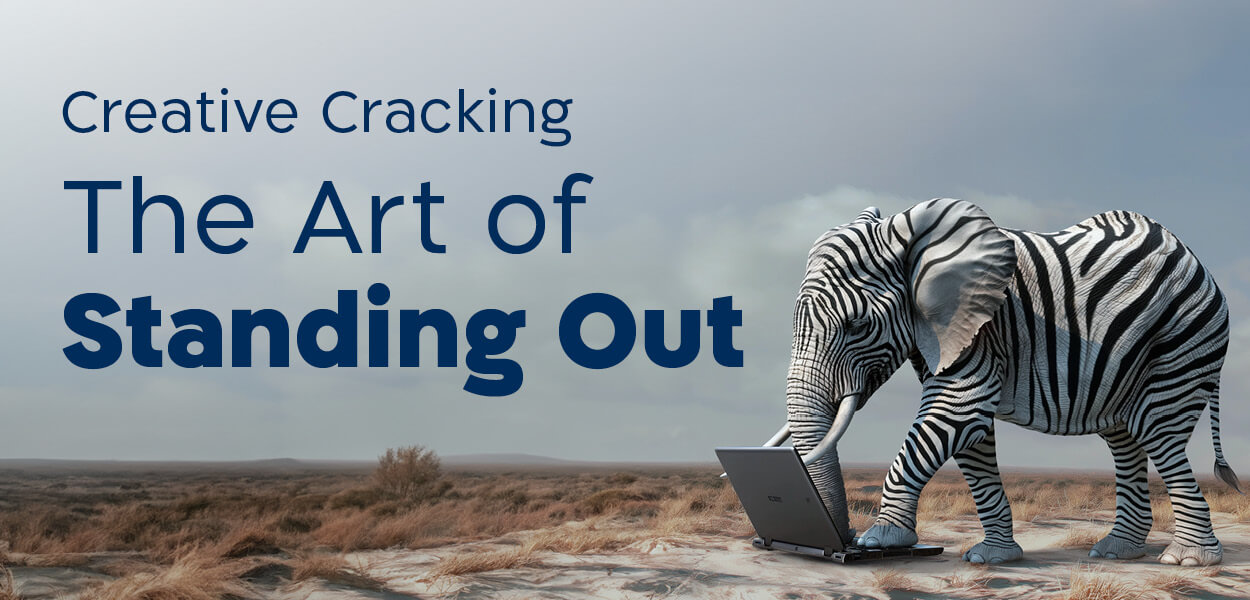
When to Launch a Creative Concept?
So, how do you know when it's time to invest in a creative concept campaign? Here are a few key moments: • Launching a New Product: Generate excitement and buzz around your latest offering with a campaign that speaks directly to your target audience's needs and desires. • Entering a New Market: As you venture into uncharted territory, a creative concept campaign can help you build brand awareness and establish yourself as a leader in the new space, enhancing your brand recall. • Making a Big Announcement: Whether it's a shift in your industry focus or a strategic partnership, a creative campaign can add weight and memorability to your message.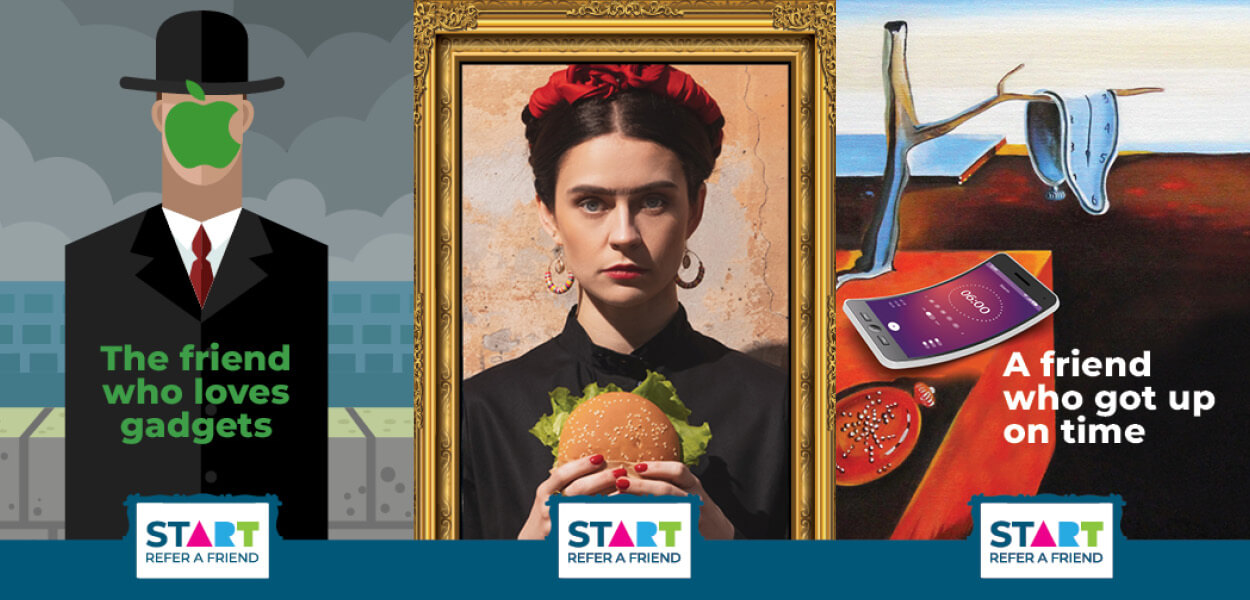
From Insights to Impact: Our Creative Concept Process
At Oz Global, we understand the power of storytelling real-time marketing. We take a data-driven approach to developing creative concepts, working closely with you to understand your specific needs, target audience, and brand voice. Here's how we do it - Laying the Groundwork: Gathering Information and Formulating Ideas Our approach begins with gathering comprehensive information about your business objectives, the competitive landscape, and your target audience's preferences. This phase is crucial as it lays the groundwork for crafting marketing moves that are not only creative but also strategically aligned with your business goals. Visuals and Messages that Speak Volumes With a clear understanding of your marketing goals and audience insights, we move ahead to shape the visual and narrative elements of your campaign. This involves selecting colors, typography, and imagery that align with the brand's identity while introducing something new and exciting. Continually experimenting and testing directions, before zooming in, selecting, and finetuning the winning concept. And a new creative direction (or two) is born. Concept Ideas: The Survival of the "Fittest" Once you choose the path that best aligns with your vision, we'll get working on crafting an engaging campaign that extends across your channels. From a captivating landing page to eye-catching social media banners, every touchpoint will, from this moment on, speak the same creative language, cementing your brand identity, generating buzz, and driving high-rate engagement. Bringing Creative Concepts to Life After finalizing the design, we bring the creative concept to life across various platforms and touchpoints. Whether it's digital ads, social media content, or physical marketing materials, every element is designed to reflect the unified creative concept, ensuring consistency and boosting brand recall.Why Creative Concepts are Marketing Gold
To break through the noise and engage professional audiences effectively in B2B marketing, creative concepts are a must. With innovative marketing strategies, that tap into your audience's emotions (emotional appeal), a standard product launch can turn into a compelling business story that lands on the desks of decision-makers. Creative concepts help to raise the perceived value of a product or service and build meaningful connections with your customers, driving conversions and strengthening long-term partnerships. By prioritizing creativity, B2B companies can make sure their marketing efforts are seen, remembered, and acted upon. And don't forget the power of a clear call to action (CTA) during a targeted product or service marketing campaign! Whether it's encouraging a visit to your dedicated landing page, downloading your white paper, or signing up for an upcoming webinar, a strong CTA will ensure your audience knows exactly what you want them to do next.Your Story, Amplified
Employing a unique creative concept does more than just attract attention, it amps up all your marketing efforts, by - - Standing out: It separates your campaign marketing moves from your ongoing brand marketing programs, helping your campaign stand out. - Boosting Engagement: Adding visually appealing and message-oriented concepts helps make a campaign more memorable and engaging. - Building Long-term Brand Recall: Just as unique packaging can make products memorable, unique creative concepts can help marketing moves linger in the minds of consumers, helping to achieve long-term brand recall.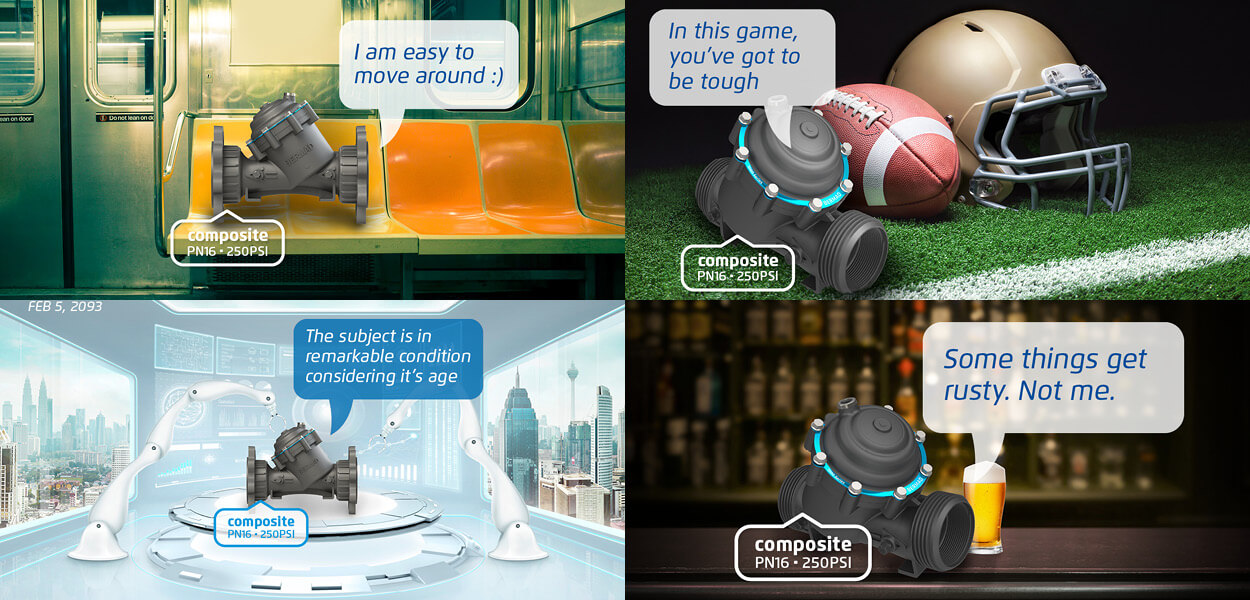
A Final Thought
For a marketing move to be successful, it needs a strong creative element. In the same way that different products of the same brand thrive in unique packaging, each marketing campaign needs its own creative concept to make sure it speaks directly and powerfully to the target audience. Not only does it boost visibility, it leaves a lasting impression. So, are you ready to break free from the monotonous scroll and make a lasting impact? Let us help you develop a creative concept campaign that gets noticed, remembered, and drives real results.
Is HubSpot’s Content Hub the MVP of Your Content Marketing Team?
By
Mayrav Galor
, 05/05/2024
Constantly creating high-value content is a neverending story — there’s always a new chapter to write. Having created a piece of content, it needs to be repurposed into different media for different marketing channels
A content marketer’s job is never done
Constantly creating high-value content is a neverending story — there’s always a new chapter to write. Having created a piece of content, it needs to be repurposed into different media for different marketing channels. It also needs to be managed – the performance of every piece of content needs to be tracked, to see how it’s performing, draw informed conclusions, and new content created that delivers even better results.The quest for great content
The new hero in the marketer’s quest to create and manage memorable content is Content Hub. It’s the all-in-one AI-powered content marketing software in HubSpot that will help you devise and deliver content to fuel the entire customer journey. As a content specialist, you may already be cringing. Are you about to be made obsolete? Absolutely not! While Content Hub is an exceptionally powerful platform, it’s there to empower you. It requires savvy marketers to make it work to its full capabilities – which ultimately will make your life a lot simpler and help you focus on being creative. Before you roll your eyes, we highly recommend you give it a test run. Trust us, you’ll be pleasantly surprised.
What can Content Hub do for you?
In a nutshell, it can help you gear up your marketing strategy and put it into action. You can run and monitor every aspect of your marketing campaigns — creating everything from blog posts, emails, social posts, and more. Let’s dive in and take a look at the key feat- AI blog post generator- based on your description of what your blog is about and keywords, it creates a list of editable titles, together with monthly search volume (MSV), difficulty to rank, and keyword intents. Once you’ve selected the title you want, it provides a blog post outline. You have complete flexibility to add paragraph headings, remove those you don’t want, and add talking points. From there, it generates an entire blog ready for you to edit. Here’s when you put your mark on the copy, ensuring it’s on message and speaks your brand’s language. HubSpot is way ahead of you, providing a tool that allows you to define your brand voice using past writing samples. Once you’ve edited the blog to your satisfaction, you can preview it before publishing it. But wait, you need an image!
- AI image generator- simply describe the image you want (e.g. a steaming cup of hot coffee sitting on an office desk with a pair of spectacles beside it), decide on a style, and hit generate. Now, you can crop and edit your royalty-free image in the correct ratio for your blog posts, landing pages, marketing emails, and social posts.
- Blog post narration- with this handy feature, you can easily create audio from your blog content, customizing the tone and human voice before adding it to your blog or using it for different channels.
- AI language translation- translate your blog into multiple languages with a click. Voilà! Votre traduction est prête.

Drum roll, please! Killer feature coming up
Probably the most exciting tool in the Content Hub toolbox is Content Remix, which allows you to repurpose your content for multiple channels and formats in just a few clicks. Blink and it’s done. Here too, your sharp eye, copywriting chops, and editing muscles will come into play as you tweak the content until it’s just right.But that’s not all…
Much like the shopping channel, there really is more! You can also create podcasts, smart content, landing pages and forms, CTAs, chatbots, and live chat. With HubSpot’s App Marketplace, you can create video content, engaging web experiences, and compelling design assets.What happens the day after you unleash your content to the world?
You can easily track the performance of every piece of content you create, so you can leverage what’s working and drop what’s not.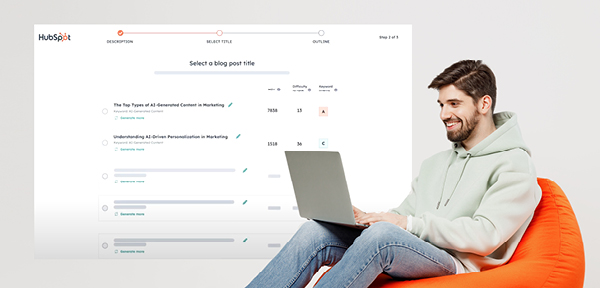
MVP or VIP?
That brings us back to our original question: Is HubSpot's Content Hub the most valuable player of your content marketing team? Our experience shows that it can be a very important player greasing your content wheels —with you in the driver’s seat to define the strategy and goals, refine the messaging, customize it to your brand, and add those crucial finishing touches. It’s a valuable addition to the HubSpot platform that can simplify and streamline both the creation and management of your company’s content. Ready to give it a try? Ask our HubSpot expert for a demo.
Unlock SEO Automated Success: Top 7 SEO Strategies You Can Automate with Make (Integromat)
By
Orly Gilad
, 07/03/2024
Are you overwhelmed by the relentless pace of digital marketing and the constant need for SEO optimization? Imagine if you could put some of those tasks on autopilot. That's where Make (formerly Integromat) comes into play, offering a way to supercharge your SEO strategies with automation. Let's delve into seven automation strategies that can not only save you precious time but also improve your website's standing in search engine results.
1. Competitor Analysis Automation
Imagine having a secret window into your competitors' strategies, giving you the upper hand. By automating the tracking of their blog updates, keyword usage, and SEO maneuvers, you're essentially doing just that. It's like playing a strategic game where you're always one move ahead, nimbly navigating through the ever-changing landscape of digital competition. For Example: Automatically tracking a competitor’s blog updates and keyword changes.How-to:
- Set Up Triggers: Use RSS feeds or webhooks to monitor competitor blogs or websites.
- Extract Key Data: Use Make scenarios to automatically extract new content details such as titles, keywords, and descriptions.
- Analyze Changes: Use SEO tools like SEMrush or Ahrefs to analyze any new keywords or strategies they're employing.
- Send Reports: Configure Make to send periodic reports with this data to your email or Slack.

2. Streamlined Local SEO Management
Streamlining your local SEO tasks, like keeping Google My Business listings up to date and monitoring reviews, can make a big difference in how you rank locally. Automation takes the heavy lifting out of the equation, making sure your local presence is both accurate and compelling without constant manual oversight. For Example: Updating and monitoring Google My Business listings for multiple locations.How-to:
- Connect to Local SEO Tools: Integrate with tools like Moz Local or Yext.
- Automate Updates: Set up processes to automatically update listings with new hours, photos, or responses to reviews.
- Monitor Reviews: Get alerts for new reviews to respond quickly.
- Reporting: Generate regular reports on listing performance and local search rankings.

3. Image Optimization on Auto-Pilot
Automating the optimization of images on your website can significantly boost page performance. Faster loading times not only enhance the user experience—a key SEO factor—but also free up your time to focus on other aspects of your website. For example: Automatically optimizing images uploaded to your CMS. What can I do?- Monitor New Uploads: Set up a trigger for when new images are uploaded to your CMS.
- Connect to an Image Optimization Tool: Use services like TinyPNG or Kraken.io within Make.
- Optimize and Replace: Automatically optimize the images and replace the originals with the optimized versions on your site.

4. Efficient Content Research - Capitalize on Trending Topics
Automating your content research can keep you ahead of the curve. By pulling in trending topics from social media and news outlets, you can craft content that truly speaks to your audience and attracts more visitors, all while saving time on manual research. For Example: Gathering trending topics from social media and news feeds. What can I do?- Set Up Social Media Triggers: Monitor keywords and hashtags on platforms like Twitter or Reddit.
- Integrate with News Aggregators: Use tools like Feedly to pull in trending topics.
- Collect and Analyze Data: Aggregate this data for analysis to identify popular subjects.
- Generate Content Ideas: Use this data to inform your content creation strategy.
5. Automated SERP Analysis - Monitor Your Keyword Success
Automated SERP analysis allows you to monitor your keyword rankings effortlessly. This ongoing oversight offers crucial insights, enabling you to tweak and enhance your SEO strategies for better results, without the need for constant manual checks. For Example - Monitoring search engine result pages for selected keywords.What can I do?
- Use SEO Tools: Integrate with tools like Moz or Ahrefs.
- Set Keyword Triggers: Monitor specific keywords and get updates on their SERP rankings.
- Analyze Data: Collect data on rankings, featured snippets, and other SERP features.
- Adjust Your Strategy: Use these insights to refine your SEO strategy.

6. Proactive Broken Link Management - Maintain a Healthy Website
By automatically detecting and fixing broken links, you're ensuring your website remains navigable and SEO-friendly. This kind of proactive management keeps your site in top shape, enhancing both the user experience, and your SEO profile with minimal effort on your part. For Example: Regularly scanning your website for broken links.What can I do?
- Schedule Regular Scans: Use tools like Screaming Frog or Broken Link Checker.
- Integrate with Your Website: Connect these tools to your CMS.
- Automate Notifications: Set up alerts for when broken links are found.
- Quick Repair: Use these alerts to promptly fix or replace broken links.
7. Social Media Engagement Tracking - Understand Your Audience Better
Automatically tracking your social media engagement gives you a clearer picture of what resonates with your audience. This insight allows you to adjust your content and SEO strategies to better align with audience preferences, streamlining your efforts for more effective engagement. Example: Analyzing engagement on your social media posts.How-to:
- Connect to Social Platforms: Integrate with platforms like Facebook, Twitter, LinkedIn.
- Gather Engagement Data: Collect likes, shares, comments, and other engagement metrics.
- Analyze Trends: Use this data to understand what content resonates with your audience.
- Report and Refine: Generate reports for your team to review and refine your social media strategy.

Account Based Marketing (ABM) Vs. Lead Generation
By
Guy Toledano
, 17/08/2023
Are you struggling to decide between account-based marketing (ABM) and Lead Generation for your business? In this blog, we explore the key differences between the two strategies and how they can be used together to achieve optimal results. From understanding the benefits of demand generation to utilizing ABM for "land and expand" tactics. This guide provides valuable insights for marketers looking to boost their ROI. Additionally, the blog discusses how to effectively target the two main types of LinkedIn users to generate leads and increase engagement.
 While ABM and demand generation may seem like competing strategies, they can actually be used together to achieve optimal results. For example, demand generation can be used to create awareness and interest in a product or service, while ABM can be used to generate qualified leads and sign-up new customers.
This marketing tactic, can start with a broad-based demand generation campaign to create awareness, which will help to identify targeted leads or target market segments, which can then be used to inform a more targeted ABM campaign. An ABM activity can be used to reach out to specific named accounts with personalized content. These combined activities allow marketers to use both strategies to accelerate the buyer's journey and assist with selling.
It's also important to note that while ABM and demand generation are both outbound marketing strategies, inbound demand generation is also possible. By using inbound marketing tactics such as content marketing, SEO and other digital marketing strategies, you can drive leads and customers to your website and then use ABM to engage with them.
While ABM and demand generation may seem like competing strategies, they can actually be used together to achieve optimal results. For example, demand generation can be used to create awareness and interest in a product or service, while ABM can be used to generate qualified leads and sign-up new customers.
This marketing tactic, can start with a broad-based demand generation campaign to create awareness, which will help to identify targeted leads or target market segments, which can then be used to inform a more targeted ABM campaign. An ABM activity can be used to reach out to specific named accounts with personalized content. These combined activities allow marketers to use both strategies to accelerate the buyer's journey and assist with selling.
It's also important to note that while ABM and demand generation are both outbound marketing strategies, inbound demand generation is also possible. By using inbound marketing tactics such as content marketing, SEO and other digital marketing strategies, you can drive leads and customers to your website and then use ABM to engage with them.
 On LinkedIn, there are two primary types of users. The first group is known as "active users" and they exhibit a high level of engagement on the platform, such as performing searches, interacting with content, and sharing posts. These users also typically stay on top of their inbox and respond to relevant messages. These active users can be effectively targeted through an awareness campaign, followed by account-based marketing efforts.
The second main group of LinkedIn users are referred to as "basic users." These users tend to have a more limited level of activity on the platform, mostly just scrolling through their feed. They are less likely to respond to private messages. These basic users can be targeted through professional lead generation campaigns that will catch their attention while they are scrolling through their feed, with the use of an appealing message and creative content.
It is important to note that there are other types of users who fall somewhere between active and basic user, and by combining efforts of ABM with lead generation it will help in effectively reaching out to all types of users, with the right format and message.
In conclusion, account-based marketing and lead generation are both powerful strategies for generating revenue and boosting ROI. While they have their own unique benefits, it's important to understand how they can be used together to achieve optimal results. By using a targeted ABM approach in conjunction with a broad-based demand generation campaign, marketers can achieve their pipeline and revenue goals by capturing the attention of the right accounts and signing up new customers.
For more info and questions contact us.
On LinkedIn, there are two primary types of users. The first group is known as "active users" and they exhibit a high level of engagement on the platform, such as performing searches, interacting with content, and sharing posts. These users also typically stay on top of their inbox and respond to relevant messages. These active users can be effectively targeted through an awareness campaign, followed by account-based marketing efforts.
The second main group of LinkedIn users are referred to as "basic users." These users tend to have a more limited level of activity on the platform, mostly just scrolling through their feed. They are less likely to respond to private messages. These basic users can be targeted through professional lead generation campaigns that will catch their attention while they are scrolling through their feed, with the use of an appealing message and creative content.
It is important to note that there are other types of users who fall somewhere between active and basic user, and by combining efforts of ABM with lead generation it will help in effectively reaching out to all types of users, with the right format and message.
In conclusion, account-based marketing and lead generation are both powerful strategies for generating revenue and boosting ROI. While they have their own unique benefits, it's important to understand how they can be used together to achieve optimal results. By using a targeted ABM approach in conjunction with a broad-based demand generation campaign, marketers can achieve their pipeline and revenue goals by capturing the attention of the right accounts and signing up new customers.
For more info and questions contact us.

Is your website “Bing-ready”?
By
Orly Gilad
, 16/07/2023
This blog highlights essential points for SEO practitioners targeting Bing and Google. Topics include keyword research, social media integration, backlinks, local SEO, rich media content, and technical SEO. Stay updated with evolving algorithms for the best results. For more information, consult reputable SEO blogs and industry websites.
Here are some general points to consider when comparing SEO for Bing and Google:
- Keyword Research: While Bing and Google both consider keywords relevancy as an important factor for SEO, they may have different algorithms for how they interpret and rank keywords. It's important to research and optimize for search terms that are relevant to both Bing and Google search results. ➭ For example, After conducting keyword research, you may find that [your company solution] + USA are popular search terms on both Bing and Google. By optimizing your content for these keywords, you'll increase the chances of appearing in search results on both search engines.
- Social Media Integration: Bing tends to give more importance to social media integration and social signals, such as social media shares, likes, and comments, compared to Google. Incorporating social media strategies into your SEO efforts may be more beneficial for Bing rankings, so be sure to promote your content on social media platforms like LinkedIn, Twitter, and Facebook, encouraging shares, likes, and comments to improve Bing rankings.
- Backlinks: Both Bing and Google consider backlinks as an important ranking factor, but they may have different algorithms for evaluating the quality and relevance of backlinks. It's important to understand the differences and optimize your backlink strategy accordingly. ➭Request backlinks from authoritative industry websites or thought leaders to enhance your website's credibility and rankings on both Bing and Google.
- Local SEO: Bing tends to place more emphasis on local search results compared to Google. Optimizing your website for local SEO, by including location-specific keywords like "top Global B2B agencies in [Israel]" ;) will help optimize your local listing, and getting local citations, will be beneficial for both Bing and GMB rankings.
- Rich Media Content: Bing tends to place more importance on rich media content, such as images and videos, compared to Google. Including relevant images and videos with proper optimization may help improve your rankings on Bing.
- Technical SEO: Both Bing and Google consider technical SEO factors, such as website speed, mobile-friendliness, and crawlability. Optimizing your website's technical aspects according to the guidelines of both search engines can help improve your SEO performance on both Bing and Google.
➭ To find the technical guidelines for both Bing and Google, you can refer to the official documentation and resources provided by each search engine:
Additionally, both Bing and Google offer webmaster tools that provide insights into your website's performance, indexing status, and potential issues. These tools can help you optimize your website according to the search engine guidelines, improving your overall SEO performance.
- Bing Webmaster Tools: https://www.bing.com/webmasters/
- Google Search Console: https://search.google.com/search-console
Consumerize the Customer Journey
By
Nirit Elyovich, MBA
, 25/01/2022
Early in my career, a wise woman said customers pay my salary, not owners. It's vital for marketers to consider future customers' needs.
The new B2B customer is a digital native
Our childhood determines our future behaviors as adults, the people we become, and the decision-makers we grow up to be. It is also true of the technological environment in which we were raised.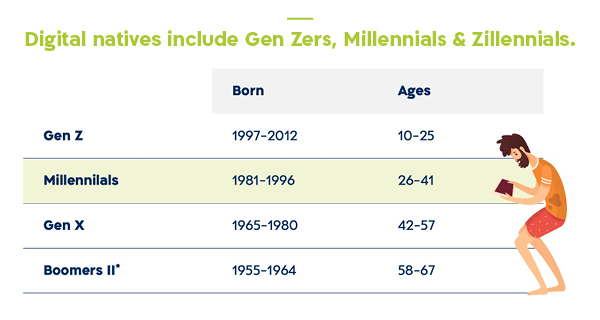 The millennials, also known as Generation Y, were born after 1980. They are now in their 30’s. Generation Z, as you can see in the table, is still young, but we will soon see them influencing our businesses. Since technology is changing very quickly, a sub-generation was born between the Millennials and Generation Z. Zillennials were born between ‘93-‘98 and were influenced by more advanced technology than the Millennials.
For their entire lives, digital natives have been surrounded by technology, social media, mobile devices, computers, and the internet. They speak this digital language as their mother tongue. They did not learn this language in their 20’s, 30’s, or later. They do not have an accent, so to speak.
The millennials, also known as Generation Y, were born after 1980. They are now in their 30’s. Generation Z, as you can see in the table, is still young, but we will soon see them influencing our businesses. Since technology is changing very quickly, a sub-generation was born between the Millennials and Generation Z. Zillennials were born between ‘93-‘98 and were influenced by more advanced technology than the Millennials.
For their entire lives, digital natives have been surrounded by technology, social media, mobile devices, computers, and the internet. They speak this digital language as their mother tongue. They did not learn this language in their 20’s, 30’s, or later. They do not have an accent, so to speak.
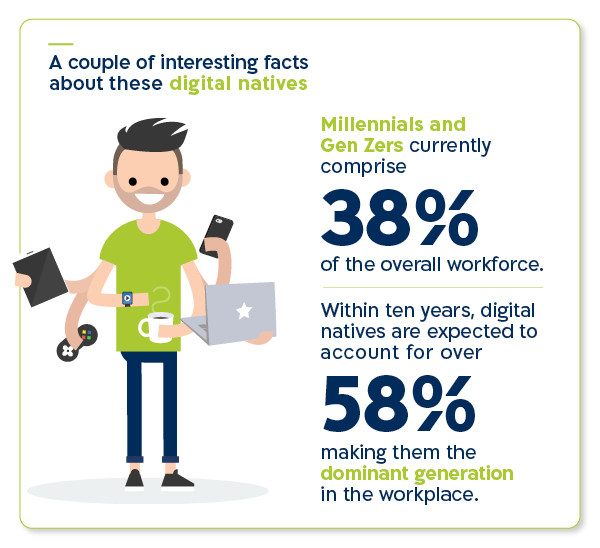
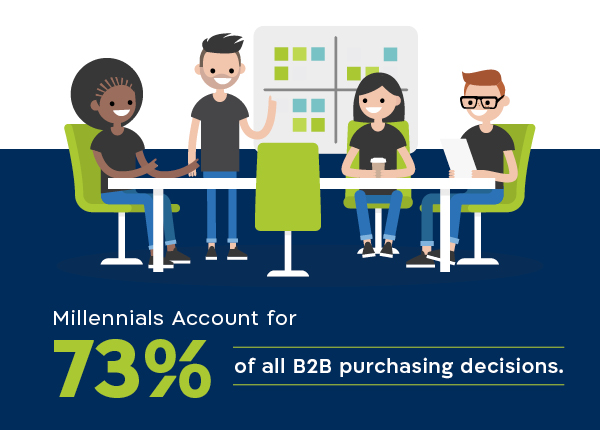 This impressive figure tells the whole story: More and more millennials and gen zers are entering the B2B decision journey, some as technological or professional influencers and others as decision-makers. It is important to note that among the people involved in decision-making, you usually meet several generations.
A few months ago, we at Oz Global B2B did a project for the American agricultural market. The intergenerational integration in the decision-making process that arose there was very prominent.
This impressive figure tells the whole story: More and more millennials and gen zers are entering the B2B decision journey, some as technological or professional influencers and others as decision-makers. It is important to note that among the people involved in decision-making, you usually meet several generations.
A few months ago, we at Oz Global B2B did a project for the American agricultural market. The intergenerational integration in the decision-making process that arose there was very prominent.
-
- A family business where the younger generation initiates a decision, and the founding generation approves it. Sometimes the founder initiates the decision but immediately passes it on to the younger generation to check online what the options are.
- A senior manager at a big business closes a deal, but the people in the field - professionals or salespeople - do not “speak” the same language. This will greatly affect the next purchase.
The Millennials and Gen Zers highly influence who will enter the decision funnel
About 50% of all product searches on the web are conducted by digital natives. The customer journey is long, complex, and involves many stakeholders.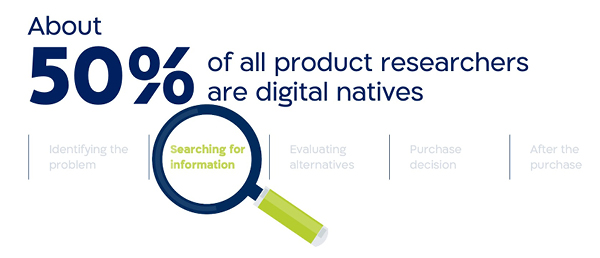 By the time the customer recognizes that he has a problem, we are, in most cases, not there. Identification is an internal stage from which someone is appointed to start researching information to find options for a solution.
50% of those who conduct the research and seek alternatives regarding a product or service, may not take an "official" part in decision-making but are the ones who put the relevant suppliers in the decision-making funnel. They are the ones who build the long list. They are the ones who decide whether or not you will be included in the “consideration group,” which is of critical importance.
By the time the customer recognizes that he has a problem, we are, in most cases, not there. Identification is an internal stage from which someone is appointed to start researching information to find options for a solution.
50% of those who conduct the research and seek alternatives regarding a product or service, may not take an "official" part in decision-making but are the ones who put the relevant suppliers in the decision-making funnel. They are the ones who build the long list. They are the ones who decide whether or not you will be included in the “consideration group,” which is of critical importance.
Two tips to gain the trust of digital natives:
1. Be authentic!
The generation that grew up on social networks, fake news, and unfounded marketing does not believe in marketing messages and does not believe in unproven statements. They have developed a hypersensitivity to online messages - they suffer from a blatant lack of trust in what is being said online. They continue to consume information online, but with a very large firewall. The bright side of it is that digital natives recognize authenticity when they see it..So what does authentic marketing look like?
-
- Get your executives to use social media Customers want to know the people behind the executives or the company representatives that they are in contact with.Make sure your site reveals who you are beyond your formal title. What topics do you choose to share? Who are your friends, what groups do you belong to, and to whom do you respond to?LinkedIn is not everything. Feel free to diversify to other social networks - Facebook, Instagram, Twitter, and even Tik Tok.
- Share user-generated content from real people Show real things, with real customers behind them. If you trust your product, let it tell your story.
- Go live on social media platforms Talk without filters. To digital natives this sounds obvious, to digital immigrants, it is less trivial. At first, the digital immigrants posted posts after editing them numerous times. Then they agreed to post an edited video. The transition to live video is scarier, but this is exactly the meaning of authenticity.
- Promote employee advocacy Empower your employees to share smart, quality content with their own social networks. On average, employee networks have 10x more connections than a company has followers. Plus, according to the Edelman Trust Barometer, people are 3x more likely to trust company information shared by an employee than that shared by a CEO.
2. Consumerize!
This word does not exist in the dictionary yet but already stars in the literature that follows trends in the B2B world. As Mona Akmal, Falkon CEO and Cofounder, once said, “As work and life flexibly intertwine, so must our approach to reaching our target users.” Gone are the days when the customer was a business person between 9-17 and a consumer on evenings and weekends. Studies show that the business customer is very much influenced by his consumer experience and expects to have a similar experience in business purchases. The customer experience touches on all stages of the journey - collecting information, placing an order, contacting the company up to paying.- More than 80% of B2B customers stated that they will look for a new supplier if their expectations in terms of customer service and user experience are not fulfilled.
- According to McKinsey & Co, B2B brands score below 50% on customer experience index ratings on average, compared to 65 to 85% for typical B2C brands.
- Gartner illustrates that 77% of B2B buyers report that their last purchase was very difficult or complex.
To sum up…
- The digital natives are digital animals. They were born into it, and it is their playground. It requires us to be present and comfortable in the digital space. Allow them to find us easily and learn about us in a convenient way that interests them. Allow them to easily consult, purchase and pay online.
- Life in the digital arena has taught them to be suspicious, not to believe everything they are told. They have developed the skills and expertise to recognize fake news when they see it. This requires us to be authentic in interactions with them, without filters and edits.
- Remember, before they are decision-makers, customers, or partners, they are first and foremost human beings. Their personal lives have seeped into their business life and it is very difficult for them to separate the two. So, we have no choice but to "consumerize" the way we treat them.

10, 9, 8…. And counting down marketing trends for 2018
By
Orit Oz
, 18/01/2018
The New Year is here and we put together a countdown of marketing trends that will affect B2B brands in 2018!
10 – Visual content
 The trend for visualization through video, images and infographics will get stronger. In fact, predictions indicate that by 2019, video will account for 80% of consumer internet traffic. And, according to Facebook, live is even better and live video gets 3x more views and is expected to dramatically increase in 2017. B2B brands can use live videos in lots of different ways, including at events to give followers a behind-the-scenes look, host interviews with key influencers, and launch promotions.
9 – Big (big) data
 Big data’s been a big trend for many years now, but it’s become more accessible because of machine learning and AI. As more and more platforms and marketing methods start incorporating big data, the use of big data is becoming an essential part of marketing and understanding what the consumer wants and when is worth its weight in gold.
8 – Authenticity
 Transparency and trust have become a major component of the customer’s decision-making process as customers’ become less and less tolerant towards fake news and reviews, or in other words, exaggerated marketing. Brands should invest in community management to keep the online community engaged, informed and happy; and can use technology advances such as virtual reality (VR) and augmented reality (AR) to connect with users on a deeper, more emotional level.
7 – Content and influencer networks
 There is no arguing with the fact that content is still king. However, there is a need to deal with the challenge of oversaturation. Now that most brands have some sort of content strategy and social media networks are full of content, the focus needs to shift slightly. Rather than fighting for more visibility, marketers will need to think out of the box and stand out in space that is already taken. This is where influencers come into the picture. By leveraging the networks of influencers who already have a “captive” audience, marketers can increase their online influence and start to reduce the volume of content produced, or in other words, go for quality and not quantity.
6 – Shift of focus from millennials to Generation Z
 Born between 1995 and 2010, this consumer group marks a substantial shift that will affect all brands. These digital natives are different from millennials and they will have increased buying power in the near future. Keep an eye out on key platforms such as Snapchat and Instagram when targeting this young and highly dynamic demographic.
5 – Mobile, mobile, mobile
 We cannot emphasize this one enough. Consumers are spending most of their time on their mobile phones. In fact, in 2018, mobile video consumption is expected to grow by 25% and ad spending on mobile video will reach 18 billion dollars next year, surpassing desktop. Even Google has even given priority to pages that are AMP optimized (Accelerated Mobile Pages). So the bottom line is that if you haven’t yet done so, you need to start optimizing your marketing strategies, websites and ads for mobile.
4 – Shift in KPIs
 While it’s still important to know how many people visited your site and from where, at the end of the day it’s all about sales. For this reason, it’s important to track conversions and revenue, in other words, who buys and at what stage of the buyer’s journey. In this way, it becomes easier to track your return of investment on digital marketing.
3 – Data protection
 The digital age brings with it the need to take multiple aspects including data privacy into account. In May 2018, the General Data Protection Regulation (GDPR) will take affect with the aim of improving protection for EU citizens and adapting privacy and data laws to the digital age. This will require marketers to think and act very differently as it will affecter multiple factors in a marketer’s focus, some of which require organizations to start preparing immediately.
2 – Native ads and smart content
 Native advertising is expected to drive more than 74 percent of all add revenue by 2021. Because of their more natural placement and format, these ads usually get more exposure and engagement than traditional banner ads. However, these ads need to be written according to the preferences of those seeing the ads, and they should also be linked to “smart content” that is adapted to audiences based on NI, cookies and an in-depth understanding of target audiences.
1 – Take advantage of the FOMO effect
 Even though we already mentioned this one in a previous point, we think it deserves to be repeated for emphasis. As more and more people experience the FOMO (Fear of Missing Out) effect, marketers need to create unique and original content that makes potential customers feel like they’re the first to know. For example, content that involves a “behind-the-scenes look”, an exclusive with an influencer, or a sneak preview of upcoming projects and product launches can be used to really create a buzz and get potential consumers to engage “before” anyone else does.
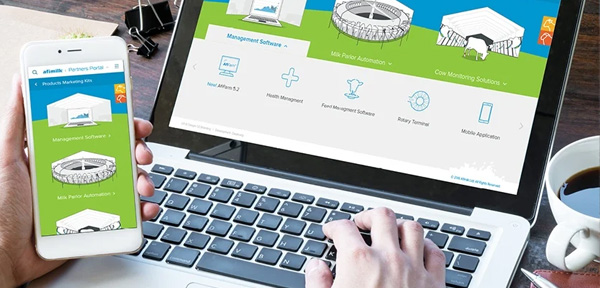
Moo-ving it up a notch with user experience
By
Miri Peled
, 10/10/2017
To encourage Afimilk’s dealers to make more purchases online and to give them access to marketing materials, OZ designed an intuitive online partner portal.
Afimilk case study: partner portal
In the world of B2B, it’s really important to nurture partner relationships and find ways to make it easier for our partners and distributors to satisfy the needs of their (and our) end customers. In this manner, you can create a win-win situation where both your customers (distributors) are happy and their customers (end users) are happy with your brand. Recently, as part of our ongoing services for Afimilk – a global leader in advanced dairy management technology solutions – we created a unique and creative solution for its partners. With the goal of encouraging Afimilk’s dealers to make more purchases online and give them easy access to marketing materials, we designed an integrated and intuitive online partner portal. This portal provides end-to-end marketing and sales support, and an easy-to-use online ordering system. It includes three valuable tools that are also integrated with Afimilk’s ERP system:- Knowledge center – with marketing resources including brochures, presentations, and supporting materials to help dealers promote Afimilk solutions.
- Configurator wizard – builds price quotations tailored to customer requirements while promoting Afimilk’s preferred solutions.
- Market gate – intuitive online ordering system tailored for Afimilk partners to encourage online ordering.

Moving to a business-to-business-to-user mindset (B2B2U©)
By
Dina Gidron
, 10/09/2017
Communicate with both intermediary customers and patient-consumers in this new age of healthcare by transitioning to a Business-to-Business-to User model.

It’s all about the people and building relationships
By
Miri Peled
, 09/08/2017
We worked together to develop a new visual identity that stands out in the global market and is also centered around Trendlines’ two foundational principles.
 In the case of Trendlines Group – an innovation commercialization company that invents, invest in, and incubates innovation-based technology – global expansion and going public on the Singapore stock exchange were the main catalysts for looking to OZ for rebranding.
As we've been partnering with Trendlines for the last 20 years, it was natural that the company turned to us for support at this significant point of growth.
Against the backdrop of our long-term relationship, we worked together to develop a new visual identity that stands out in today's global market and is also centered around Trendlines’ two foundational principles:
In the case of Trendlines Group – an innovation commercialization company that invents, invest in, and incubates innovation-based technology – global expansion and going public on the Singapore stock exchange were the main catalysts for looking to OZ for rebranding.
As we've been partnering with Trendlines for the last 20 years, it was natural that the company turned to us for support at this significant point of growth.
Against the backdrop of our long-term relationship, we worked together to develop a new visual identity that stands out in today's global market and is also centered around Trendlines’ two foundational principles:
It’s about the people AND building relationships
Because Trendlines Group’s hands-on investment approach and commitment to improve the human condition through innovation are inseparable parts of the company's character, the refreshed visual identity rests strongly on these principles. The result – a new compelling brand and visual identity – was launched at Trendlines’ 7th Annual Trendlines Company Showcase attended by hundreds of biomedicine industry professionals from around the world, and sponsored by companies worldwide.
Inbound for Medical & Healthcare Companies Event
By
Miri Peled
, 23/07/2017
We held an Inbound for Medical & Healthcare Companies event where industry experts shared multiple insights on marketing for medical and healthcare industries.
- Matt Brown, HubSpot Specialist from Boston – US Trends in Healthcare Marketing
- Dina Gidron, VP Strategy at OZ – Opening New Channels of Communication
- Mickey Nave, Corporate Marketing Director at Lumenis – Medical marketing: generating leads that your sales team will love
- Bat-chen Grinberg, Founder of MC Forum – Digital tools that reduce your work overload
- The age of “Social Health”. The combination of healthcare reforms, the age of consumerism and mobile technology is creating the perfect climate for change in healthcare.
- We see YOU, we know YOU, we understand YOU, we want to help YOU. The digital revolution is transforming the way we do business as we shift from a Business-to-Business (B2B) to a Business-to-Business-to-User (B2B2U©).
- Patient-consumers are the center of the universe. As patient-consumers become the single most important factor in this new era, we need to open up direct channels of communication with them to understand their challenges, increase brand awareness and create bottom-up demand.
- Trends in medical and healthcare. Patient-consumers are avid researchers; marketers are targeting patient-consumers AND payers; digital channels are overtaking traditional marketing channels; and digital content is key to the decision process.
- Brands must recognize social health and deliver value across the full spectrum to drive leads, convert prospects to customers and keep them loyal.
- Inbound marketing and content marketing are well-suited to the medical and healthcare industry as it promotes targeted communication, trust-based decision-making, long-term relationships, and thought leadership and industry expertise.
Getting to know your patient-consumers
By
Orit Oz
, 13/07/2017
When I just started my career, an intelligent woman told me that only when I understand.
Preparing for the age of “Social Health”
As healthcare reforms, the era of consumerism and mobile technology create the ideal climate for positive change in the medical and healthcare arena, we’re ushering in a new age – the “Social Health” era. As we transition into this new era, patient-consumers are becoming the single most important factor in the medical and healthcare eco-system; and as they research and shop online for medical services, products and insurance plans, the medical & healthcare industry increasingly resembles a retail industry. The impact of this shift on medical and healthcare providers is huge as it means they need to open up direct channels of communication with patient-consumers to understand their challenges and offer services and products with real value. Or in other words, there is a need to move from a Business-to-Business (B2B) to a Business-to-Business-to-User (B2B2U©) approach.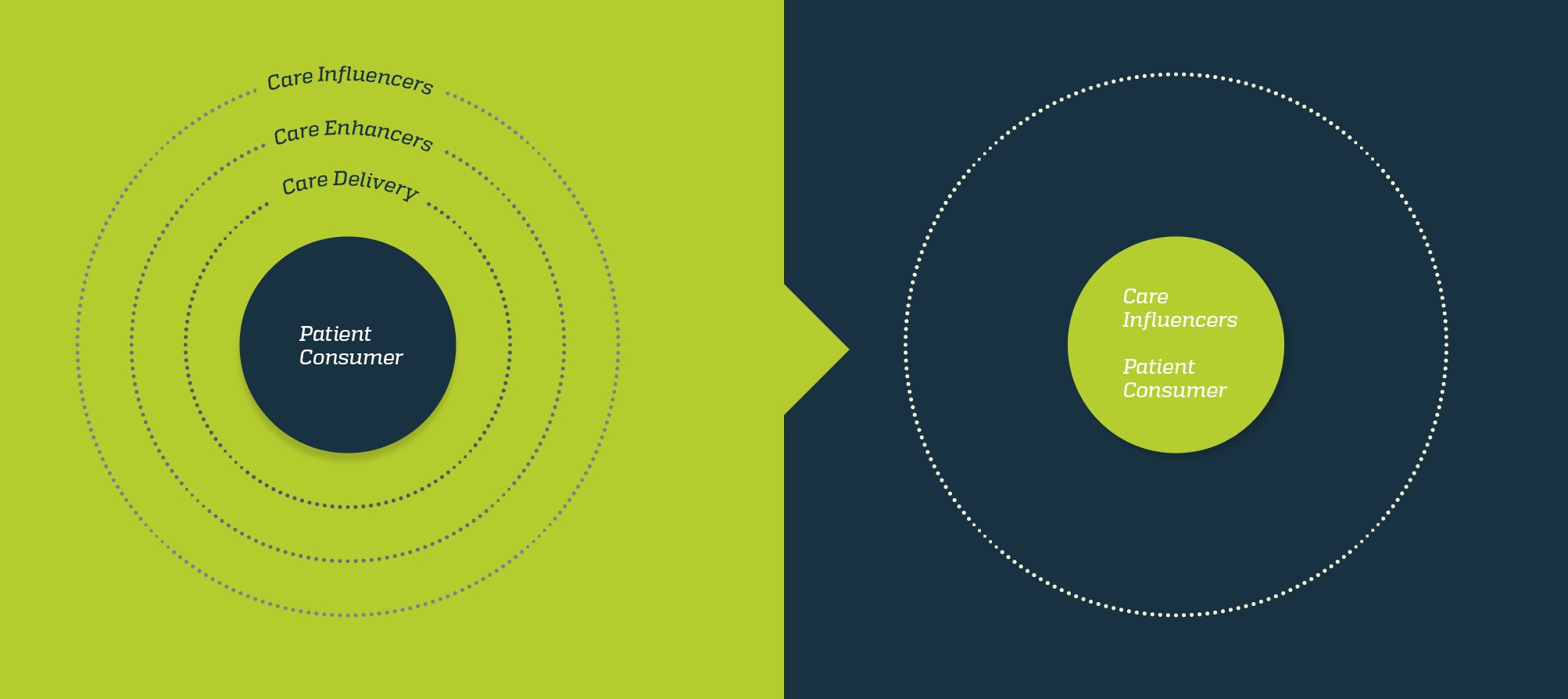 As we enter this age of “Social Health”, brands need to recognize the need to deliver value across the full spectrum to drive leads, convert prospects to customers and keep them loyal.

What’s the difference between traditional and inbound marketing?
By
Miri Peled
, 29/06/2017
Inbound marketing focuses on attracting customers through valuable content, while traditional marketing is marketer-centric and uses more interruptive methods.
It's time to attract your prospects instead of bombarding them.
Inbound marketing is a customer-centric approach that focuses on attracting customers to your business through content and interactions that are valuable, helpful, and trust-building.It’s all about using remarkable content to develop and nurture long-term relationships with your prospects so they ultimately build trust in your brand.
In comparison, traditional marketing, which is marketer-centric, uses more interruptive methods to vie for the attention of prospects.| Inbound | VS. | Outbound | |
| Definition | Inbound marketing uses customer-centric tactics to attract prospects, address their challenges and goals, and build trust in your business | Traditional marketing uses more interruptive methods to push products and services and get the attention of prospects | |
| Communication | Based on interactive communication that engages prospects and attracts them to you | Based on one-way, outward communication | |
| Tools/techniques | Educational content such as blogs, videos, eBooks, white papers, SEO, and case studies | Print and TV ads, banner ads, direct mail, cold calling, and mass email campaigns | |
| Goals | Offer prospects value through educational content and earn their trust | Drive sales through product-centric marketing |
Get your creative juices flowing with these great blog topic tips
By
Orit Oz
, 06/06/2017
Here are some tips to get your creative juices flowing to come up with some great blog topics.
- Consider the content’s purpose, format and topics.
- Create content that builds trust amongst your prospects.
- Get your content in front of the right people at the right time.
- Analyze & repeat. Determine what worked and what didn’t, and repeat your successes.

What is lead nurturing?
By
Orit Oz
, 24/05/2017
Lead nurturing is the process of engaging with contacts via automated workflows to build a relationship with them.
Because the reality is that not all leads are ready to talk to the sales team at the beginning of their interaction with your company. In fact, most aren't, and according to HubSpot, research shows that only 5-25% of visitors that come to your site are ready to close the deal.
This means that in order for inbound marketing to be effective, you need to engage with your leads along every stage of the buyer's journey until they are ready to do business with you.
Which is where lead nurturing comes in. As a key component of your B2B marketing strategy, lead nurturing utilizes automated email campaigns that are timely, offer valuable content, and address your prospects' specific interests to nurture them until they're sales ready.
And, because the emails are automated, it saves you a lot of work by qualifying leads and pushing them through the sales funnel quicker, meaning a higher return on investment. In fact, DemandGen Report found that nurtured leads increase sales opportunities by an average of 20% versus non-nurtured leads.
As you begin to develop your lead nurturing workflows, always remember these foundational principles:
- Grow and nurture relationships
- Offer educational content
- Use hyper personalization

Inbound marketing in a nutshell
By
Orit Oz
, 16/05/2017
When I just started my career, an intelligent woman told me that only when I understand.
Why inbound marketing?
We live in an age where people are bombarded with advertising wherever they turn, and for this reason, have become increasingly skeptical of standard interruptive marketing methods. In fact, Harvard Business Review reports that 90% of B2B buyers never respond to cold-marketing. For this reason, instead of competing for consumer attention, inbound uses the fact that prospects seek out the information they need on their own terms. By developing valuable and relevant content with the expectation to be found, potential customers will come to you, become new clients, and ultimately be delighted by their experience.How does inbound marketing work?
Inbound marketing is based on four phases: attract, convert, close, delight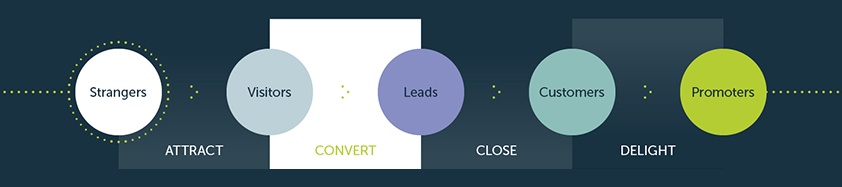
ATTRACT
First, attract visitors to your website using tools such as blogging, website optimization, and, social media. Tools: blog, social media, keywords, pagesCONVERT
Once you have new visitors, you can convert some into leads by gathering their contact information, the currency of inbound marketing. To do this, it's important to offer them something valuable, usually in the form of additional information or useful content. Tools: calls-to-action, landing pages, forms, contactsCLOSE
Once you’ve converted some visitors into leads, you need to nurture their interest by providing them with relevant information. In this stage, tools like email and CRM are helpful in selling to the right leads at the right time. Tools: email, workflows, lead scoring, CRM integrationsDELIGHT
Once you close a sale with a customer, your relationship is just beginning. At this stage, you need to continue to delight and engage them so they become happy promoters of your brand. Tools: social media, smart calls-to-action, email, workflows Analysis is critical to making inbound marketing work. Every strategy and technique you use, and content you create, should be analyzed regularly to see if it's working, and adjusted as needed to make it better.